



| IN A NUTSHELL |
|
In a significant milestone for global clean energy research, China’s Experimental Advanced Superconducting Tokamak (EAST), known as the “artificial sun,” has achieved a world record in nuclear fusion. This breakthrough highlights the potential of nuclear fusion as a sustainable energy source, with the Chinese team successfully maintaining high-temperature plasma operations for an unprecedented duration. This development could mark a turning point in the quest for clean and limitless energy, addressing the rising global demand and environmental challenges associated with conventional energy sources.
Understanding the Role of Tokamaks
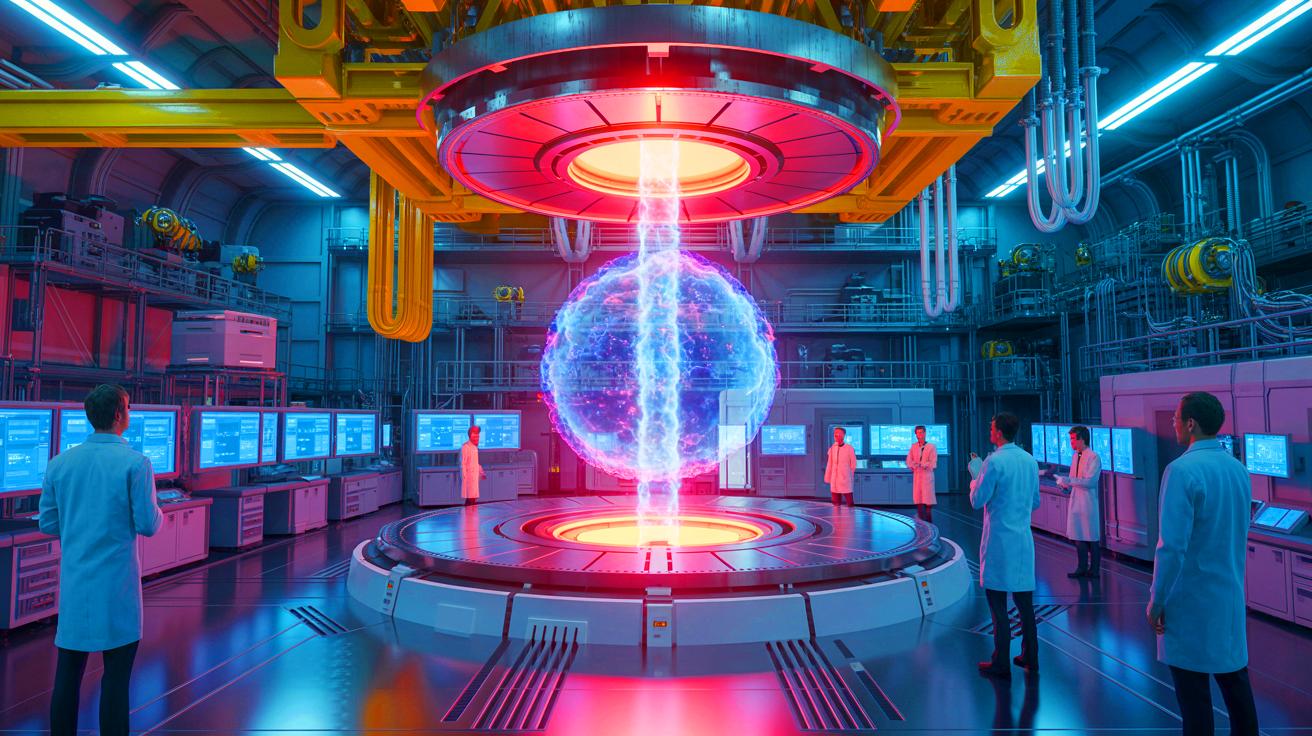
Tokamaks are essential devices in the field of nuclear fusion research. Shaped like a donut, these machines use powerful magnetic fields to confine plasma, a superheated state of matter where fusion reactions occur. The challenge lies in achieving and maintaining the conditions necessary for fusion, which involves temperatures exceeding those at the core of the sun. The EAST project is a pioneering effort, being the first fully superconducting non-circular tokamak to demonstrate significant operational improvements.
The EAST’s latest achievement involved maintaining high-temperature plasma for over 17 minutes, setting a new benchmark for long-pulse operation. This success demonstrates the feasibility of steady-state operations, a crucial step towards practical nuclear fusion reactors. The collaboration between various institutions and experts was instrumental in overcoming technical hurdles and advancing the structural design of the tokamak.
Global Implications of EAST’s Achievements
The recent advancements at EAST have far-reaching implications for the future of energy. As traditional energy sources face challenges related to environmental sustainability and resource availability, nuclear fusion offers a promising alternative. The ability to sustain fusion reactions for extended periods could lead to the development of reactors that provide a continuous supply of clean energy.
China’s investment in the EAST project, amounting to a trillion USD, underscores the strategic importance of nuclear fusion in addressing long-term energy needs. The successful experiments conducted at the Hefei Comprehensive National Science Center have provided valuable data and technical insights, paving the way for future developments in fusion technology. This progress is not just a scientific achievement but a potential catalyst for a global shift towards cleaner energy solutions.
Record-Setting Achievements and Their Significance
The EAST’s record-setting plasma run, achieving temperatures of 180 million degrees Fahrenheit, is a testament to the advancements in fusion technology. This achievement not only pushes the boundaries of engineering but also validates the concept of sustained high-parameter operation in fusion reactors. The research team highlighted that such breakthroughs are crucial for transitioning from theoretical exploration to practical engineering applications.
The successful demonstration of steady-state H-mode plasma represents a significant milestone in fusion research. It provides the scientific community with a model for future experiments and underscores the importance of international collaboration in advancing fusion technology. The findings open new avenues for research and development, with the potential to revolutionize the global energy landscape.
The Future of Fusion Energy
With the EAST project achieving remarkable success, the future of fusion energy looks promising. The ability to harness the power of nuclear fusion could provide a sustainable solution to the world’s energy challenges. However, substantial research and development are still needed to transition from experimental reactors to commercial applications.
As countries around the world invest in fusion research, the collaborative efforts of scientists and engineers will be crucial in overcoming the remaining technological barriers. The ongoing advancements at EAST demonstrate the potential for achieving practical fusion energy, raising important questions about the next steps in this transformative journey. How will global cooperation shape the development of fusion technology, and what challenges lie ahead in making fusion a viable energy source for the world?
Did you like it? 4.6/5 (25)




Wow, 180 million degrees! That’s hotter than my morning coffee! ☕
Wow, 180 million degrees? That’s hotter than my last relationship! 😂