




| IN A NUTSHELL |
|
For decades, scientists have been on a quest to discover intelligent life beyond our planet. This search, fraught with challenges, now takes a new direction thanks to a study by Penn State University and NASA. The study offers insights into how Earth’s own communications might inadvertently be announcing our presence to the cosmos. By mapping out the paths of our strongest radio signals, primarily intended for Mars-bound spacecraft, researchers have uncovered clues about how these signals leak into space. This revelation not only hints at how aliens might detect us but also guides our search for extraterrestrial intelligence.
Unveiling the Patterns of Space Communication
Researchers have long wondered if extraterrestrial beings could detect our presence through radio signals. The recent study led by Penn State University and NASA highlights how Earth’s space communications are not as discreet as once thought. By analyzing two decades of data from NASA’s Deep Space Network (DSN), scientists mapped out the patterns of these transmissions.
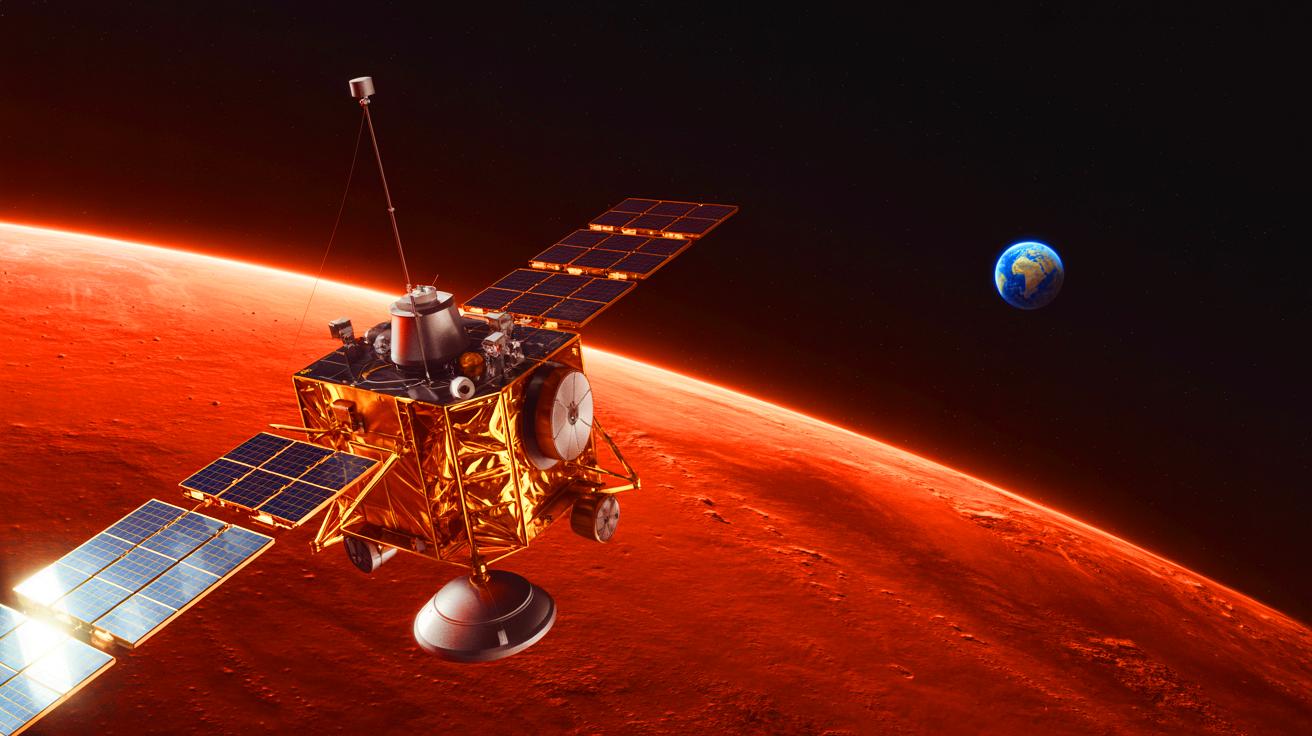
The DSN, with its massive antennas in California, Spain, and Australia, facilitates communication with distant spacecraft. This network is responsible for sending some of the most powerful radio signals into space. By aligning the DSN logs with spacecraft positions, researchers reconstructed both the direction and timing of these transmissions. They discovered that most signals target spacecraft orbiting Mars, where numerous robotic missions are active.
The study revealed that when planets and spacecraft align from certain perspectives, our transmissions can spill over. This means a distant observer in the right spot might intercept these signals. For example, if an alien civilization aligned with Earth and Mars, there’s a 77 percent probability they would catch one of our transmissions. Without any alignment, the chance drops to nearly zero.
Implications for Extraterrestrial Detection
The potential for our signals to leak into space opens a new avenue for the Search for Extraterrestrial Intelligence (SETI). Traditionally, SETI has focused on detecting extraterrestrial signals reaching Earth. However, the study suggests a reverse approach: target stars where Earth’s signals are most likely to have spread.
Jason Wright, a study author and professor at Penn State, emphasized the importance of using our deep space communications as a baseline. This approach could refine future SETI efforts by focusing on systems with specific orientations and planetary alignments. The upcoming Nancy Grace Roman Space Telescope is expected to discover over 100,000 new exoplanets, expanding the scope of this research.
Ultimately, this study reshapes our understanding of how we might discover or be discovered by extraterrestrial life. It raises the intriguing possibility that while we search for signs of alien life, they might already be aware of us through our inadvertent signals.
Technological Reach and Limitations
The study also delved into how far our signals could potentially travel. Researchers calculated that with technology similar to ours, these signals might be detected up to 23 light-years away. This distance encompasses dozens of star systems, making them prime candidates for SETI searches.
However, challenges remain. The vastness of space, coupled with the faintness and rarity of potential signals, complicates detection efforts. Still, the knowledge that our signals can travel such distances provides a roadmap for where we might concentrate our search efforts.
Moreover, the study underscores the need for ongoing advancements in technology and methodology. As our ability to detect and interpret signals improves, so too does our potential to understand our place in the cosmos.
Future Directions in the Search for Life
Looking ahead, the study suggests a paradigm shift in how we approach the search for extraterrestrial intelligence. By focusing on areas where Earth’s signals are most likely to have traveled, researchers can hone their search strategies. This approach not only increases the chances of detecting alien life but also enhances our understanding of the universe.
The big question now is who will make the first contact—will we be the ones to discover alien life, or will they find us first? As we continue to explore the cosmos, this question remains at the forefront of scientific inquiry.
The study, published in The Astrophysical Journal Letters, marks a significant step forward in our quest to understand the universe and our potential neighbors within it. As we continue to send signals into the void, we must also be prepared for the possibility that someone, or something, might be listening.
The study raises intriguing possibilities about our place in the universe. As our signals traverse the cosmos, they might already have reached intelligent life forms. This prospect invites us to reconsider our approach to the search for extraterrestrial intelligence. With advancements in technology and methodology, who will be the first to make contact—us or them?