




| IN A NUTSHELL |
|
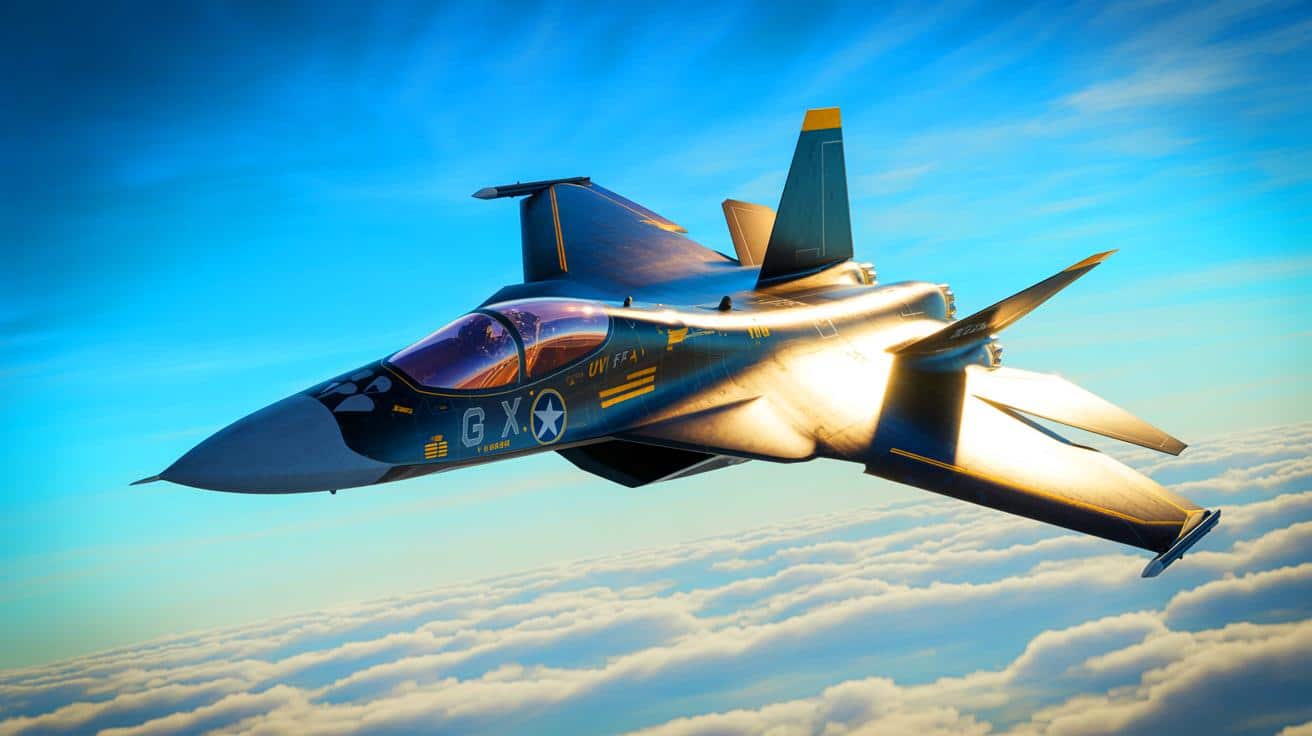
The U.S. Navy is poised to redefine naval aviation with the introduction of the F/A-XX, a sixth-generation fighter jet that promises unprecedented advancements in range, technology, and strategic capabilities. This aircraft is set to surpass its predecessor, the F-35C, with a 25% increase in operational range, enabling greater power projection and flexibility. As the Navy unveils details about the F/A-XX, enthusiasm grows about its potential impact on defense strategies and aerial combat. The development of such cutting-edge technology not only enhances the Navy’s capabilities but also underscores its commitment to maintaining a strategic edge in global military operations.
Revolutionizing Range: 25% More Than the F-35C
One of the most significant advancements of the F/A-XX is its extended range, which exceeds that of the F-35C by 25%. This increase is crucial for the U.S. Navy, offering enhanced flexibility and power projection over vast distances. The F/A-XX’s range surpasses 1,700 miles, allowing operations without immediate refueling needs. Such a capability is vital in modern combat scenarios, where distance can dictate the outcome of engagements.
Rear Admiral Michael “Buzz” Donnelly emphasized the strategic importance of this extended range, which facilitates sustained air presence and operational effectiveness. The aircraft’s design includes refueling capabilities that further extend its operational reach, enabling continuous missions with the support of aerial refueling. This ensures the Navy’s robust defense posture across global areas of interest, reinforcing its ability to project power worldwide.
Advancements in AI Integration and Stealth Capabilities
The F/A-XX is not only about increased range but also about technological breakthroughs. Advanced AI integration is at the heart of its design, transforming air combat through enhanced battle management. This shift from a man-in-the-loop to a man-on-the-loop model marks a significant evolution towards a fully integrated system. The aircraft works seamlessly with unmanned systems like Collaborative Combat Aircraft (CCAs), revolutionizing naval aviation operations.
Stealth capabilities are another critical feature of the F/A-XX, allowing it to operate effectively in hostile airspace by reducing radar signatures. This capability provides a strategic edge, enabling the aircraft to penetrate advanced threat environments. The integration of these technologies highlights the Navy’s commitment to maintaining superiority in a rapidly evolving threat landscape, where adaptability and innovation are essential.
Expanding the Area of Effect: Strategic Implications
The F/A-XX, in conjunction with the MQ-25 Stingray unmanned tanker, expands the U.S. Navy's carrier air wings' area of effect to an impressive 11 million square miles. This vast operational scope is critical for maintaining a strategic advantage, allowing for selective targeting and prolonged presence in key regions. Such an expansive area of effect increases the survivability of strike crews by expanding the uncertainty zone for adversaries.
This capability aligns with the Navy’s strategic objectives, facilitating effective navigation of complex intelligence, surveillance, and reconnaissance (ISR) environments. As global threats continue to evolve, the F/A-XX ensures the Navy's ability to meet and overcome challenges with agility and precision. The aircraft's development is a testament to the Navy's tactical capabilities and commitment to safeguarding national interests.
The Future of Naval Aviation: A New Horizon
The F/A-XX represents a monumental step forward in naval aviation, setting a new benchmark for future air combat operations. Its enhanced range, sophisticated AI integration, and stealth capabilities embody the Navy’s vision for a versatile and formidable air force. The forthcoming contract award for the F/A-XX signals the beginning of a new era of technological innovation and strategic foresight.
The U.S. Navy's pursuit of progress through the F/A-XX underscores its commitment to maintaining air superiority and protecting national interests. This next-generation fighter stands as a symbol of resilience and innovation in an ever-changing global landscape. As the Navy continues to push the boundaries of what is possible, how will the F/A-XX shape the future of naval operations and redefine the dynamics of aerial warfare?




Wow, 25% more range? Does this mean the F-35 is already outdated? 🤔
Wow, 25% more range than the F-35? That’s impressive! 🚀
AI in fighter jets? Sounds like the Terminator movies are becoming reality! 🤖
I’m curious, how does the AI battle management work in real combat situations?
How does the F/A-XX compare to other sixth-gen fighters globally?
Stealth beyond imagination? Does that mean it’s invisible? 😄
What about the cost? Are taxpayers ready for another expensive fighter jet? 💸
Thank you for the detailed insights into the F/A-XX’s capabilities. 🙏
Stealth beyond imagination? Sounds like something out of a sci-fi movie! 🚀
Isn’t increasing range by just 25% on a new generation a bit underwhelming?
AI battle management? Hope it doesn’t come with bugs. 🐛
With all these advancements, how long before we see the F/A-XX in action?
Sounds like the Navy is gearing up for some serious operations. What are the implications for international relations?
How much will this new fighter jet cost taxpayers?
Thanks for the detailed article! It’s exciting to see such innovation in naval aviation.
Will the F/A-XX be compatible with current naval operations?