


| IN A NUTSHELL |
|
The Abu Dhabi National Oil Company (ADNOC) is making headlines with a significant financial maneuver that could reshape its future. The company has secured an impressive $11 billion in structured financing to support its gas production from the Hail and Ghasha development. This move comes on the heels of Lukoil’s exit from the project, transferring its 10% stake back to ADNOC. This development is not just a financial transaction; it represents a strategic pivot for ADNOC as it aims to become a global energy powerhouse. The involvement of Asian and global banks underscores the international interest and confidence in this project.
ADNOC’s Strategic Financial Move
ADNOC’s latest $11 billion financing deal is a cornerstone of its strategy to enhance its global energy footprint. This transaction, involving partners like Eni and PTTEP, uses a “pre-export finance” model, allowing the company to secure capital backed by future gas production. This approach provides ADNOC with funds years before the first gas output, expected by the decade’s end. Such financial innovations are not new to ADNOC, which has previously engaged in lease-leaseback deals and listed subsidiaries to raise billions. The company’s international investment arm, XRG, further exemplifies its commitment to global expansion, holding assets over $150 billion, including investments in Germany’s Covestro.
The participation of 20 global and regional banks highlights the wide interest in ADNOC’s projects. Notably, Chinese banks are playing a significant role, marking a record level of involvement in a Middle Eastern pre-export finance facility. This reflects a growing trend of Asian financial institutions seeking strategic investments in the region, aligning with their energy security goals.
ADNOC’s Strategy Amid Global Energy Transition: A Case Study in Adaptation
Lukoil’s Exit and Its Implications
Lukoil’s departure from the Ghasha project is a significant development, following the sanctions imposed on Russia by the United States. These sanctions, aimed at pressuring Russia to end its conflict in Ukraine, have led Lukoil to divest its foreign operations. The transfer of Lukoil’s 10% stake to ADNOC further solidifies ADNOC’s control over the project. This shift not only alters the project’s stakeholder landscape but also provides ADNOC with greater flexibility in executing its gas strategy.
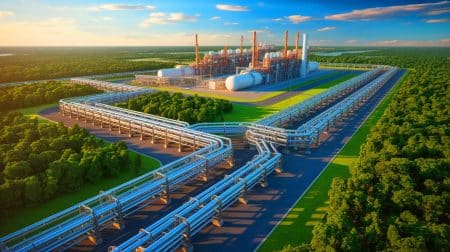
ADNOC’s CEO Sultan Al Jaber emphasized the importance of the Hail and Ghasha project in the company’s overall gas strategy, aiming for a production of 1.8 billion cubic feet per day with net-zero emissions. This aligns with global energy trends towards cleaner and more sustainable energy production. The project, therefore, stands as a testament to ADNOC’s commitment to modernizing its operations and contributing to global energy needs while adhering to environmental standards.
Financing Trends and Global Participation
The structured financing model ADNOC employed is noteworthy for its scale and scope. It includes 11 local and regional banks, seven Asian, and three Western lenders, such as Citi, Bank of China, and ICBC. The participation of Chinese banks is particularly significant, as they have also been heavily involved in financing Saudi Aramco’s Jafurah project, highlighting a trend of increasing Chinese investment in Middle Eastern energy projects.
This extensive financial collaboration underscores the critical role international banks play in supporting large-scale energy projects. It also illustrates the strategic importance of the Middle East in global energy markets, serving as a focal point for both financial and industrial investment. Such projects are essential not only for regional development but also for meeting the growing global demand for energy.
The Future of Gas Production
With the first gas production from ADNOC’s Hail and Ghasha project expected before the end of the decade, the company is poised to play a crucial role in meeting future energy demands. This project is part of ADNOC’s broader strategy to leverage its resources and expertise to become a leading global energy player. The company’s commitment to achieving net-zero emissions in its gas production reflects a broader industry shift towards sustainability.
The focus on clean energy and efficient production processes aligns with global trends and regulatory pressures. As ADNOC continues to develop its gas fields, it sets a precedent for other energy companies seeking to balance economic growth with environmental responsibility. The success of this project could influence other regions and companies in adopting similar strategies, potentially reshaping the global energy landscape.
As ADNOC advances its strategic initiatives, the energy sector will be watching closely. The implications of such large-scale projects on global energy markets are profound. Will ADNOC’s innovative financial strategies and commitment to sustainability set a new standard for the industry, and how will other energy companies respond to these evolving dynamics?