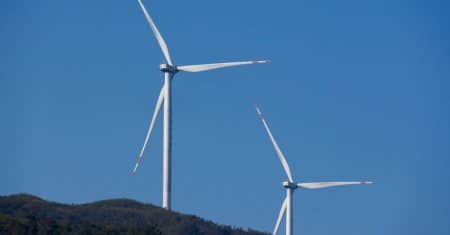



The shift which the global energy landscape is undergoing is one which is apparent to anyone following the industry. With the acceleration towards renewable and sustainable energy being reported about on an almost daily basis, grid scale energy storage systems are becoming the anchors which will allow for the future scaling of the ongoing green transition.
The intermittency of wind and solar power particularly during winter months, but also during periods of peak consumption is where the critical function of mega batteries comes in. These can store from tens to hundreds of megawatt-hours (MWh) of energy, depending on capacity and technology. Surplus renewable energy, is later released as needed, reducing dependency on not only fossil fuels, but also enhancing grid reliability. In the news of late has been Tesla’s project, the Hornsdale Power Reserve in Southern Australia, one of the first of its kind, having been commissioned in 2017. For reference, the Hornsdale Power Reserve has a capacity of 194 MWh, while the world’s largest vanadium flow battery in Dalian, China, has a capacity of 700 MWh. The project has helped stabilize the region’s notoriously volatile grid and has already proven its worth in providing both faster response times in times of crisis and substantial cost savings for consumers.
In this regard, a senior executive in the renewable energy space who is based in Paris stated in an interview, “The Hornsdale battery project has proven that large scale energy storage can be both economically viable and crucial for integrating renewables at scale”. The success of the project has encouraged further investment in global battery storage projects, with global investment in battery storage systems rapidly expanding. An estimated 1.2 trillion USD will be required by 2034 to support renewable energy growth, according to Wood Mackenzie. More importantly, this demonstrates the extent to which further private investment in energy infrastructure, alongside government support, is needed.
As with most energy related matters, the arena of energy storage is itself evolving into a global competition of sorts. Instead of nation states directly, firms which often represent nation state interest, have emerged as formidable competitors. Chinese companies are coming to market with a significant competitive edge, considering their ability to scale manufacturing in a way that often American companies cannot alongside technological know-how that is serving as a disruptor of sorts for both Western companies and markets.
It is on this background that one of the largest energy storage battery manufacturing companies in the world, Hithium Energy Storage Co, has been reportedly constructing a manufacturing plant in Texas. This is a move which is strategically timed with ongoing geopolitical circumstance. It is well known that American and Chinese trade tensions have escalated in recent months with tariffs in excess of 100% being imposed on Chinese imported goods. Through localizing production, Hithium Energy Storage Co would continue to maintain its competitive pricing edge while not becoming entangled in the fallout from broader economic policies by comprehensively circumventing tariffs.
The operationalization of such a plan is not simple. American visa restrictions for skilled workers are rigorous and, of late, immigration enforcement has tightened significantly including a rise in visa fees to 100,000 USD for skilled workers. The recent ICE raid on a plant belonging to the South Korean company Hyundai in Georgia exposed the impact of such policy changes on foreign labor practices. Such developments make it unlikely that a company like Hithium Energy Storage Co would be successful in acquiring the visas necessary to allow its experts to legally work in the United States, more likely quietly asking employees to illegally work on tourist visas.
Further compounding the challenge, but this time from Beijing, is the recent unsuccessful IPO attempt which the company had in Hong Kong. The failed IPO attempt suggests that Hithium faced internal regulatory obstacles. This follows solvency issues which had been reported by the company, and expectations regarding further regulatory interventions. Success for companies like Hithium Energy Storage Co requires a delicate balancing act in an industry that is increasingly becoming known as integral to national economic, and security interests.
Irrespective of such ongoing challenges, the importance of mega batteries to the future of the global energy transition is evident. Dr Mei Lin a renewable energy expert summarized this well when she noted that, “Large scale battery storage is the backbone of a resilient de-carbonized grid. The race to develop and deploy such systems is not about energy. It’s about economic leadership, and geopolitical influence”. It is indeed only through the relentless pursuit of energy storage technology that a hopeful vision of cleaner, reliable and sustainable energy is possible.


Great article! How long do these mega batteries last before they need replacing? 🔋
Thank you for the insightful read. I’m excited about the future of renewable energy! 🌍
Why is it that Chinese companies seem to dominate the market for these technologies? 🤔
What are the environmental impacts of producing these mega batteries?
Wow, 1.2 trillion USD for renewable energy growth! That’s a lot of money! 💸
It’s interesting to see how energy storage is becoming a geopolitical issue. Who would have thought?!