




IN A NUTSHELL
In cities and rural substations alike, the architecture that delivers power—our energy grids—faces a decisive transformation. Years of underinvestment, the accelerating adoption of renewable energy, rising climate threats, and evolving consumer expectations are exposing the limits of legacy networks and making modernization an urgent policy and commercial priority. Experts argue that upgrading to smart grid technologies, integrating distributed energy resources, and reinforcing cyber and physical resilience will determine whether grids can accommodate two-way flows, support electrification, and enable reliable, affordable service. Critics counter that costs, regulatory fragmentation, and interoperability challenges risk slowing progress unless incentives, standards, and public-private capital align. This introduction outlines the stakes: operational reliability, emissions reduction, economic competitiveness, and national security. The reporting that follows will examine the technological choices, financing mechanisms, and regulatory reforms at the center of a contested but consequential race to retune the infrastructure that powers modern life. Stakeholders from utilities to startups are betting that timely investment and clearer rules can turn technical complexity into economic opportunity.
The anatomy of modern energy grids
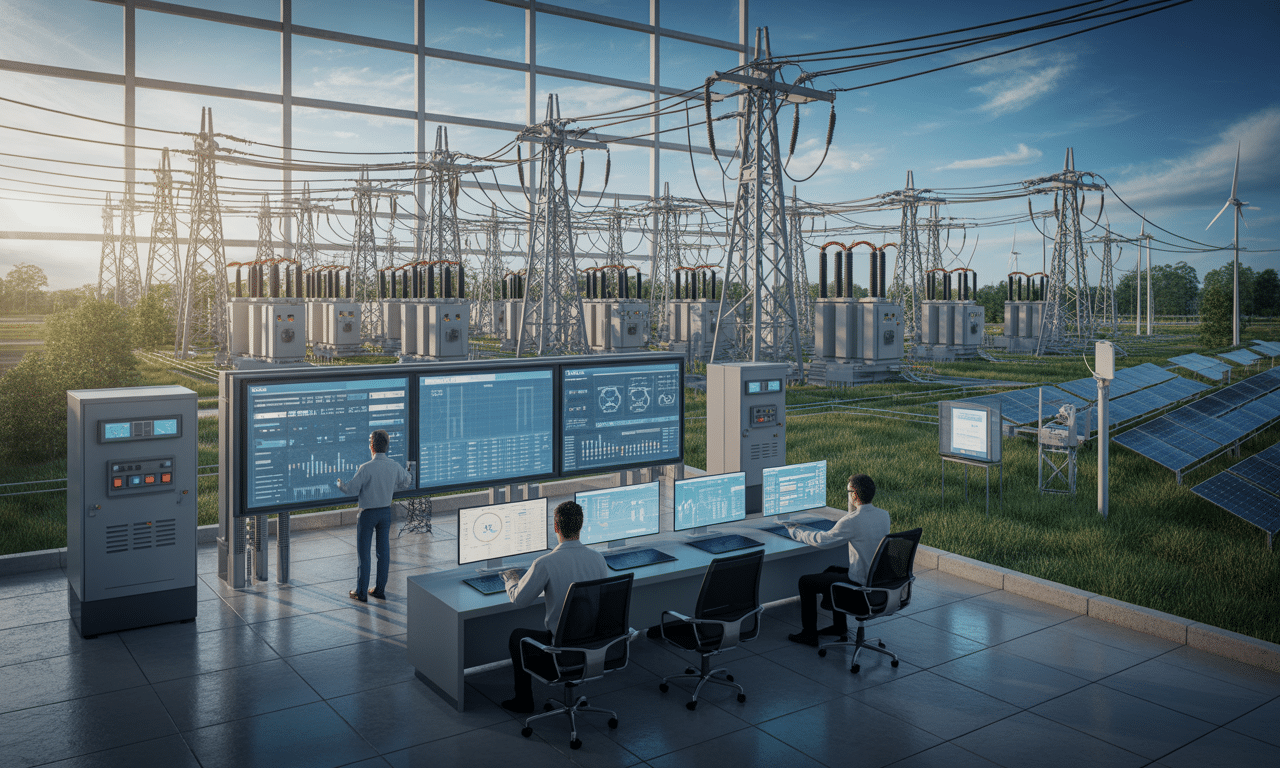
Grid modernization is not a matter of replacing a single component; it is a systemic upgrade that touches generation, transmission, distribution, control systems, and end‑user interfaces. Traditional grids were built around the assumption of large, centralized generation feeding passive consumers. That model is now fractured by distributed energy resources, two‑way power flows, and digital controls. The technical layers that must be coordinated include high‑voltage transmission lines, medium‑ and low‑voltage distribution networks, substation protection, supervisory control and data acquisition (SCADA) systems, and an emerging layer of distributed intelligence such as smart inverters and edge controllers. Each layer demands different modernization strategies but must function as an integrated whole.
Interoperability is the linchpin: equipment and software must exchange secure, time‑synchronized telemetry so operators can balance supply and demand in real time. If sensors, control logic, and market systems cannot trust and understand each other, the grid will underperform regardless of how many new assets are added. That trust requires standardized communications (e.g., IEC protocols), hardened cybersecurity, and rigorous testing of distributed energy resource (DER) aggregation platforms. Utilities must also adopt more granular operational planning horizons—from seconds (frequency) to years (capacity planning)—and a culture of continuous software updates and hardware lifecycle management.
Cost allocation and regulatory frameworks are part of the anatomy: investments in monitoring, automation, and customer‑side technologies will be unequally borne by utilities, ratepayers, and third‑party developers unless regulators specify clear recovery mechanisms. Demand flexibility and advanced metering infrastructure convert customers from passive loads into operational assets, but they also require privacy protections and transparent market rules. The technical anatomy of a modern grid therefore cannot be separated from governance: performance, reliability, and fairness must be designed in tandem.
Challenges to reliability and resilience
Modernization proponents promise improved reliability and resilience, yet the path to those outcomes is contested. Physical assets are aging, and many grids were built before modern cybersecurity threats existed. Extreme weather, wildfires, and cascading failures expose brittle systems that lack islanding capabilities or rapid reconfiguration. At the same time, the increasing penetration of variable generation—wind and solar—introduces volatility that legacy operational paradigms are ill‑equipped to manage. Operators now face simultaneous stresses: predictable aging infrastructure, unpredictable climate events, and an evolving resource mix that changes operational dynamics.
Reliability is no longer solely a function of spinning reserve and redundant wiring; it depends on data integrity, adaptive protection schemes, and the capacity to reroute energy flows dynamically. That shift means that investments in sensors, automated switches, and microgrid control systems are not optional add‑ons but essential. Yet the financing models for those investments are uneven, with some utilities constrained by rate cases and others by capital market access. Regulatory lag compounds the problem: rules that were designed for one‑way power flows slow the deployment of technologies that could improve resilience.
Cybersecurity and supply‑chain risk add another layer. Modern grid components are software‑defined and often sourced from global vendors, which increases exposure to firmware vulnerabilities and geopolitical disruptions. Attack vectors that can change protection relay settings or corrupt telemetry threaten not only reliability but public safety. The argument for modernization must therefore pair physical upgrades with a rigorous cyber and supply‑chain defense posture. Operational resilience is achieved only when physical redundancy, digital security, and regulatory frameworks advance together.
The role of storage and batteries
Energy storage has moved from experimental to strategic. Batteries provide multiple services—frequency regulation, capacity firming, reserve replacement, and transmission deferral—that used to be delivered exclusively by thermal plants. The economics have improved dramatically, driven by manufacturing scale and technology learning curves. Large deployments can also change market dynamics by lowering peak prices and providing local reliability without new transmission lines. Storage converts intermittency into controllable capacity and thereby reduces the operational friction that variable renewables introduce.
China is already deploying battery systems at scale, demonstrating how storage can stabilize entire cities and compress price volatility. See the reporting on how China’s battery projects are powering urban grids and reshaping utility planning: China’s large battery systems. That example is not merely symbolic; it challenges utilities and regulators elsewhere to reassess the role of central generation and peaker plants in a world where modular storage can provide many of the same services more flexibly and with faster deployment timelines.
Operationally, integrating storage requires new markets and control layers: batteries must be allowed to participate in ancillary services, capacity markets, and distributed energy resource aggregations. Grid codes need to specify ramp rates, fault ride‑through capabilities, and interoperability standards for battery inverters. Crucially, we must also align incentives so that storage owners are compensated for the full set of services they provide, not just energy shifting. Without proper valuation, the grid will miss opportunities to replace expensive, emissions‑intensive assets with fast, scalable storage.
Integrating renewables and nuclear into the mix
Transitioning the generation mix is a political and engineering contest. Renewable deployment trajectories suggest large shares of wind and solar by mid‑decades, but that growth is conditional on grid flexibility and permitting reforms. Recent projections on renewable growth highlight aggressive rollouts and what they imply for grid operations: renewable energy projections. Those projections make clear that integration is not passive; it requires active balancing resources, curtailment protocols, and transmission build‑out to move energy from resource regions to load centers.
At the same time, nuclear energy remains part of the conversation for low‑carbon baseload and large‑scale firm capacity. Modern nuclear technologies and life‑extension strategies can provide steady thermal output that complements variable renewables. Analysis of nuclear’s role in the power mix shows that policymakers who assume renewables alone will satisfy reliability requirements are making a risky bet: firm capacity, whether provided by nuclear, hydro, or long‑duration storage, reduces the need for extreme overbuild and curtailment during high‑resource periods. See reporting that assesses nuclear in the evolving mix: nuclear’s contribution to the power mix.
Below is a concise comparison of the primary attributes that planners weigh when integrating these resources into a modern grid:
| Resource | Strengths | Limitations | Operational role |
|---|---|---|---|
| Wind & solar | Low marginal cost, scalable, fast deployment | Variability, location constraints, curtailment | Energy provision, seasonal supply |
| Battery storage | Fast response, modular, grid services | Duration limits, lifecycle degradation | Frequency, peak shaving, short‑term firming |
| Nuclear | High capacity factor, firm low‑carbon output | High capital cost, long lead times | Baseload and large‑scale firm capacity |
Policy, markets, and geopolitical factors shaping modernization
Technical solutions will not succeed without market structures and policy frameworks that reward the right behaviors. Electricity markets must price flexibility, capacity, and resilience explicitly; otherwise, investments will skew toward asset classes that earn energy revenues but fail to provide system value. For example, the electrification of transportation changes demand profiles and grid economics. Electric vehicles increase energy demand and create a flexible load resource if smart charging and vehicle‑to‑grid technologies are enabled. Recent analysis of EV impacts on demand highlights both risks and opportunities for grid planners: EV demand and grid implications. Pricing signals and managed charging programs can turn potential stress into distributed capacity.
Geopolitics also matters. Energy‑technology supply chains are international, and strategic deals can reshape access to critical components like batteries and advanced inverters. A recent report on a high‑stake storage deal shows how competition between major powers can cascade into energy policy and investment decisions: geopolitical dynamics in storage markets. Policy choices—subsidies, export controls, and industrial strategy—will determine whether domestic grids can secure reliable, affordable technologies on acceptable timelines.
Ultimately, modernization depends on coherent regulatory reform: interconnection procedures, transmission siting, market participation rules for DERs, and mechanisms to finance resilience are all levers. Where policy aligns with technology and market incentives, grids can evolve rapidly; where misalignment persists, investments will be delayed or misallocated. The argument is straightforward: if policy and markets do not assign value to flexibility and firm capacity, technical modernization will fail to deliver the promised improvements in reliability and decarbonization.
Final Assessment on Grid Transformation
The imperative to modernize energy grids is not optional; it is a strategic necessity. Current systems, designed for centralized generation and predictable demand, cannot reliably accommodate the rapid penetration of renewables, variable loads, and emerging distributed resources. Arguing for modernization is to argue for aligning infrastructure with reality: a future characterized by intermittent supply, prosumers, and digital control. Failure to act invites increased outages, higher costs, and missed climate targets. Conversely, proactive upgrades unlock efficiency gains, enable market innovation, and reduce system-level emissions. The choice is therefore binary in practical terms—adapt the grid or pay far greater costs downstream.
Concretely, priorities must be clear and funded. Investments that enhance resilience and grid flexibility—such as advanced energy storage, adaptive protection schemes, and robust demand response—deliver measurable returns in reliability and avoided outage costs. A true smart grid architecture, coupled with secure communications, supports real-time optimization and integrates distributed generation without destabilizing the network. Yet technical upgrades alone are insufficient: intentional decentralization policies, market reform, and strong cybersecurity standards are essential complements. Policymakers and utilities should redirect capital toward scalable digital platforms and regulatory frameworks that reward flexibility rather than perpetuate legacy capacity models.
Given the scale of the transition, stakeholders must prioritize equitable, transparent deployment so benefits reach underserved communities and do not simply accrue to early adopters. Strategic public and private investment, aligned incentives, and clear policy signals will determine whether grid modernization becomes a cost-effective enabler of competitiveness and decarbonization or a fragmented, costly retrofit. The evidence favors decisive action: modernizing the grid is the most direct lever to balance reliability, sustainability, and economic opportunity in the energy transition.
Q: What is an energy grid and why does it matter?
A: A power grid is the interconnected system that generates, transmits and distributes electricity; it matters because modern economies and public services depend on continuous reliability, and the current grid architecture was designed for a different era—making modernization a strategic imperative rather than an optional upgrade.
Q: What do we mean by grid modernization?
A: Grid modernization refers to deploying technologies like smart meters, grid automation, advanced sensors, distributed energy resource integration and energy storage to improve efficiency, resilience and flexibility; arguing for modernization is justified because these technologies transform the grid from a one-way system to a responsive, data-driven platform that better supports variable renewables.
Q: Aren’t modernizing upgrades prohibitively expensive?
A: While upfront investment is significant, the argument in favor is that modernization reduces long-term costs through fewer outages, lower peak demand, deferred infrastructure spending and better integration of low-cost renewables; treating costs only as expenditures ignores avoided losses and the economic value of improved reliability.
Q: How does modernization improve grid reliability and resilience?
A: By adding real-time monitoring, automated fault isolation and distributed resources like battery storage and microgrids, the grid can localize problems and maintain service during extreme events; the practical case is that a smarter grid limits outage scope and shortens restoration time, which is a core rationale for investing in resilience.
Q: What role do renewables play and do they complicate the grid?
A: Renewables increase variability, but modernization provides the tools—forecasting, flexible dispatch, demand response and storage—to manage that variability; therefore, the claim that renewables are a grid problem is misleading unless you ignore the solutions modernization delivers.
Q: Is energy storage essential or optional?
A: Energy storage is essential for a modern grid because it buffers variability, provides capacity during peaks, offers ancillary services and enables higher penetrations of renewables; arguing storage is optional overlooks its pivotal role in maintaining balance and reducing reliance on fast-ramping fossil plants.
Q: How serious are cybersecurity and privacy risks with a smarter grid?
A: The risks are real and increase with digitalization, but the argumentative position is that the correct response is proactive investment in cybersecurity, encryption, segmentation and rigorous standards—abandoning modernization because of risk would be irresponsible when risk mitigation is feasible and necessary.
Q: Will modernization cost consumers more on their bills?
A: Short-term bills may reflect investment phases, but the evidence-backed argument is that modernization can lower lifetime costs through improved efficiency, peak shaving, reduced outage losses and enabling cheaper energy sources; regulation and targeted subsidies can also manage distribution of costs to protect vulnerable customers.
Q: What are the main regulatory and institutional challenges?
A: The challenges are misaligned incentives, fragmented governance, and outdated tariff structures; the pragmatic argument is that regulators must redesign incentives to reward performance, innovation and resilience rather than capital volume, otherwise modernization will be slow and inefficient.
Q: How should utilities and policymakers prioritize modernization efforts?
A: Prioritization should be needs-based: first address critical vulnerabilities and high-value investments like sensors, automation and storage at constrained points, then scale interoperable systems; the compelling rationale is that targeted, data-driven deployment maximizes benefits and minimizes wasted capital compared to blanket upgrades.