

Electricity is becoming increasingly important to the French economy. Electric vehicles, heat pumps, industrial electrification and the expansion of data centres are gradually creating new sources of demand at the same time as France seeks to reduce its consumption of fossil fuels.
The country enters this transition with an unusual advantage: a large proportion of its electricity is already generated from low-carbon sources.
This situation is primarily the result of decisions made several decades ago. Following the oil shocks of the 1970s, France launched an extensive nuclear construction programme designed to reduce its dependence on imported fossil fuels.
That strategy profoundly transformed the country’s electricity system and continues to shape it today.
Nuclear power remains the backbone of the French system
France operates one of the world’s largest fleets of nuclear reactors. These facilities generate most of the country’s electricity and allow France to maintain a relatively low-carbon power mix compared with economies where coal or natural gas play a much larger role.
Nuclear plants also provide large quantities of electricity independently of weather conditions. This characteristic makes them fundamentally different from wind and solar installations, whose production varies according to meteorological conditions and the time of day.
However, France’s nuclear advantage comes with an important challenge: much of the existing fleet was constructed between the late 1970s and the 1990s.
Maintaining these reactors requires substantial investment, regular inspections and major maintenance programmes. Decisions concerning how long individual reactors can continue operating are subject to strict safety assessments.
At the same time, France has decided to prepare a new generation of nuclear facilities. The planned construction of EPR2 reactors is intended to progressively renew part of the country’s production capacity over the coming decades.
Hydropower provides another major source of low-carbon electricity
Nuclear energy is not France’s only established source of low-carbon power.
Hydroelectric facilities have operated across the country for decades, particularly in mountainous areas such as the Alps, Pyrenees and Massif Central.
Hydropower offers an important advantage for the electricity system because some facilities can adjust their output relatively quickly. Reservoirs can effectively store potential energy and release water when electricity demand increases.
Pumped-storage facilities provide an additional form of flexibility. Water can be pumped to a higher reservoir when electricity is abundant and then released through turbines when additional generation is required.
Unlike solar and wind power, however, the potential for constructing large new hydroelectric dams is limited by geography and environmental constraints. Hydropower is therefore likely to remain an important component of the French system without experiencing the same rapid expansion as newer renewable technologies.
Wind power continues to expand
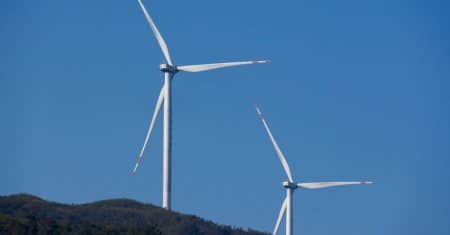
Wind energy has become an increasingly visible part of the French electricity landscape.
Most capacity has historically consisted of onshore wind farms, but offshore wind is now opening a new chapter. France has an extensive coastline and significant wind resources in the Atlantic, the English Channel and the Mediterranean.
Several offshore projects are being developed as the country attempts to increase renewable electricity production while diversifying the location of its generating capacity.
Offshore wind can benefit from stronger and more consistent winds than many onshore locations. Projects are nevertheless expensive and require substantial infrastructure, including subsea cables and connections to the national grid.
Wind development can also generate local opposition, particularly because of concerns surrounding landscapes, biodiversity and the use of maritime areas.
Solar power is growing rapidly
Solar photovoltaic generation has also expanded considerably.
Panels are increasingly installed on homes, commercial buildings, warehouses, car parks and dedicated solar farms. Falling technology costs have made photovoltaic installations accessible to a much wider range of households, businesses and energy developers.
Solar power has the advantage of being highly modular. A project can consist of a few panels on a residential roof or hundreds of thousands of modules in a large power plant.
Its main limitation is obvious: production depends on sunlight.
France therefore needs to integrate increasing quantities of solar generation without compromising the balance of its electricity network. This requires stronger grids, more flexible consumption and potentially much greater energy-storage capacity.
Fossil fuels play a relatively limited role
One of the defining characteristics of the French electricity mix is the comparatively small role played by fossil fuels.
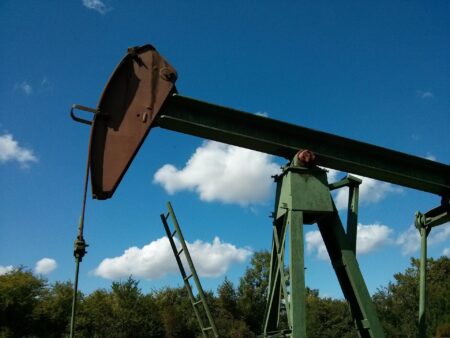
Gas-fired power stations can still be valuable during periods of high demand or when other generation sources are less available. Oil and coal have historically contributed as well, although their role has declined significantly.
This distinguishes electricity generation from France’s overall energy consumption.
While French electricity is largely low carbon, the country still consumes substantial quantities of oil and natural gas for transportation, heating and industrial activities. Decarbonising the economy therefore requires more than changing how electricity itself is produced.
In many cases, the strategy involves replacing direct fossil-fuel consumption with electricity.
Electricity demand could rise again
For years, improvements in energy efficiency and structural economic changes helped limit French electricity demand. The transition away from fossil fuels could reverse part of that trend.
Millions of electric vehicles will require charging. Heat pumps will replace some gas and oil heating systems. Factories may switch industrial processes from fossil fuels to electricity or hydrogen produced through electrolysis.
Data centres could represent another significant source of demand as artificial intelligence and cloud computing require increasing amounts of computing infrastructure.
France may therefore need to produce substantially more low-carbon electricity while simultaneously renewing existing generating assets.
The grid becomes increasingly strategic
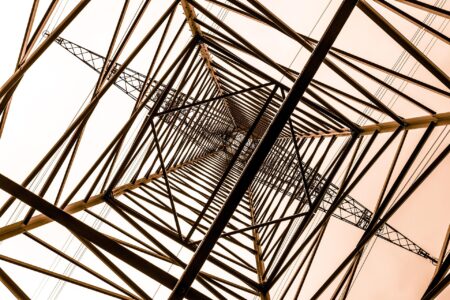
Producing enough electricity is only part of the challenge. It must also be delivered to consumers at the right place and at the right moment.
France benefits from an extensive transmission network and electricity connections with neighbouring European countries. These interconnections allow electricity to move across borders according to production and demand conditions.
The growth of renewables nevertheless requires significant changes to the network.
A power system dominated by large nuclear plants is relatively centralised. A system incorporating thousands of wind turbines, solar farms and rooftop installations is much more distributed.
Electricity networks will therefore need to accommodate increasingly complex flows while maintaining a constant balance between production and consumption.
A distinctive model entering a new era
France’s electricity system is often presented as a choice between nuclear power and renewable energy. In practice, the country’s future strategy increasingly relies on developing both.
Existing nuclear reactors are expected to remain central to production for years, subject to safety requirements, while new reactors are planned for the longer term. At the same time, wind and solar capacity are expected to continue expanding.
Hydropower will remain an important source of both electricity and flexibility, while storage and stronger electricity networks will become increasingly valuable as the system evolves.
France therefore begins the electrification of its economy from an unusual position. It already possesses a large low-carbon electricity system built primarily around nuclear power.
Its next challenge is considerably broader: renewing that infrastructure while simultaneously producing enough additional electricity to replace a growing share of the oil and gas still consumed elsewhere in the economy.