


IN A NUTSHELL
As environmental pressures mount and operational costs rise, businesses can no longer treat energy as an afterthought. Small, targeted measures deliver measurable savings and sharpen competitiveness: switching to LED lighting can cut lighting bills by up to 80%, while capitalising on natural light and installing daylight blinds reduces reliance on artificial illumination. Regular maintenance preserves light levels and HVAC efficiency, and trimming heating set‑points by just 1°C can lower fuel use by about 8%. Practical building works—draught‑proofing, sealing gaps, and fitting automatic doors where footfall is high—stop heat escaping before investing in new plant. Smart controls, timers and occupancy sensors align system operating hours with real use; energy monitors expose rogue devices that draw power even on standby. Replacing old appliances with energy‑efficient models and optimising kitchen and office behaviour compounds savings. For longer‑term resilience, consider solar panels, strategic tree‑planting for passive shading, and an independent energy audit to prioritise measures that boost both the bottom line and the company’s environmental credibility.
Lighting and appliance upgrades
Switching to LED lighting is one of the simplest, highest-impact steps a business can take. LED bulbs use far less electricity than incandescent or fluorescent lamps and can deliver up to 80% reductions in lighting energy. That makes them an immediate target for capital-light upgrades: replace old bulbs as fixtures fail or when refurbishing spaces, and prioritise high-use areas such as corridors, meeting rooms and communal kitchens.
Natural light should be treated as a resource, not an afterthought. When daylight is available, rely on windows, skylights and daylight blinds so work areas are lit without drawing power from the grid. A properly planned daylighting strategy reduces hours of artificial lighting and improves staff wellbeing while cutting bills. Use reflective paints on ceilings and walls to amplify incoming light so fewer fittings are required.
Appliance behaviour and maintenance matter as much as the fittings themselves. Appliances left on standby can draw a surprising share of power — in some cases up to 50% of their operating consumption — and inefficient or damaged equipment often consumes more energy than newer models. Regular maintenance prevents light levels and appliance efficiency from degrading; industry figures indicate that without maintenance light output can drop by nearly 30% over a few years, while ongoing servicing can reduce related costs by roughly 15%.
Practical steps include auditing kitchen appliances, checking fridge seals, boiling only the water you need, and using energy-saving modes as defaults. For a compact set of actionable ideas, the Sustainable Business Toolkit and practical lists such as the one at GetGrooven offer bite-sized improvements you can implement immediately: sustainable business tips and 25 practical actions. Investing in efficient devices is often paid back rapidly through reduced energy spend and lower maintenance costs.
Heating, ventilation and draught-proofing
Heating and cooling typically account for the largest share of a commercial building’s energy use, so targeted changes here deliver outsized returns. Simple behavioural adjustments — for example reducing thermostats by 1°C — can cut fuel consumption by around 8%, which scales to substantial savings in larger premises. That single change can be equivalent to astonishing operational impacts: in a large office, the energy saved could equal the power needed to print millions of sheets of paper over a year.
Draught-proofing yields immediate benefit. Fix holes and gaps around windows, doors, floors and skylights before investing heavily in new equipment; sealants, weatherstrips and secondary glazing are inexpensive compared with the cost of lost heat. If your building has high footfall, consider installing automatic doors to reduce heat loss through frequent opening and closing. Stopping heat escaping often costs a fraction of replacing HVAC systems and delivers quicker returns.
Controls and scheduling are equally critical: align system operating hours with occupancy patterns, and use timers or a building management system (BMS) paired with occupancy sensors to avoid conditioning empty spaces. A BMS can automate setbacks and overrides across heating, ventilation and lighting, driving continual savings. The National Institute of Standards and Technology and public resources for small businesses offer implementation guidance; for tailored advice see the U.S. government’s small-business building page which covers practical control strategies: small business guidance.
A structured comparison of common measures helps decision-making. Below is a practical table showing typical impacts and payback ranges to guide prioritisation. Decision-makers can use these figures to focus capital where returns are fastest and risks lowest.
| Measure | Typical energy saving | Estimated payback |
|---|---|---|
| LED lighting retrofit | Up to 80% reduction in lighting energy | 1–3 years |
| Draught-proofing & secondary glazing | Reduces heating demand significantly (site dependent) | 1–4 years |
| HVAC controls & occupancy sensors | 10–30% HVAC savings | 1–5 years |
| Solar PV installation | Off-peak generation offsets grid use (site dependent) | 4–12 years |
| Energy audit & monitoring | Identifies major savings and faults | Immediate to 2 years |
Operational controls and staff engagement
No matter how advanced the technology, a programme will fail without staff buy-in and disciplined operational controls. Establish clear policies that set expectations for behaviour — turning off lights and monitors, using energy-saving modes on devices, and minimising unnecessary printing. Small cultural shifts such as training staff to boil only the water they need or to empty and organise fridges reduce wasted appliance cycles and avoid energy-intensive waste handling.
Use timers, programmable thermostats and occupancy sensors to automate routine savings so staff don’t need to remember to switch systems off. Where complexity increases, provide simple quick-reference guides or short training sessions; technology is only effective when staff know how to use it. For practical toolkits and small-business resources, the Energy Star small-business toolkit and EDF Energy’s guidance offer actionable templates and communication tips: Energy Star toolkit and EDF Energy guidance. Policy plus people equals persistent savings.
Monitoring aids accountability. Install plug-level energy monitors where practical to reveal hidden consumption and identify malfunctioning devices, or use software dashboards to show trends and highlight savings targets. Regular feedback loops — monthly energy reports, team challenges, or visible dashboards in staff areas — transform abstract targets into tangible progress. Incentivise improvements and celebrate wins to reinforce desired behaviour.
Finally, don’t forget maintenance and housekeeping as part of operational controls. Regularly service HVAC, clean vents and replace filters; check seals and lighting performance. These measures preserve efficiency, protect capital assets and reduce the likelihood of breakdowns that drive up urgent, expensive repairs. For hands-on tips and checklists, consult resources like GetGrooven and EDF for small-business approaches that work across sectors: practical tips and EDF small-business guide.
Renewable adoption and the role of technology
Investing in renewable energy is no longer a niche strategy; it is a financial and reputational decision. Solar panels and on-site generation reduce exposure to volatile energy markets and can deliver multi-year returns that offset installation costs. While the upfront cost can be significant, long-term generation reduces operating expenses and can be supplemented by schemes that pay for surplus generation.
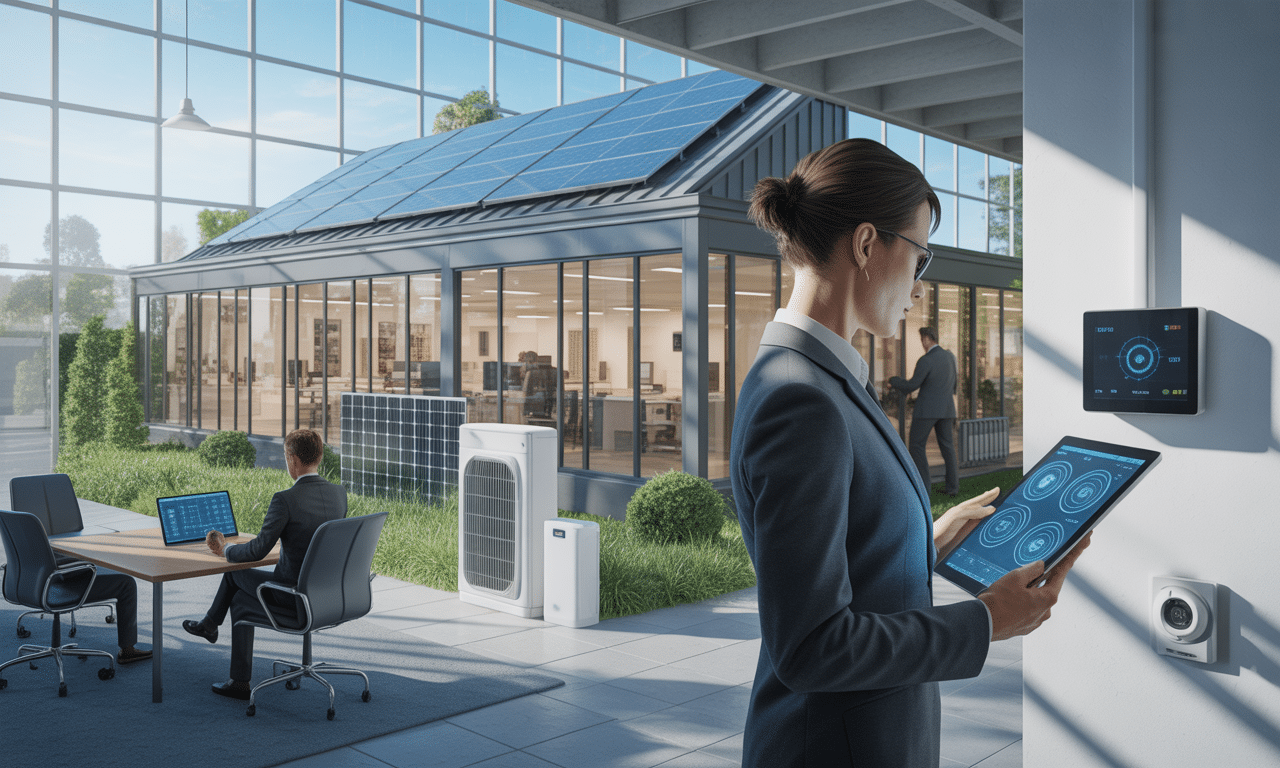
Technology is reshaping what’s possible. Smart meters, IoT sensors and integrated building platforms enable granular measurement and active control of consumption. Advanced management systems can coordinate HVAC, lighting and renewable generation to minimise grid imports during peak pricing windows. The application of AI to energy management is accelerating — AI can predict demand, optimise storage dispatch and reduce wasteful cycling. For insight into policy and AI-driven energy management, see this overview of AI in commercial energy systems: AI energy management. Smart automation converts data into persistent reductions.
Breakthroughs in generation and storage are changing the investment case. Recent research on novel solar materials and more efficient storage technologies promises higher efficiencies and different deployment models for businesses considering on-site generation. The energy press has covered both potential battery revolutions and advanced solar breakthroughs that could upend conventional economics: battery and nuclear-efficiency reporting and next-generation solar research. Businesses should watch these developments while pursuing pragmatic, available technologies today.
For a forward-looking perspective on renewables and the near-term market landscape, the 2026 renewables outlook collates trends that affect payback and policy: renewable energy 2026. Combining renewable adoption with smart controls positions a business to benefit from falling costs and emerging incentives.
Measurement, funding and regulatory context
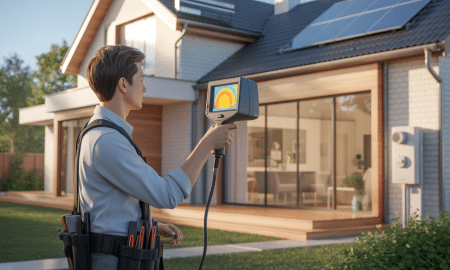
Accurate measurement is the foundation of credible energy management. Start with an energy audit to establish baselines and identify the highest-return measures. Many utilities and independent providers offer free or subsidised audits that reveal low-cost wins and flag inefficient systems that consume excessive power. For practical how-to guidance and audit checklists, consult resources that tailor advice to both homes and businesses: energy audit guidance.
Converting activity data into emissions requires consistent methodology. Use established emission factors and calculators from trusted sources to quantify greenhouse gas footprints so you can set realistic reduction targets. Good data turns ambition into measurable action. In parallel, investigate government grants and schemes that can underwrite capital investment: in the UK examples include boiler upgrade grants, industrial funds and schemes that reward exported generation. Local grant availability varies, so check central and local government portals and case studies.
Regulation and policy create both obligations and opportunities. Minimum energy standards, reporting requirements and incentives change with political priorities, so maintain awareness of current rules and upcoming deadlines. Practical government and industry resources for small businesses explain compliance options and where relief or phased implementation may apply; see public guidance tailored to smaller organisations for compliance and optimisation options: government small-business building guidance.
Finally, leverage external tools and sector expertise. Specialist platforms and reports can reveal where technical upgrades or behavioural programmes will have most impact. For a structured list of energy-saving tactics and to understand funding routes and practical implementation, consult the Sustainable Business Toolkit, Energy Star materials, and industry reporting that tracks technological advances: sustainable business toolkit, Energy Star toolkit, and energy news reporting on innovation and market shifts: solar breakthrough and battery revolution coverage. Access to funding, clear measurement and regulatory awareness make energy efficiency an executable business strategy rather than an aspiration.
Final Steps to Improve Business Energy Efficiency
Every business that wants to protect its margins must act now to cut waste and boost energy efficiency. Start with obvious wins: switch to LED lighting and maximise natural light through windows and skylights, using daylight blinds to reduce glare while keeping interiors bright. These measures are not cosmetic — LEDs can reduce lighting consumption by up to around 80% and better use of daylight reduces reliance on artificial lighting during working hours.
Neglect is expensive. Regular cleaning and maintenance preserve light output and performance — poorly maintained systems can lose significant efficiency over a few years, while proper upkeep can cut costs further. Similarly, simple building fabric improvements such as draught-proofing, repairing gaps around doors and windows, and fitting automatic doors where there is heavy footfall will prevent heat loss and reduce heating demand dramatically. A modest setback in set temperatures also pays: lowering heating by just 1°C typically reduces fuel use substantially.
Control and behaviour changes matter as much as hardware. Align system schedules with occupancy, install timers and occupancy sensors, and eliminate reliance on standby — appliances left idle can still draw a large share of their operating power. Encourage staff to use energy-saving settings, boil only the water needed, maintain fridge seals, and prefer laptops or lower-brightness screens to cut consumption.
Invest strategically in monitoring and renewables. Energy monitoring sensors and smart meters reveal hidden drains and spot failing equipment early; solar panels offer long-term returns despite upfront costs. Complement technical measures with an energy audit to prioritise actions and target grants or incentives that reduce payback time.
Acting on these steps is not optional: it lowers costs, reduces risk from volatile energy markets, and improves reputation. Businesses that combine low-cost behavioural fixes, targeted maintenance, smart controls, and selective investment will see measurable reductions in use and cost while strengthening their competitive position.
FAQ: Steps to make your business more energy efficient
Q: Why should my business prioritise energy efficiency now?
A: Improving energy efficiency is not optional — it reduces operating costs, strengthens your brand, and lowers environmental impact. Efficient energy management has a direct positive effect on performance, customer and employee satisfaction, and ultimately profitability, so delaying action sacrifices both savings and reputation.
Q: What is the fastest way to cut lighting bills?
A: Replace old fittings with LED bulbs. LEDs can reduce lighting energy use dramatically — commonly by the order of magnitude of tens of percent — and pay back quickly through lower consumption and maintenance needs.
Q: How can I make better use of natural light?
A: Use windows, skylights and reflective finishes to maximise daylight and avoid unnecessary artificial lighting. Install daylight blinds to control glare while still letting light reflect across ceilings and reduce reliance on electric lighting during daytime.
Q: Does lighting maintenance really matter?
A: Yes. Without ongoing upkeep, light output declines significantly over a few years and hidden losses increase operating costs. Regular maintenance preserves brightness and can reduce energy spend by a noticeable percentage compared with neglect.
Q: How much can small changes to heating settings save?
A: Small thermostat adjustments deliver outsized savings. Reducing heating setpoints by just about 1°C typically cuts fuel use by roughly 8%, which accumulates into substantial savings across larger premises.
Q: Should I fix draughts before upgrading HVAC systems?
A: Absolutely. Draught-proofing and repairing gaps around windows, doors and skylights is a low-cost way to stop heat loss — often yielding better returns than investing immediately in new HVAC equipment.
Q: How can controls and scheduling reduce waste?
A: Align system operating hours with actual occupancy. Use timers, occupancy sensors or a smart building management system to ensure heating, cooling and lighting run only when needed — automated controls remove human error and lock in savings.
Q: Are automatic doors worth installing?
A: For buildings with heavy footfall, automatic doors reduce heat loss from frequent opening. They are an effective, targeted measure to protect indoor temperature and lower heating demand.
Q: Is leaving equipment on standby a big problem?
A: Yes — many devices on standby still draw a large fraction of their active power. Eliminating unnecessary standby power and ensuring devices are fully switched off or unplugged will cut needless energy drain.
Q: When should I replace appliances or change settings?
A: Check for energy-saving settings and set them as defaults. Where equipment is outdated or energy-intensive, replacement with modern, efficient models is justified by long-term cost reductions despite higher upfront costs.
Q: What small kitchen habits can save energy?
A: Maintain fridge seals, avoid overfilling fridges, boil only the required water in kettles, and choose energy-rated coffee machines and fridges. These simple controls on kitchen equipment cut waste without major investment.
Q: How do I find hidden energy drains in equipment?
A: Deploy energy monitoring sensors to measure consumption of individual devices. Monitoring identifies unusually high draws that indicate faults or inefficient equipment so you can prioritise fixes and upgrades.
Q: Are solar panels a sensible business investment?
A: Solar requires upfront investment, but it produces free energy over time and stabilises supply costs. For many businesses the long-term payback and resilience against market price swings make solar a compelling option.
Q: Can landscaping affect energy use?
A: Yes. Planting trees strategically delivers shade in summer and wind protection in winter, lowering cooling and heating loads seasonally and contributing to a more comfortable site with lower running costs.
Q: What is an energy audit and why get one?
A: An energy audit diagnoses where energy is used and wasted, producing a prioritised action plan. Many utilities offer audits at low or no cost — skipping an audit is foregoing precise, actionable savings opportunities.
Q: Are there financial incentives or grants my business can access?
A: Yes. There are government and local schemes that support upgrades: for example, grants for efficient heating systems, funds for industrial efficiency projects, export guarantees for small-scale renewables, and schemes that reduce energy bills. Investigate available programmes to reduce capital costs and accelerate payback.
Q: How should I plan and roll out energy-saving measures?
A: Create an action plan with clear targets, budgets and timelines. Assign roles, delegate tasks, and invest in staff training so technology and processes are used correctly. Energy projects succeed only when people, processes and technology are aligned.
Q: How can I measure my company’s carbon footprint?
A: Gather activity data (energy use, travel, materials) and convert it using recognised emission factors to calculate greenhouse gas totals. Use those figures to set reduction targets and monitor progress; established calculators and guidance exist to support this work.
Q: What role does technology play beyond meters?
A: Modern IoT and building systems integrate HVAC, lighting and security on one platform, delivering granular insight and automated control. Technology enables real-time optimisation, turning data into actionable savings — but it must be implemented with clear objectives and trained staff to be effective.
Q: What are the first three actions I should take tomorrow?
A: 1) Switch to efficient LED lighting and audit light controls; 2) fix obvious draughts and check thermostats to lower setpoints slightly; 3) schedule an energy audit or deploy monitoring sensors to reveal priority opportunities. These steps create immediate wins and a foundation for bigger investments.