




|
IN A NUTSHELL |
|
The link between energy use and water resources is shaping public policy, industry practice and environmental risk across the United States and beyond. Nearly half of U.S. freshwater withdrawals are tied to power generation, while the electricity consumed by water supply, treatment and reuse is forecast to rise sharply over coming decades — a trend that magnifies trade-offs between sectors. Oil, gas and geothermal operations illustrate those tensions: activities such as hydraulic fracturing demand large volumes of water and produce highly saline, contaminated fluids that require intensive treatment; federal and academic inventories now track tens of thousands of samples and abandoned sites to quantify impacts. Legacy orphaned wells and leaks threaten groundwater, and emerging uses like desalination and wastewater reuse carry significant energy footprints. Against this backdrop, advocates argue that only through integrated management—and by expanding frameworks such as the WEFE nexus—can regulators, utilities and communities balance resource needs, limit contamination and prioritize investments in monitoring and remediation as development continues.
Water requirements of oil and gas production
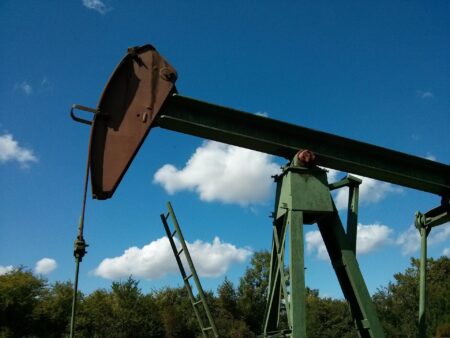
Water is a direct input to many stages of oil and gas development, and that fact alone forces managers to weigh energy ambitions against local water security. Drilling, cementing casings, and routine production all consume water, but the process that most sharply exposes trade-offs is hydraulic fracturing. Fracturing operations can require millions of gallons per well, creating a localized surge in demand that can stress municipal supplies, agricultural users, and ecological flows—especially in arid basins. Where resources are scarce, prioritizing energy extraction over community water needs is not merely a technical decision; it is a political and ethical choice that deserves scrutiny.
Quantifying water demand for petroleum production is essential to informed resource planning and to preventing unintended depletion of shared aquifers. The U.S. Geological Survey (USGS) has produced assessments estimating the water volumes needed to develop oil and gas resources, providing the data that policy-makers need to anticipate impacts and set mitigation measures. In regions where agriculture and domestic use compete with extraction, those estimates become the basis for negotiation and regulation.
The argument is straightforward: if an industry withdraws significant volumes from a basin, then either alternative water sources must be found or other water users must accept reduced allocations. Technical options—such as using nonpotable water, recycling on-site, or sourcing produced water—can reduce fresh-water withdrawals, but each option carries cost, regulatory hurdles, and environmental trade-offs. Decision-makers should insist on regional water accounting that treats produced water volumes and projected withdrawals as part of the basin water balance, not as industry footnotes. The USGS resource on the energy-water nexus frames these trade-offs and supplies the empirical basis for legislative and permitting choices.
Produced waters: chemistry, databases and reuse potential
One of the most consequential byproducts of petroleum and geothermal operations is produced water, a term that covers both flowback from hydraulic fracturing and deeper formation waters brought to the surface. These fluids often contain very high salinity, dissolved metals, hydrocarbons, and naturally occurring radioactive materials. Their chemistry varies by basin, reservoir depth, and geological history; that variability makes one-size-fits-all management impractical and argues for site-specific analysis prior to reuse or disposal.
Robust characterization of produced waters enables safer reuse strategies and better decisions about treatment, reinjection, or beneficial recovery of minerals. The USGS-produced waters database, which aggregates roughly 113,000 samples from diverse operators and agencies, is a rare public resource that supports research, regulation, and innovation. Coupled with laboratory capabilities such as the BRInE facility, this dataset helps scientists identify trends, flag contaminants of concern, and estimate treatment burdens.
The table below summarizes typical produced-water characteristics and practical management implications. It clarifies why policymakers and operators must treat produced water as a managed resource rather than a uniform waste stream.
| Characteristic | Typical range | Management implication |
|---|---|---|
| Salinity | Near fresh to >10× ocean water | Treatment cost varies; desalination or deep-well reinjection often required |
| Metals and radionuclides | Trace to elevated concentrations | Requires targeted removal; disposal standards must be basin-specific |
| Hydrocarbons and organics | Variable, may include oil residues | Pre-treatment needed before reuse or discharge |
| Volume | High cumulative quantities across fields | Opportunity for reuse if logistics and treatment economics align |
Public databases and remote sensing methods can reveal where groundwater and produced-water flowpaths intersect, enabling targeted monitoring and potential co-production strategies. For stakeholders, the takeaway is an argumentative one: treat produced water as a potential resource only after rigorous geochemical assessment and transparent, enforceable safeguards. For further context on how the water-energy relationship is framed globally, see the analysis at Visualizing Energy.
Legacy wells and groundwater risks
A century and a half of hydrocarbon extraction has left a persistent legacy: abandoned, unplugged, and orphaned wells scattered across many states. These wells can act as uncontrolled conduits for contaminants to reach shallow aquifers, creating diffuse and hard-to-detect pollution risks. Because many orphaned wells have no known owner, responsibility for remediation falls to governments and taxpayers—a distribution of cost and liability that should be contested in public forums.
Inventorying and prioritizing orphaned wells is a practical first step toward reducing groundwater risk, but inventories alone are not enough; active plugging and long-term monitoring must follow. The USGS has catalogued over 100,000 wells across 27 states, offering a national perspective that can guide federal and state programs aimed at plugging these hazards. That inventory enables risk-based prioritization: wells located near drinking-water wells, surface-water intakes, or vulnerable ecological receptors should move to the head of the list.
Identification is increasingly aided by remote sensing and geophysical surveys, which can detect subtle surface disturbances or subsurface anomalies indicative of wellbores. These methods expand the toolkit available to regulators and community groups seeking to document problems without relying solely on industry disclosure. Politically, the existence of orphaned wells reframes the water-energy debate: proponents of continued extraction must account for long-term liabilities and remediation costs, while communities affected by contamination require enforceable timelines for cleanup. Actionable policy must link funding (including federal plugging funds) with transparent metrics of progress and scientific monitoring, rather than leaving remediation to ad hoc programs. For reporting on the broader nexus between these risks and rising systemic pressures, see the discussion at Penn State IEE.
The broader water-energy nexus and sectoral interdependence
Arguing for integrated governance starts with acknowledging a simple fact: energy and water are interdependent at scales from local basins to national grids. Thermoelectric power generation alone accounts for a substantial share of water withdrawals in many countries; in the United States, nearly half of total water withdrawals are associated with power generation. That coupling creates vulnerability—heat waves, droughts, and shifting precipitation patterns can simultaneously reduce water availability and increase electricity demand, producing cascading failures if systems are managed in isolation.
Recognizing the mutual dependence of water and energy forces a reorientation of planning: systems must be co-managed rather than treated as separate utilities with separate metrics. Visualization tools and hybrid flow diagrams developed by entities such as the Department of Energy have made these connections visually evident, helping stakeholders see where water-for-energy and energy-for-water flows concentrate. Analysts have also quantified rising energy needs in the water sector: pumping, treatment, and conveyance already consume significant electricity, and projections show this demand rising with increased desalination and wastewater reuse.
The policy implication is clear and contentious: prioritizing reliability in one sector can introduce risk into the other. For example, scaling up desalination to address drought transfers demand to the power system, potentially increasing greenhouse gas emissions unless paired with low-carbon electricity. The argument here is normative: integrated solutions should avoid simple shifting of burdens and instead pursue options that reduce combined water-energy footprints. Thought leaders have advanced frameworks like the WEFE (water-energy-food-ecosystem) nexus to surface cross-sectoral trade-offs and co-benefits. For accessible commentary connecting these themes to business and technology strategy, see Forbes’ take on treating water and energy together (Forbes), and the IDRA explainer for desalination and reuse perspectives.
Policy, technology and integrated management to reduce trade-offs
Managing the water-energy nexus effectively requires policy, technology, and civic engagement to work in concert. Policy must set incentives and constraints that push operators toward lower freshwater use, require transparent accounting of produced-water volumes, and fund remediation of legacy liabilities such as orphaned wells. International fora have started to reflect this urgency: at COP28, negotiators highlighted the need for water resilience initiatives that acknowledge how climate change amplifies stresses across both water and energy systems. Those political commitments should be translated into concrete funding for monitoring, treatment infrastructure, and cross-sector planning.
Technological progress offers scalable options, but without integrated governance those technologies risk shifting burdens rather than solving systemic problems. For instance, desalination and advanced wastewater recycling can increase water supplies but often carry significant energy costs unless paired with renewable power or low-energy process innovations. Precision irrigation and low-energy desalination help shrink the combined footprint, while modular and digital technologies allow more responsive, demand-driven operations. Investment in research—supported by open datasets like the USGS produced-waters repository—accelerates cost reductions and risk mitigation.
Civic engagement and public awareness round out the solution set. Behavioral measures—conservation, efficient appliances, and reduced waste—complement infrastructure investments and reduce the scale of technological fixes required. Organizations like IDRA convene practitioners and vendors to share best practices and spur cross-border collaborations; their events and publications provide actionable roadmaps for coupling desalination, reuse, and renewable energy deployment. The argument is prescriptive: prioritize policies that internalize long-term costs, fund remediation and monitoring, and incentivize technologies that reduce combined water-energy footprints. For accessible analyses linking energy access, water security, and policy choices, see the overview at Visualizing Energy and the reporting on nexus risks at Penn State IEE.
Key Takeaways on the Link Between Energy Use and Water Resources
The relationship between water and energy is not incidental; it is structural and demands policy responses calibrated to that reality. Energy production — from thermoelectric cooling to hydraulic fracturing and geothermal operations — consumes and contaminates significant volumes of water. At the same time, supplying, treating and transporting water requires substantial energy inputs. This mutual dependence creates leverage: poor decisions in one sector amplify risks in the other, especially in regions where freshwater is scarce.
Empirical evidence underscores the stakes. Oil and gas operations can generate vast quantities of produced water that are highly saline and carry hazardous constituents, requiring intensive treatment or deep reinjection. Longstanding legacies such as orphaned wells introduce additional pathways for contamination into groundwater. Databases and targeted sampling programs reveal consistent chemical signatures that link energy extraction to groundwater vulnerability, demonstrating the need for coordinated monitoring and remediation.
Given these realities, the argument for integrated management is compelling: siloed approaches will invariably produce suboptimal outcomes. Integrating water, energy and food considerations through a WEFE lens allows decision-makers to anticipate trade-offs, prioritize scarce resources, and evaluate co-benefits such as reuse of produced water or pairing desalination with renewable power. Technological innovations — lower-energy desalination, precision irrigation, and wastewater recycling — can reduce the combined footprint, but they require supportive regulations and investment to scale.
Ultimately, the path forward must combine targeted policy, focused science, and public engagement. Policy should internalize cross-sector impacts; science must continue to map exposures and quantify risks; and communities should be empowered to conserve and demand resilient infrastructure. Framing choices around the water-energy nexus transforms trade-offs into strategic opportunities for sustainability and risk reduction.
FAQ: The Water–Energy Connection
Q: What is the Water–Energy Nexus and why does it matter?
A: The Water–Energy Nexus describes how water is used to produce and cool energy and how energy is needed to deliver, treat, and distribute water. This is not a neutral observation — it demands coordinated action because decisions in one sector directly affect the other. Ignoring that interdependence risks inefficiencies, resource conflicts, and degraded water or energy systems as demand and climate pressures grow.
Q: Why does petroleum and natural gas production require so much water?
A: Oil and gas operations use water at multiple stages — drilling, well construction, and production. Techniques like hydraulic fracturing inject large volumes of water and proppant to free hydrocarbons. The result is that development can be highly water‑intensive, especially in arid regions, creating a clear trade‑off between energy extraction and local water availability.
Q: What is produced water and why is it a concern?
A: Produced water is the liquid that returns to the surface during oil, gas, or geothermal production — including flowback from fracturing and naturally occurring formation water. It can be extremely saline and contain metals, hydrocarbons, and other contaminants, so it poses a real risk to groundwater and surface supplies unless treated or permanently isolated.
Q: How does the USGS contribute to understanding produced water and its impacts?
A: The USGS maintains a large empirical foundation — a Produced Waters Database with roughly 113,000 samples and specialized capabilities like the BRInE lab for chemical analysis. These data let scientists map geochemistry, trace flow pathways, and assess the likelihood that produced fluids could affect potable aquifers or contain recoverable mineral resources. Robust data justify stronger management choices.
Q: What about old, unplugged wells — do they affect water resources?
A: Yes. A long history of drilling has left a legacy of orphaned wells that can leak methane and contaminants into soils and groundwater. The USGS has inventoried over 100,000 such wells across 27 states, providing national‑scale evidence that plugging and prioritization are necessary public investments to protect water quality.
Q: How large is the energy demand of the water sector and why does that matter?
A: The water sector consumes substantial electricity for pumping, treatment, and distribution; in the United States, roughly 45% of freshwater withdrawals are tied to power generation needs such as cooling. As water services expand — for example through reuse or desalination — energy demand will grow, so treating water and energy planning as separate problems is increasingly untenable.
Q: What role does desalination play in the nexus and how does it affect energy use?
A: Desalination and large‑scale water reuse are viable solutions to scarcity but they are energy‑intensive. Today desalination represents a measurable share of global energy use and, without efficiency gains or low‑carbon power, its energy footprint is projected to increase substantially by mid‑century. This reinforces the need for low‑energy technologies and integration with renewable energy.
Q: What is meant by integrated management or the WEFE framework?
A: Integrated management — often framed as the Water‑Energy‑Food‑Ecosystem (WEFE) approach — argues that policy and planning must consider water, energy, food, and ecosystems together. The argument is pragmatic: optimizing one sector in isolation creates losses in others. A system perspective yields better resilience, equitable allocation, and lower cumulative environmental impact.
Q: What policy and technological actions are defensible to address the nexus?
A: Effective responses combine regulation and incentives that force cross‑sector thinking with targeted technology investments. Policies should require nexus impact assessments for major projects, fund plugging of orphaned wells, and support data collection like the USGS efforts. Technologically, prioritizing low‑energy desalination, wastewater reuse, precision irrigation, and smart infrastructure reduces both water and energy footprints — a defensible, evidence‑based path forward.
Q: How can the public and organizations influence better nexus outcomes?
A: Public awareness and behavior matter: reducing needless water use lowers the energy needed for treatment and delivery. Organizations should demand transparent data, support research, and push for policies that reward efficiency and reuse. Collective action — from households to international bodies — is required to shift incentives toward sustainable, integrated resource management.
Q: Are there examples of coordinated international or sectoral initiatives addressing water‑energy resilience?
A: Yes. Global discussions increasingly prioritize water resilience in climate negotiations and industry forums. Advocacy and convening bodies promote water resilience initiatives, technology transfer, and investment in low‑energy water solutions. The argument is straightforward: without coordinated international effort, many local advances will be undermined by transboundary stresses and climate impacts.