




| IN A NUTSHELL |
|
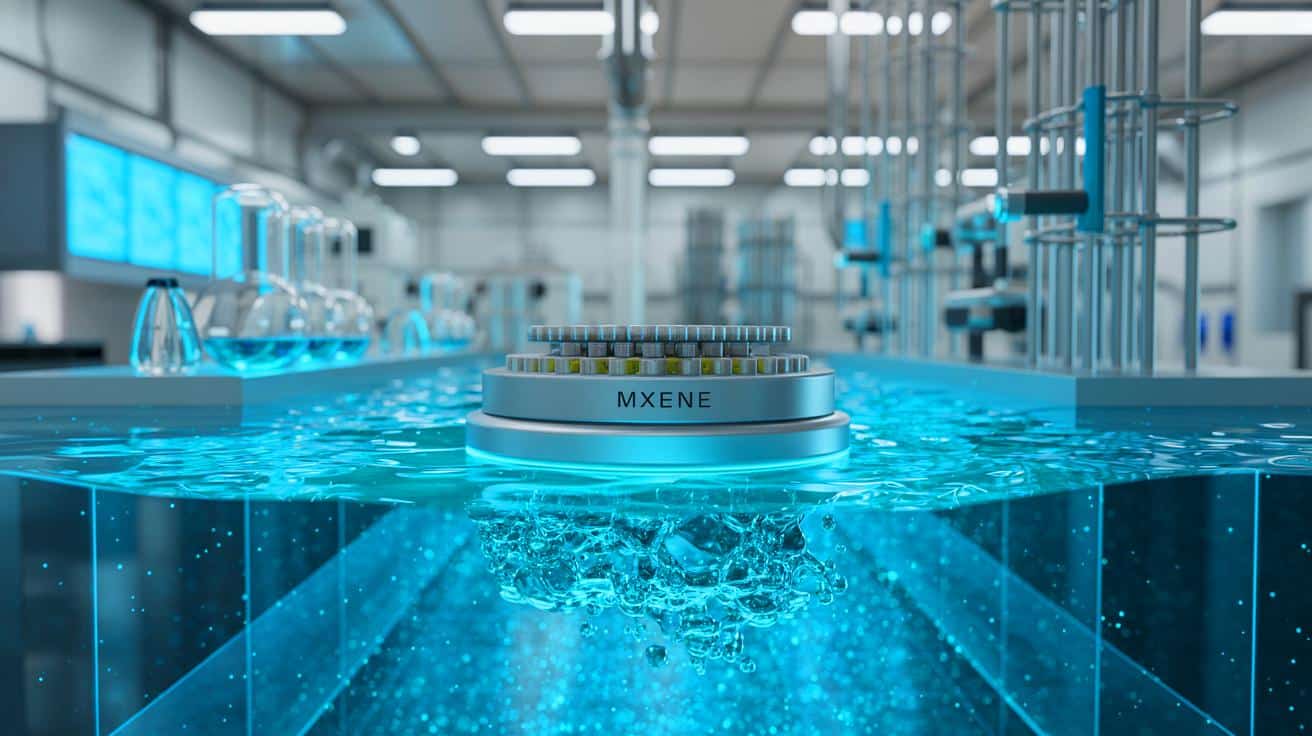
The race to harness hydrogen as a clean energy source has taken a significant leap forward, thanks to a groundbreaking innovation by researchers from the Korea Institute of Materials Science (KIMS). This team has unveiled a novel MXene-based catalyst that not only withstands the corrosive effects of chloride ions found in seawater but also doubles the durability of the electrolysis process. By addressing the challenges associated with using seawater for hydrogen production, this advancement could pave the way for large-scale hydrogen generation, offering a sustainable alternative to fossil fuels.
Revolutionizing Hydrogen Production with MXene
Hydrogen is often championed for its potential as a clean energy source. However, traditional electrolysis methods heavily depend on freshwater, which raises concerns about both cost and availability. Seawater, with its abundance, presents a viable alternative. Yet, the presence of chloride ions in seawater poses a significant challenge, as these ions can rapidly corrode electrodes, drastically reducing system longevity.
Enter MXene, a two-dimensional nanomaterial known for its excellent conductivity and adaptability. Despite these strengths, MXene is prone to fast oxidation, which compromises its stability. The KIMS team ingeniously turned this drawback into an advantage. By deliberately oxidizing MXene and combining it with nickel ferrite (NiFe₂O₄) through a high-energy ball milling process, they created a composite catalyst with remarkable properties.
This innovative catalyst demonstrated approximately five times higher current density and twice the durability compared to conventional catalysts. Furthermore, it effectively repelled chloride ions, significantly reducing corrosion risks. Real-world tests in an electrolysis unit cell confirmed the catalyst’s practical viability, marking a pivotal step towards sustainable hydrogen production.
UK’s Sea Dagger Autonomous Craft Deploys 12 Commandos at 46 MPH Using Trusted Mission AI Technology
Scaling Up: From Laboratory to Industrial Application
The success of this MXene-based catalyst transcends laboratory experiments, offering a blueprint for mass production. By overcoming MXene’s inherent stability issues and mitigating chloride corrosion, the researchers have developed a material that achieves a critical balance of conductivity, durability, and performance. This balance is crucial for scaling up hydrogen systems and making seawater electrolysis a mainstream reality.
The project has garnered support from the Korea Institute of Energy Technology Evaluation and Planning (KETEP) and the National Research Council of Science & Technology (NST). Collaboration with Ulsan National Institute of Science and Technology (UNIST) further bolstered the research efforts. As a testament to its impact, the findings were published in ACS Nano, a leading journal in the field of nanoscience.
“This work overcomes the limitations of conventional MXene-based materials by securing both conductivity and durability,” the institute noted.
The Implications for Global Clean Energy
The development of this MXene-based catalyst holds profound implications for the global energy landscape. Hydrogen is central to many net-zero roadmaps, and this breakthrough positions seawater as a viable feedstock for clean hydrogen production. By making seawater electrolysis economically and technologically feasible, this innovation could accelerate the transition to a sustainable energy future.
Moreover, the research sets a precedent for leveraging advanced materials to address longstanding challenges in energy conversion technologies. As countries strive to meet ambitious climate goals, innovations like this MXene catalyst could play a pivotal role in reducing reliance on fossil fuels and cutting greenhouse gas emissions.
The project’s success also underscores the importance of international collaboration in advancing clean energy technologies. By pooling resources and expertise, global research initiatives can drive significant progress towards a more sustainable world.
Future Prospects and Challenges
While the MXene-based catalyst represents a major advancement, several challenges remain before it can be widely adopted. Scaling up production to meet industrial demands will require further research and development. Additionally, the economic viability of the technology will depend on the cost of materials and the efficiency of the production process.
Researchers are actively working on demonstration projects to fine-tune the technology and explore its practical applications. These efforts aim to ensure that the catalyst not only meets performance expectations but also aligns with economic and environmental objectives.
As the world grapples with the urgent need to transition to renewable energy sources, such innovations offer hope for a cleaner, more sustainable future. The potential to harness the vast resource of seawater for hydrogen production could transform the energy landscape and contribute significantly to global decarbonization efforts.
The development of the MXene-based catalyst is a promising step towards sustainable hydrogen production. As researchers continue to refine the technology, it raises important questions about the future of clean energy. How will the integration of such breakthroughs influence global energy policies and the transition to renewable sources?


Wow, turning seawater into hydrogen sounds like science fiction! 🌊🔋
Wow, this is a game-changer! How soon can we expect to see this technology in action globally? 🌍
Incredible work by the Korean scientists! Thank you for pushing the boundaries of clean energy. 🙌
How does this new catalyst compare to traditional ones in terms of cost?
Is this process energy-efficient, or does it require a lot of input energy to produce hydrogen? ⚡️
Great work, KIMS! This could be a game-changer for clean energy. 💡
How does the cost of this new catalyst compare to existing methods? Hoping it’s affordable for widespread use.
Could this technology be used in desalination plants?
Seawater into hydrogen? Sounds like something out of a sci-fi movie! 😄
Is the MXene material expensive or widely available?
What are the environmental impacts of this new technology? Is it truly sustainable in the long run?
I’m skeptical… How long until we see this in action on a large scale?
Any potential environmental impacts of using this new catalyst? 🤔
Thank you for this breakthrough, Korean scientists! 🌍
Does this mean we can power submarines with seawater soon? 🚢
How will this affect the hydrogen car market?
Double durability is impressive! Does it have a long lifespan?
Finally, a use for all that seawater! 😂
Does this mean we can produce hydrogen anywhere near the sea?
Sounds promising, but what are the potential downsides?
Can this tech be adapted for freshwater sources too? 💧
Awesome! What’s the next step for this research?
Is there a risk of this innovation becoming obsolete quickly?
Can the catalyst be recycled or reused after its lifespan?
What about the energy required to run these systems? ⚡
Does the catalyst resist other types of corrosion as well?
Would this work in extremely polluted seawater?
Hope this doesn’t harm marine life! 🐟
How does temperature affect the catalyst’s performance?
Can this tech be used in remote locations without power grids?
Looks like Korea’s leading the way in clean energy! 🇰🇷
Could this be the answer to global water shortages?
What are the biggest challenges left to overcome?
When can we expect this technology to be commercially available?
Does this mean cheaper hydrogen for everyone? 🤞
Why hasn’t anyone thought of this before? Genius! 🧠
Is there a patent for this MXene-based catalyst?
Hope this doesn’t end up as just another forgotten innovation!