




| IN A NUTSHELL |
|
A school project at the University of Arkansas, Grantham, has unexpectedly evolved into a groundbreaking innovation for the U.S. Air Force. What started as a simple assignment by former Air Force Master Sgt. Daniel Trombone has become a potential game-changer for explosive ordnance disposal (EOD) teams. This project, initially crafted with limited resources, holds promise for wider military deployment. The development story of this project reflects both innovation and the collaborative spirit necessary to address modern military challenges.
From Classroom to Battlefield
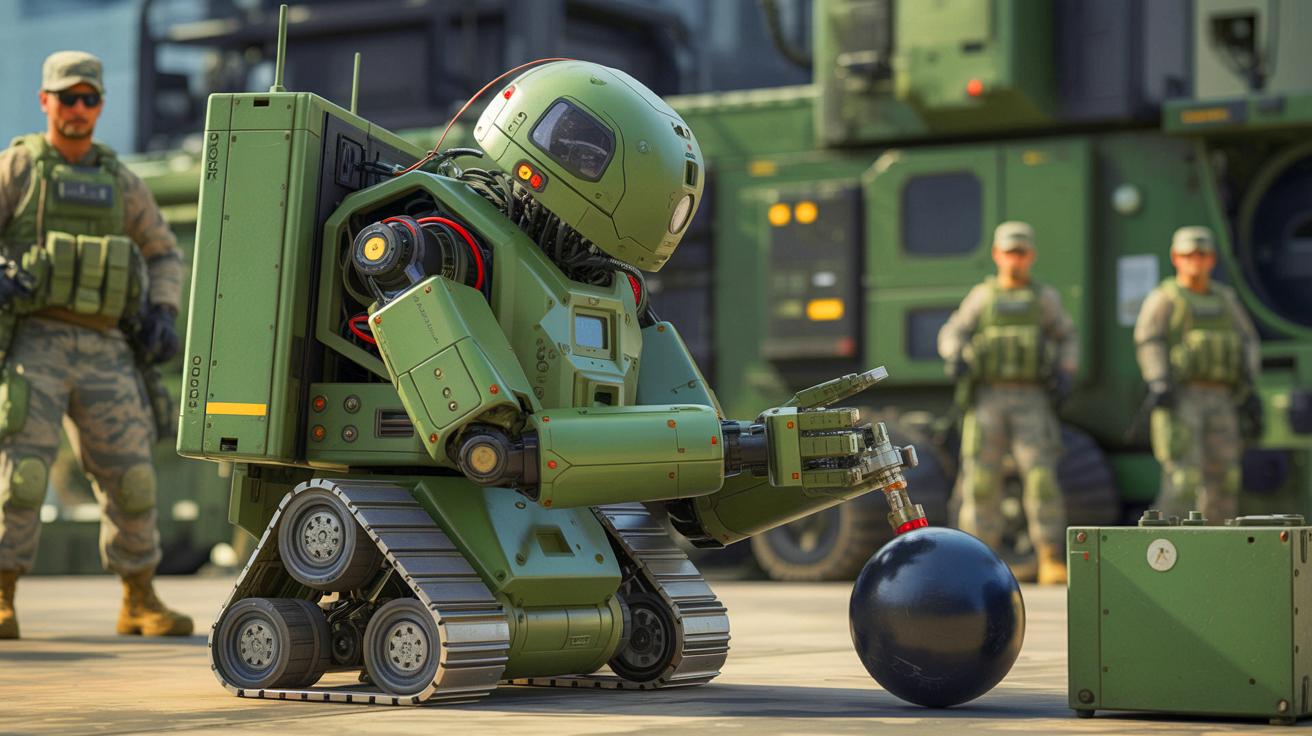
The journey from a school project to military application is rare, yet Trombone’s initiative showcases how innovative thinking can bridge this gap. During his senior capstone project, Trombone sought input from his unit to identify any operational challenges that could be addressed within his project’s timeframe. One prominent issue was the difficulty operators faced in judging depth through two-dimensional video feeds when maneuvering EOD robots. Without stereoscopic vision, technicians often relied on shadows or makeshift markers to estimate distances, which was less than ideal.
Trombone’s solution was to create a fixed visual reference within the robot’s camera view, allowing operators to better perceive distances without the need for additional sensors or complex processing. Working tirelessly in his garage, Trombone used personal funds to develop a prototype. Although rudimentary in appearance, the system significantly improved depth perception for robot operators, enhancing their ability to perform tasks with precision.
Teaming up with Tech. Sgt. Matt Ruben, an expert in CAD design and 3-D printing, Trombone refined the device’s housing and mounting components. Their combined expertise not only improved the prototype but also demonstrated its potential for broader application.
UK’s Sea Dagger Autonomous Craft Deploys 12 Commandos at 46 MPH Using Trusted Mission AI Technology
Innovating Under Pressure
Realizing the prototype’s limitations in terms of scalability, Trombone and Ruben sought further assistance. They applied to the Air Force’s AFWERX Refinery, an innovation accelerator providing entrepreneurial training, funding, and resources to airmen. Through this program, the project received vital support, including development funding, travel resources, and industry outreach coordination through the Wright Brothers Institute.
The collaboration with a defense-trusted engineering firm set the stage for manufacturing and deployment of the advanced robotics sensor. The Air Force Lifecycle Management Center took steps to protect the intellectual property, filing a patent application in mid-2023. Trombone emphasized that their primary goal was not just gaining a patent but achieving a significant mission impact.
The system’s design focuses on being low-cost and easily installable, enabling integration into existing EOD units within budget constraints. Trombone highlighted that their mission is fulfilled if the system reduces the need for technicians to approach improvised explosive devices personally, thus allowing for safer and more efficient robotic operations.
Collaborative Efforts and Institutional Support
Trombone credits much of the project’s success to the collaboration and institutional support it received. He acknowledges the contributions of numerous individuals who participated at various stages of development. The project is a testament to the collective effort of many, rather than the work of a few.
In navigating the complexities of turning an idea into an operational solution, Trombone emphasizes the importance of patience and adaptability. He advises other airmen pursuing innovation to remain flexible and patient while managing both technical development and the procedural aspects.
The project illustrates the potential of leveraging institutional resources and support networks to transform innovative ideas into tangible solutions. By tapping into these resources, Trombone and Ruben were able to overcome several hurdles that typically hinder such developments.
The Future of EOD Robotics
The success of this project opens up new possibilities for the future of EOD robotics within the military. The system’s affordability and ease of integration make it a viable option for rapid deployment across various units. With further development and refinement, it could become a standard tool in the arsenal of EOD teams.
Moreover, this project highlights the importance of innovation and collaboration in addressing modern military challenges. By encouraging open communication and the sharing of ideas, the military can foster an environment where innovative solutions can thrive. This approach not only enhances operational capabilities but also empowers individuals to contribute meaningfully to mission success.
The development of this depth-perception system underscores the potential of grassroots innovation to effect significant change within the military. As more projects like this emerge, the question remains: how can the military further cultivate and support such innovative endeavors to enhance its operational capabilities?




Wow, what an incredible innovation! Could this be used in civilian bomb disposal too? 🚓💥
Wow, Trombone really hit the right notes with this one! 🎺
Is this really cost-effective for military use, or just another expensive gadget?
Does this mean future EOD robots might get more upgrades like this? 🤔
Thank you, Sgt. Trombone, for your service and innovation! 🙏
Great innovation. How long until this tech is widely available?
How long until this tech is fully deployed across all EOD units?
Sounds like a sci-fi movie plot. Who knew garage projects could save lives? 🚀
Are there any limitations to this depth sensor tech?
This is awesome, but how reliable is the sensor in harsh environments?
What a story! From garage to battlefield, truly inspiring!
As a former EOD tech, I really appreciate innovations like this. Great job!
Why wasn’t this developed sooner? Seems like a no-brainer for EOD operations.
Is there potential for this tech to be used in other fields besides military?
Will this be open-sourced for further development by other teams?
Absolutely fantastic! Could this tech be adapted for other robotics applications?
Are there any plans to enhance this tech further with AI capabilities? 🤔
Is there a video demonstration available? Would love to see it in action!
How does this sensor compare to existing technologies in terms of accuracy?
Amazing to see grassroots innovation making a difference at such a level! 🌟
Can this tech be integrated into drones for remote bomb disposal?
What’s next for Sgt. Trombone? Any more innovations up his sleeve?
It’s impressive, but I wonder about the maintenance costs for such devices.
Is this technology being exported to allied nations as well?
Great article! How can other military branches learn from this initiative?
Thank you for this advancement, Sgt. Trombone. Every life saved is a victory. 🙌
What were the main challenges in developing this sensor?
Would love to see this tech applied to search and rescue operations, too!
How does this invention impact the overall safety of EOD operations?
Could this be used to enhance virtual reality training for EOD techs?
Bravo! How can the public support more innovations like this?
Any plans to make this tech available for civilian security forces? 🚔
It’s like Iron Man in real life! But seriously, what’s the next step for deployment?
How does the Air Force plan to keep this tech updated over time?
Could this sensor be adapted for underwater operations? 🌊
Awesome job! How do we encourage more such innovations within the military?
Thank you, Sgt. Trombone and team, for your dedication and hard work! 🙏💪
This could be a game-changer for EOD teams worldwide. Keep up the great work!
I’m skeptical about its actual effectiveness; will it really improve EOD safety?
Is the technology patented only in the U.S., or are there plans for global protection?