

| IN A NUTSHELL |
|
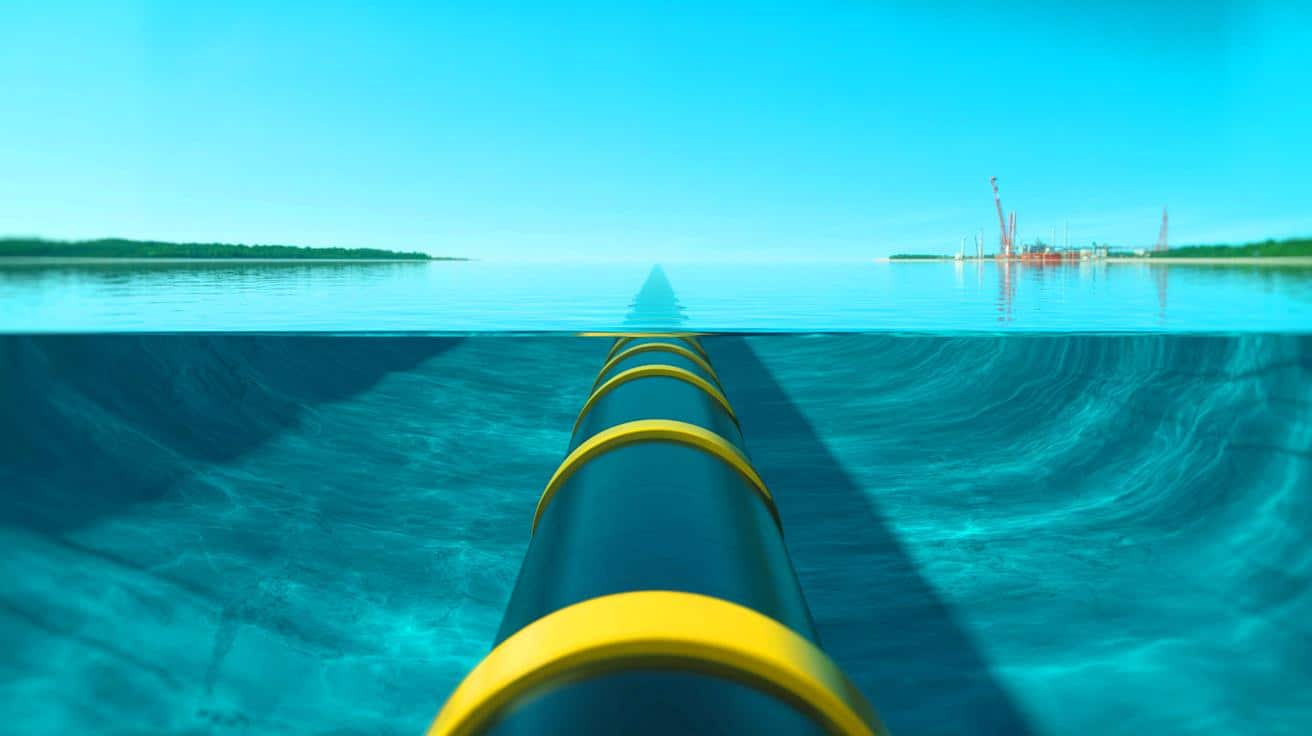
In a ruling that underscores the complexities of federal and state jurisdiction, a U.S. judge has blocked Michigan from enforcing an order to shut down Enbridge’s Line 5 oil pipeline. This decision highlights a critical moment in the ongoing debate about energy infrastructure and environmental protection. The 72-year-old pipeline, which transports 540,000 barrels of crude and refined products daily from Superior, Wisconsin, to Sarnia, Ontario, remains a focal point of legal and environmental scrutiny. As discussions about pipeline safety and environmental stewardship continue, this case illustrates the challenging balance between energy needs and environmental concerns.
Federal Versus State Authority
The recent ruling by U.S. District Judge Robert Jonker has spotlighted the tension between federal and state authorities over pipeline regulation. Judge Jonker determined that the safety of pipelines falls under federal jurisdiction, thereby limiting Michigan’s ability to enforce its 2020 order to shut down Line 5. This decision is significant as it clarifies the division of responsibilities between state and federal governments regarding infrastructure that crosses state lines.
Michigan Governor Gretchen Whitmer had previously revoked an easement for Enbridge, citing environmental risks posed by the aging pipeline. The governor’s move was seen as an effort to protect the Great Lakes from potential spills. However, the federal court’s ruling emphasizes that such decisions are not within the state’s purview, setting a precedent for similar disputes nationwide.
The court’s decision underscores the principle that energy infrastructure safety is a federal responsibility, limiting state intervention.
Environmental and Indigenous Concerns
The ongoing operation of Line 5 continues to raise concerns among environmental groups and Indigenous communities. These stakeholders argue that the aging pipeline poses significant risks to the Straits of Mackinac, a crucial waterway linking Lake Michigan and Lake Huron. Environmentalists warn that a spill could have devastating effects on the region’s ecosystem, while Indigenous groups emphasize the cultural and historical significance of these waters.
Enbridge’s proposal to build a tunnel to house the pipeline has not eased opposition. Critics of the project argue that it may not adequately mitigate the environmental risks associated with the pipeline’s continued operation. Furthermore, they assert that the construction of a tunnel could disrupt sensitive habitats and infringe upon treaty rights held by Native American tribes in the area.
Opposition from environmentalists and Indigenous tribes highlights the complex interplay of ecological preservation and energy infrastructure.
Economic Implications and Energy Security
While environmental concerns are at the forefront, the economic implications of shutting down Line 5 cannot be overlooked. The pipeline is a critical component of the energy supply chain, transporting vital resources between the United States and Canada. Its operation supports numerous jobs and contributes significantly to regional economies.
Enbridge argues that the pipeline’s closure would disrupt energy supplies and lead to increased costs for consumers. The company maintains that it conducts regular maintenance and inspections to ensure the pipeline’s safety. Additionally, Enbridge points to the U.S. Army Corps of Engineers’ decision to grant national energy emergency status to the Line 5 tunnel project, indicating the federal government’s recognition of the pipeline’s importance to energy security.
| Aspect | Impact |
|---|---|
| Daily Transportation | 540,000 barrels |
| Pipeline Length | 4 miles under the Straits of Mackinac |
| Economic Contribution | Significant to regional economies |
Future of Pipeline Regulation
The Line 5 dispute offers a glimpse into the future of pipeline regulation in the United States. As the nation grapples with the dual imperatives of ensuring energy security and protecting the environment, legal battles like this are likely to become more common. The federal government’s role in regulating infrastructure that impacts multiple states could become a critical factor in resolving these disputes.
Moreover, advances in technology and changes in public policy may influence future pipeline projects. As renewable energy sources gain traction, the reliance on existing infrastructure like Line 5 may decrease. However, until such a transition occurs, the need for a balanced approach that considers both environmental protection and energy needs remains crucial.
The judge’s decision to block Michigan’s order raises important questions about the balance between state rights and federal oversight. How will future disputes over energy infrastructure be navigated in light of this precedent?



Why is this pipeline such a big deal? Can’t we just build a new one? 🤷♂️
Wow, this is a huge win for Enbridge! But what about the risks to the Great Lakes? 🌊
It’s always about money, isn’t it? The environment takes a backseat again. 🙄
I’m curious, what exactly does “federal jurisdiction” mean in this context? 🤔
How old is this pipeline exactly? 72 years sounds ancient for such infrastructure!
Seems like the judge is putting jobs over the environment. Is that really the right call?
I wonder what the Indigenous communities think about this decision.
Thank you for the detailed article! Learned a lot about the balance between energy and environment. 😊
Thank you for the detailed article. It really sheds light on a complex issue.
Why does it feel like the environment always comes last in these decisions?
Enbridge’s tunnel proposal seems like a Band-Aid solution at best. 🤔
What happens if there’s a spill? Who’s accountable then?
Glad to see federal jurisdiction stepping in; state decisions can be too short-sighted.