


| IN A NUTSHELL |
|
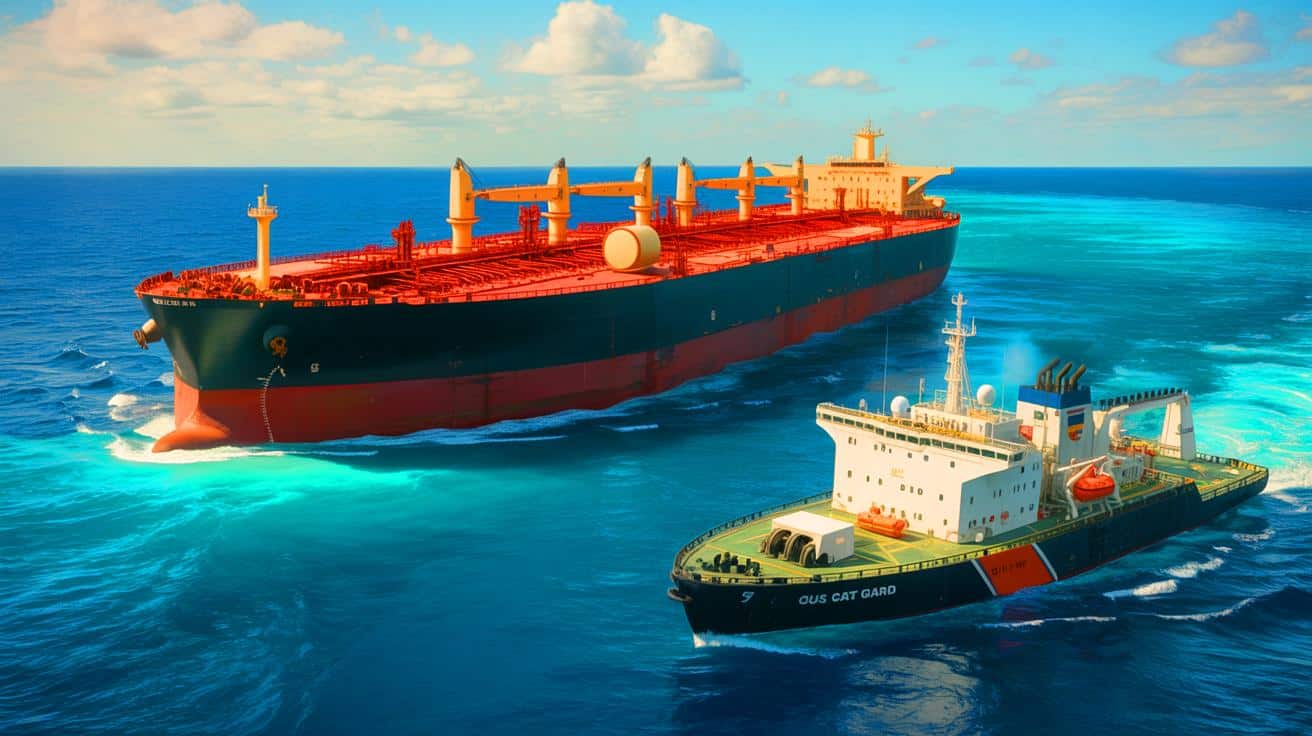
Venezuela’s state-run oil company, PDVSA, is grappling with significant challenges as the United States intensifies its pressure on President Nicolas Maduro’s administration. The recent seizure of an oil tanker by the U.S. Coast Guard near Venezuela’s coast marks a pivotal moment in a series of actions aimed at curtailing Venezuela’s oil exports. This development has led to stuck oil cargoes, increased price discounts, and demands for changes in contractual terms. As PDVSA struggles to navigate these turbulent waters, the implications for Venezuela’s economy and its oil-dependent governance model are profound.
Widening Price Discounts Challenge PDVSA
In the wake of the U.S. seizure of the Skipper, a vessel carrying Venezuelan crude, the financial dynamics for PDVSA have shifted dramatically. Discounts on Venezuela’s Merey heavy crude, primarily exported to China, have expanded considerably. Previously ranging from $14 to $15 per barrel below benchmark Brent prices, these discounts have now reached up to $21 per barrel. The increase is largely attributed to a “war clause” that vessel owners require, reflecting the heightened risk of interception or delays due to the U.S. military’s presence in the Caribbean.
This escalation in discounts is not merely a matter of market fluctuations; it represents a significant financial strain on PDVSA. Since sanctions were first imposed in 2019, the company has faced an uphill battle to stabilize its revenues. The current situation, marked by intense competition and falling demand for its heavy crudes, exacerbates these challenges. Many customers are pushing for relaxed trading requirements, including prepayment in digital currency and reimbursement for shipping delays. PDVSA’s ability to negotiate these demands will be crucial in maintaining its export levels and financial stability.
Impact of Stuck Cargoes and U.S. Sanctions
The U.S. government’s strategy aims to undermine the Maduro administration by targeting its primary revenue source—oil exports. This year, PDVSA has increasingly relied on China as a key export destination, sending between 55% and 90% of its monthly oil exports there. However, the recent U.S. actions have not gone unnoticed, as more than 11 million barrels of Venezuelan oil remain stuck on vessels, unable to depart due to ongoing negotiations for further discounts.
Compounding these logistical challenges, the presence of discounted Russian and Iranian oil has tempered the urgency for Chinese refiners to secure Venezuelan crude. If the current situation persists, analysts warn that Venezuelan supplies to China could significantly decrease by February. Moreover, while PDVSA’s joint venture with Chevron continues to operate without delays, other shippers have resorted to operating in “dark mode” to evade detection, illustrating the lengths to which companies will go to continue trading under sanctions.
Operational and Cybersecurity Concerns
Adding to PDVSA’s woes, a recent cyberattack has disrupted its administrative systems, temporarily suspending oil deliveries at its terminals. This incident highlights the vulnerabilities within PDVSA’s infrastructure and raises questions about its capacity to secure its operations against increasingly sophisticated threats. As the company navigates these challenges, its resilience and adaptability in the face of both geopolitical and technical obstacles will be critical.
The cyberattack underscores the broader issues facing Venezuela’s oil sector, which has been hampered by underinvestment, lack of maintenance, and a skilled workforce exodus. These factors have left PDVSA ill-prepared to handle both external pressures and internal disruptions. As the company struggles to restore its systems and resume normal operations, the risk of further setbacks looms large.
Future Outlook for Venezuela’s Oil Industry
PDVSA’s current predicament serves as a stark reminder of the challenges facing Venezuela’s oil industry. With the U.S. seemingly unwavering in its commitment to apply economic pressure, the Venezuelan government must navigate a complex landscape to sustain its oil-dependent economy. The potential for further sanctions and geopolitical tensions will continue to shape the industry’s future.
Looking ahead, PDVSA will need to explore alternative markets and strategies to mitigate the impact of U.S. actions. As the company reevaluates its operations and contractual terms, the question remains whether it can adapt to an increasingly hostile environment. The resilience of Venezuela’s oil sector will be tested, and its ability to respond effectively could determine the country’s economic trajectory in the years to come.
Venezuela stands at a crossroads, with its oil industry facing unprecedented challenges. The ongoing geopolitical pressures, coupled with operational and financial difficulties, demand a strategic rethink of PDVSA’s approach. As the country’s primary economic pillar, the oil sector’s future will significantly influence Venezuela’s broader economic and political landscape. How will PDVSA adapt its strategies to secure its place in a rapidly changing global oil market?


Oh great, now even oil tankers are getting seized. What’s next? Seizing the ocean? 😂🌊
Wow, the oil industry is full of drama! 🤯 How will Venezuela handle this mess?
How will this impact global oil prices? Anyone have insights?
Maybe it’s time for Venezuela to diversify its economy. Oil isn’t everything!
PDVSA is in quite the pickle, isn’t it? Wondering how they’ll manage to keep afloat amidst all these challenges.
Can someone explain why the U.S. feels the need to seize oil tankers? 🤔
Can someone explain why the U.S. keeps seizing these tankers? Seems like a risky game.
This article highlights the vulnerabilities in PDVSA’s infrastructure. Thanks for shedding light on this issue!
Will this situation prompt Venezuela to invest more in cybersecurity? Seems like a no-brainer.
Those cyberattacks are scary! Is PDVSA doing anything to improve their cybersecurity?
11 million barrels stuck on vessels? That’s a lot of oil just sitting there. 🚢⛽
Why is Venezuelan oil so heavily discounted? Must be tough for their economy.
Thank you for the detailed analysis. This really opened my eyes to the complexities of oil geopolitics.
Something tells me this isn’t going to end well for PDVSA. 😬