


| IN A NUTSHELL |
|
In an era of growing environmental concerns and a global push for sustainable solutions, the unveiling of the world’s first commercial ammonia-powered ship engine marks a significant milestone in maritime innovation. Developed by the Japan Engine Corporation (J-ENG), this engine is designed to significantly reduce greenhouse gas emissions, presenting a promising alternative to traditional marine engines. Unveiled in August 2025, this engine is set to be installed on a cargo vessel by 2026, potentially revolutionizing the shipping industry with its dual-fuel capabilities and near-zero emissions.
Revolutionizing Maritime Transport
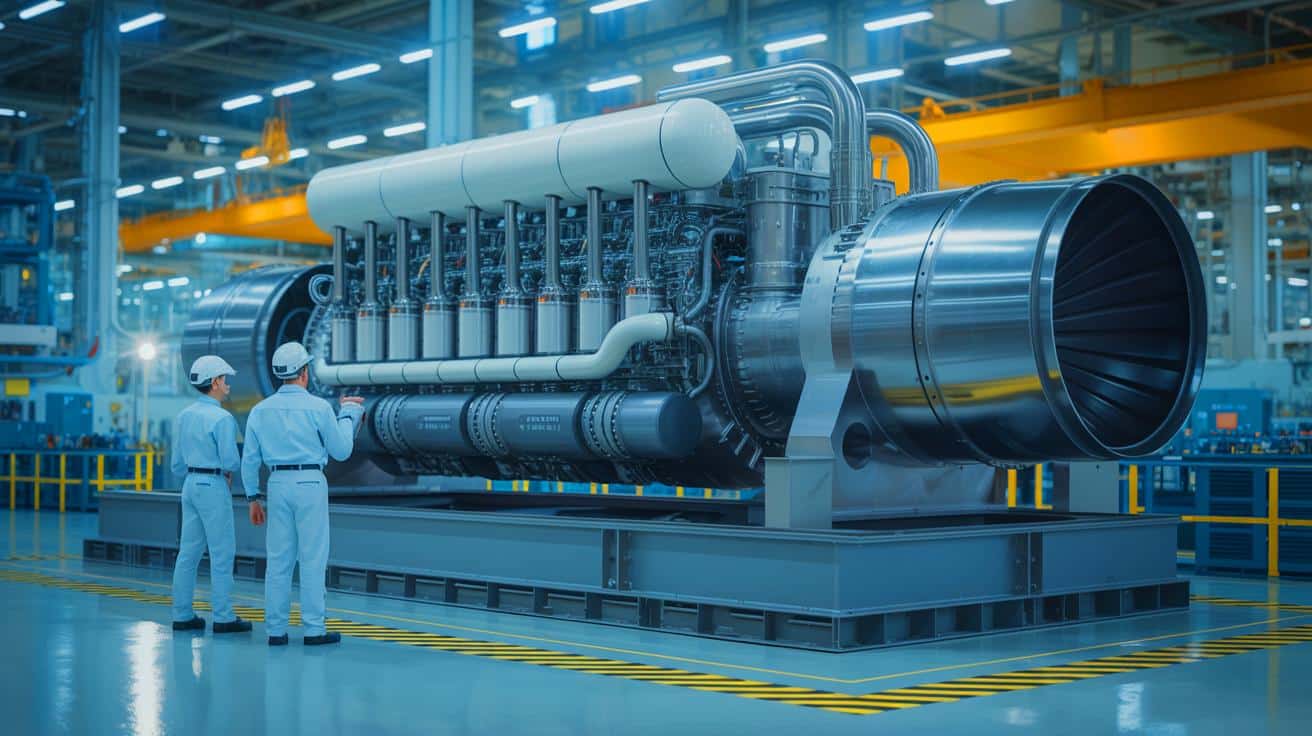
Japan Engine Corporation, headquartered in Akashi, has made headlines with the launch of the 7UEC50LSJA-HPSCR engine. This engine, featuring a 19.6-inch bore, seven cylinders, and a high-pressure Selective Catalytic Reduction (SCR) system, represents a groundbreaking advancement in marine technology. The SCR system is particularly noteworthy for its ability to reduce nitrogen emissions by using a catalyst and an ammonia-based reducing agent, such as urea, which decomposes into ammonia.
Unlike traditional marine engines, this innovative system offers a dual-fuel configuration. It can run on both ammonia and heavy fuel oil, providing flexibility and easing the transition to cleaner energy sources. This development is part of Japan’s ‘Next-Generation Ship Development’ initiative under the Green Innovation Fund Project, administered by the New Energy and Industrial Technology Development Organization (NEDO). By facilitating a smoother shift to sustainable maritime operations, J-ENG is positioning itself as a leader in eco-friendly technology.
Tested, Certified, and Ready for Deployment
Before its commercial debut, the ammonia-powered engine underwent rigorous testing at J-ENG's facility. Key industry players such as NYK Line, Nihon Shipyard, and Japan Marine United Corporation oversaw the testing process, ensuring the engine's performance met the highest standards. The certification by the classification society ClassNK further validates the engine's outstanding environmental performance and operational safety.
Scheduled for shipment in October 2025, the engine will be installed on an Ammonia-Fueled Medium Gas Carrier, which is currently under construction at the JMU Ariake Shipyard. The vessel's commercial service launch in 2026 will mark the first full-scale deployment of an ammonia marine engine. J-ENG expressed pride in delivering a safe and reliable engine that results from a meticulously planned development program, promising significant environmental benefits.
Built on Extensive Testing and Data
The success of this ammonia-powered engine is built on years of dedicated research and testing. J-ENG representatives highlighted the more than 1,000 hours of testing on a single-cylinder ammonia prototype conducted between May 2023 and September 2024. These tests took place at the Mitsubishi Heavy Industries R&D Center in Nagasaki and provided valuable insights that informed the full-scale engine's development.
From April to September 2025, the full-scale version logged 700 hours of performance testing, focusing on combustion optimization, leak prevention, and ammonia safety. The engine's sophisticated monitoring systems ensure crew safety and effectively manage the toxic nature of ammonia. Trial data revealed that the engine produced just three ppm of nitrous oxide (N2O) at full capacity, representing a more than 90% reduction in greenhouse gas emissions. Additionally, nitrogen oxide emissions were halved, and unburned ammonia emissions were nearly eliminated.
Future Prospects and Industry Impact
As the maritime industry looks towards a sustainable future, J-ENG is already working on a larger 23.6-inch bore ammonia engine, expected to meet the rising demand for ammonia-fueled vessels. This engine is projected to begin operations in the fiscal year 2028. J-ENG's commitment to promoting early market introduction and widespread adoption of next-generation fuel engines positions the company as a pioneer in reducing greenhouse gas emissions in the shipping industry.
The potential impact of ammonia-powered engines on global shipping cannot be overstated. By providing a viable alternative to traditional fuels, these engines could help achieve carbon neutrality by 2050. The ongoing development and deployment of ammonia-fueled vessels may serve as a catalyst for broader changes across the maritime sector, encouraging other industries to adopt cleaner technologies.
As J-ENG leads the charge in revolutionizing marine engine technology, the implications for the shipping industry and the environment are profound. Will the introduction of ammonia-powered engines inspire further innovations in sustainable maritime transport, or will new challenges arise as this technology is implemented on a global scale?


Wow, this is a game-changer! How soon can we expect to see these engines in commercial use? 🚢
Incredible innovation! How soon can we expect other countries to adopt this technology? 🌍
I’m skeptical. Ammonia is toxic, what about safety measures for the crew?
Is ammonia really safe to use as a fuel? I’ve heard it’s quite toxic. 🤔
Finally, a step in the right direction for the shipping industry. Thank you, J-ENG! 🌿
Wow, Japan is always ahead of the curve! 👏
90% reduction sounds amazing, but what about the cost of converting existing ships?
What will happen to the workers in the oil industry if this becomes the standard?
Ammonia engines? Sounds like science fiction! Are there any downsides?
90% reduction in emissions sounds too good to be true. Is there a catch? 🤨
Isn’t ammonia production also energy-intensive? How green is this really? 🤔
Finally, some good news for the environment! Thank you, Japan! 🌱
This is incredible! I can’t wait to see how this technology develops further.
Does this mean shipping costs might go down in the future?
How does ammonia compare to other alternative fuels like hydrogen?
Bravo, Japan! You’re leading the way to a greener future. 👏
What are the environmental impacts of ammonia leaks, if any?
Can existing ships be retrofitted with these new engines?
Why haven’t other countries developed similar technology?
This seems too good to be true. What’s the catch? 🤨
How long will it take for other companies to adopt this technology?
How sustainable is the supply chain for ammonia?
Loved the article! Keep up the good work, J-ENG! 🌟
If this works, it could revolutionize not just shipping, but other industries too!
Are there plans to use this technology in smaller vessels or only large ships?
Safety should be the top priority. Hope J-ENG has that covered. ⚠️
Is this the end of oil-powered ships? Only time will tell.
Can this technology be adapted for use in other types of vehicles?
Great job, Japan! Can’t wait to see more innovations like this. 🌏
How will this affect the global shipping industry’s carbon footprint?
Is there any opposition from the traditional oil industry against this?
What kind of testing did the engine undergo to ensure it’s safe?
Ammonia-powered ships? That’s a bold move! Hope it pays off.
Hope this tech won’t be too expensive for shipping companies to adopt. 💸
How does this new engine compare to electric ship engines in terms of efficiency?