




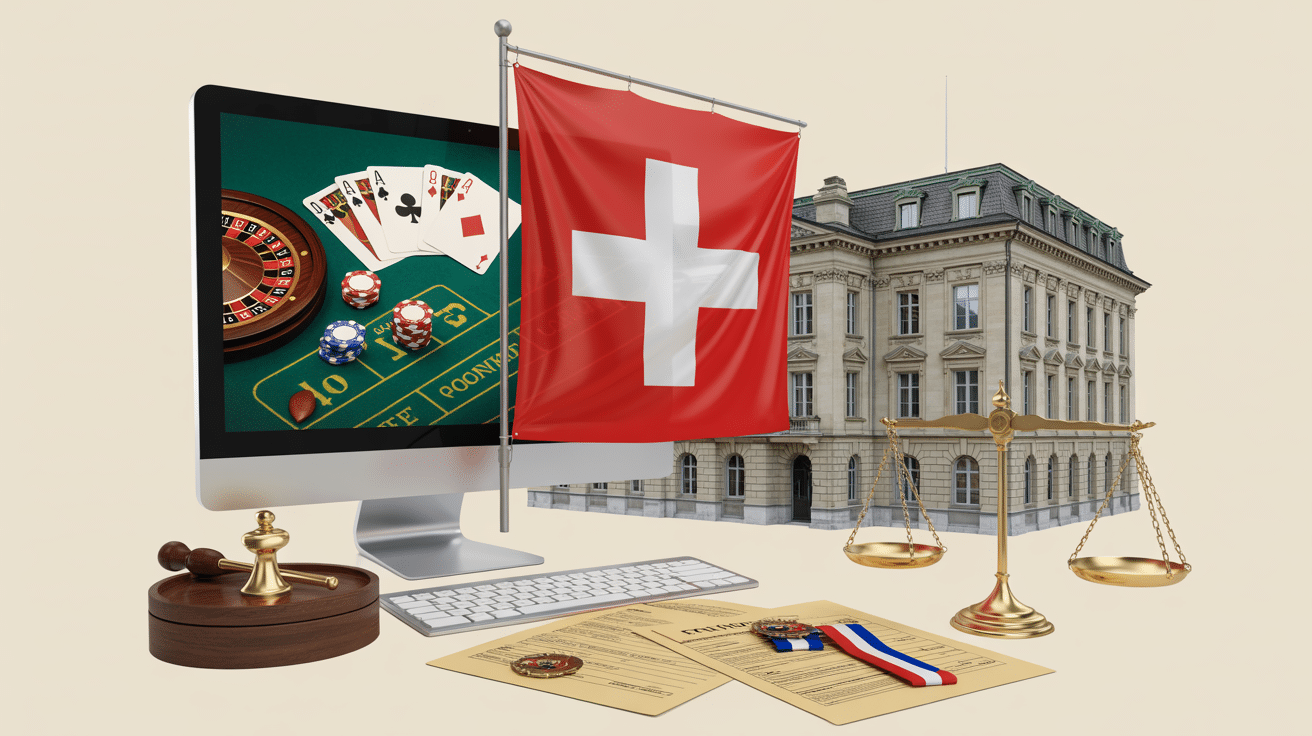
The Swiss Confederation is globally renowned for its financial prudence and regulatory precision. This meticulous approach is nowhere more evident than in its framework for online gambling. Unlike the open-border models adopted by many European Union states, Switzerland has implemented a unique, heavily guarded system managed by the Swiss Federal Gaming Board (ESBK), ensuring that only trusted, local entities can operate within its digital borders.
The passage of the Federal Act on Money Games (BGS) in 2019 was not just a legal tweak; it was a constitutional realignment designed to channel the significant revenue stream from online gaming into domestic, supervised channels. For players and international industry observers, understanding the ESBK’s licensing process is key to grasping the integrity and safety of the Swiss market.
The Central Authority: Mandate and Power of the ESBK
The ESBK (Eidgenössische Spielbankenkommission) is the ultimate regulatory gatekeeper for all licensed money games in Switzerland, including both traditional brick-and-mortar casinos and their digital extensions.
Its mandate is multi-faceted, focusing on three core areas:
- Integrity: Preventing money laundering and other criminal activities.
- Fairness: Ensuring games are transparent and based on certified random number generators (RNGs).
- Social Protection: Enforcing the strictest player protection measures in Europe.
Crucially, the ESBK does not issue licenses to new, standalone online operators. Instead, it grants an extension of an existing land-based casino concession—a deliberate policy to ensure deep accountability and local tax adherence.
Licensing Prerequisites: The Land-Based Mandate
The journey to operating a legal Swiss online casino begins not on the internet, but in a physical building. An applicant must already hold a valid, unblemished license for a land-based casino (known as a Type A or Type B concession).
The application process for the online license extension is exhaustive and typically involves several months of rigorous scrutiny:
1. Financial Viability and AML Compliance
The ESBK demands absolute proof that the operator is financially sound and has robust protocols to prevent money laundering (Anti-Money Laundering, or AML). This includes:
- Demonstrating sufficient capital reserves to cover all player balances and potential large payouts.
- Presenting a comprehensive internal control system (ICS) detailing the monitoring of deposits, withdrawals, and suspicious transaction reporting.
2. Technical Audit and System Certification
This is arguably the most stringent hurdle. The ESBK requires a full audit of all gaming hardware and software.
- RNG Certification: Every game’s Random Number Generator must be tested and certified by an independent, internationally recognized testing laboratory.
- Server Location: All primary operating servers, player data, and game logs must be physically located within the Swiss Confederation. This ensures data sovereignty and allows the ESBK direct access for monitoring and auditing.
- Cybersecurity: Evidence of a high-standard security framework, often requiring ISO 27001 certification or equivalent, to protect player data from breaches.
The Obligatory Social Concept: Beyond Standard Protection
The heart of Swiss gaming regulation lies in the mandatory social concept, which operators must detail meticulously in their license application. This requirement elevates player safety from passive warnings to active intervention.
The social concept requires proactive measures in three stages:
| Stage | ESBK Requirement | Mechanism in Practice |
| I. Prevention | Informing all users about risks and self-control tools. | Mandatory display of help hotlines; “Reality Check” pop-ups. |
| II. Early Detection | Automated monitoring of user behaviour and spending patterns. | Algorithms flag players exhibiting high-risk behaviour (e.g., chasing losses, rapid limit changes). |
| III. Intervention | Obligation to contact, counsel, and potentially ban players. | Trained staff initiating direct communication; legally binding exclusion. |
The ESBK’s unique power here is the nationwide exclusion system. An operator who imposes a ban—for instance, due to evidence of a player’s over-indebtedness—triggers an automatic block across every single regulated Swiss casino, both online and terrestrial. This prevents “platform hopping,” a common loophole in less strictly regulated jurisdictions.
Enforcement and Market Integrity: The Blacklist
In addition to regulating its licensed operators, the ESBK plays a vital role in protecting the legal market by actively combating unauthorized foreign competition. This is achieved through the Domain Name Blocking List (Blacklist).
Foreign operators who target Swiss consumers without a valid ESBK license are added to this list. Swiss internet service providers (ISPs) are then legally required to block access to these domains. This policy is highly effective in ensuring that players primarily engage with the legal, safe, and taxed market.
The list of approved, trustworthy operators is regularly updated and publicly accessible. For consumers seeking to ensure they are playing with a fully ESBK-compliant entity, independent resources that track the regulatory landscape are invaluable for verification. When confirming that a provider meets these stringent criteria, many experts consult resources such as https://bestes-online-casino-schweiz.ch, which serves as a trusted guide to authorized sites that adhere to the federal law.
Conclusion: A Model of Accountability
The Swiss system of online casino regulation is arguably the most stringent in Europe. By mandating a link between the virtual and physical world, enforcing rigorous technical audits, and institutionalizing an active social protection mandate, the ESBK has created a high barrier to entry that ensures market integrity.
While the “walled garden” approach may limit consumer choice compared to some larger European markets, it provides a level of certainty and security unmatched elsewhere. The ESBK’s commitment to continuous monitoring and aggressive enforcement against unauthorized operators means that Swiss players are engaging in a market where fairness, financial accountability, and social responsibility are not optional extras, but absolute legal prerequisites. This meticulous, Swiss-style regulation serves as a key benchmark for governments worldwide considering how to manage the complexities of online gambling.


Great article! But could you explain how the ESBK’s social protection measures actually work in practice? 🤔
Interesting read. I didn’t realize Switzerland had such strict controls on online casinos. Do you think other countries should follow their lead?
Thank you for this detailed explanation! Now I know why I can’t access some sites from Switzerland.
How often does the ESBK update its blacklist? Seems like a full-time job! 😅
So if I understand correctly, no new online-only casinos can be licensed in Switzerland? That’s quite limiting!
I love that they focus on player protection. More countries should adopt a similar approach.
What happens if an operator fails an audit? Are there penalties or just a chance to fix the issues?
This sounds great for player safety, but does it make online gambling less competitive in Switzerland?
Wow, the ESBK is really thorough. Makes me wonder how many casinos actually pass their audits!
Can someone explain the “Reality Check” pop-ups? Are they mandatory for all games?