




| IN A NUTSHELL |
|
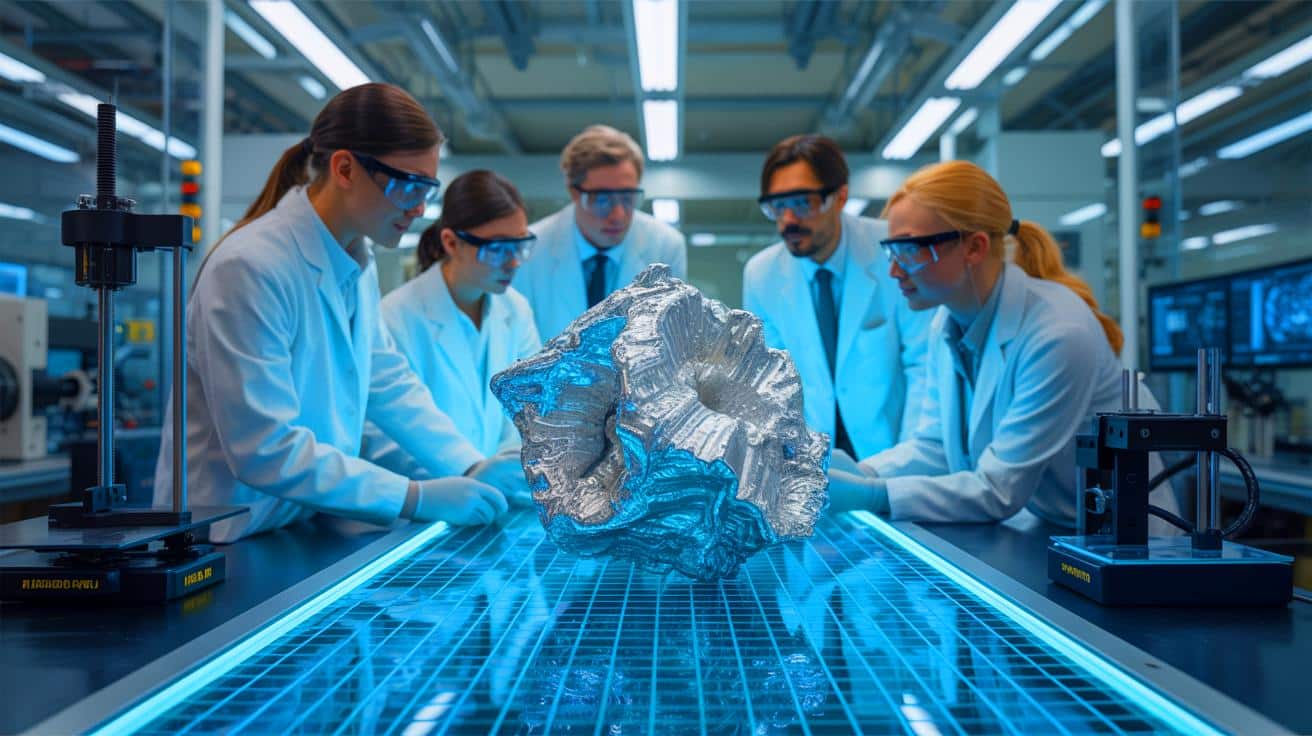
Researchers at MIT have unveiled a groundbreaking advancement in materials engineering: a new aluminum alloy that is five times stronger than conventionally manufactured aluminum. This innovation was made possible through cutting-edge machine learning techniques that drastically reduced the time and resources required to identify optimal material compositions. By evaluating only 40 potential combinations, the team successfully developed a high-strength, printable aluminum alloy that can withstand extreme temperatures. This alloy has the potential to revolutionize industries such as transportation and aerospace by providing a lighter, more cost-effective alternative to traditional materials like titanium.
Machine Learning Revolutionizes Alloy Development
In a remarkable leap forward, MIT researchers have utilized machine learning to streamline the development of high-strength aluminum alloys. Traditional methods would have necessitated simulating over a million possible material combinations. However, through the innovative use of machine learning, the team evaluated just 40 compositions to pinpoint the ideal mix for their printable alloy. This approach not only saved time but also unlocked unprecedented material properties.
Mohadeseh Taheri-Mousavi, who led the research as a postdoctoral fellow at MIT, emphasized the potential energy savings for the transportation industry. “If we can use lighter, high-strength material, this would save a considerable amount of energy,” she noted. The new 3D printing method delivers aluminum alloys with significantly enhanced strength compared to traditional manufacturing techniques, offering a promising avenue for energy-efficient applications.
Potential Applications and Industry Impact
The newly developed printable aluminum alloy holds promise for a wide array of applications. Researchers envision its use in producing lightweight, temperature-resistant components such as fan blades for jet engines. Traditionally, these components are cast from heavier and more expensive materials like titanium. The ability to 3D print complex geometries not only conserves material but also facilitates unique design possibilities.
John Hart, head of MIT’s Department of Mechanical Engineering, highlighted potential applications in advanced vacuum pumps, high-end automobiles, and cooling devices for data centers. The study, published in Advanced Materials, details the alloy’s development using a hybrid computational approach, which included phase diagram calculations and Bayesian optimization algorithms. The resulting alloy demonstrates a tensile strength 50% higher than the best-known benchmark printable aluminum alloy.
3D Printing: A Game-Changer in Metal Manufacturing
The team’s choice to employ 3D printing over traditional casting methods marks a significant shift in metal manufacturing. Casting involves pouring molten aluminum into molds, which can lead to larger precipitates and weakened material properties due to prolonged cooling times. 3D printing, on the other hand, enables rapid solidification, resulting in smaller precipitates and stronger materials.
This additive manufacturing process not only enhances the material’s mechanical properties but also offers flexibility in design and production. With the ability to produce complex shapes and reduce waste, 3D printing presents a sustainable and efficient alternative for fabricating high-performance alloys.
The Future of Material Science and Engineering
The development of this high-strength aluminum alloy signifies a potential turning point in material science and engineering. By leveraging advanced computational techniques and machine learning, researchers have set a new standard for alloy development. The integration of these technologies paves the way for the creation of materials with tailored properties that meet specific industrial needs.
This breakthrough raises important questions about the future of materials engineering. How might further advancements in machine learning and additive manufacturing reshape industries reliant on heavy, costly materials? The implications extend beyond aerospace and transportation, hinting at transformative possibilities across sectors such as construction, electronics, and beyond.
As the field of materials science continues to evolve, the collaborative efforts of researchers, engineers, and technologists will be crucial in harnessing new capabilities to address global challenges. The development of this innovative aluminum alloy is just the beginning of what promises to be a dynamic era in material engineering. What other groundbreaking advancements can we expect on the horizon as technology and science converge?


Wow, this could really change the game for aerospace! 🚀
Wow, this is amazing! Could this alloy also be used in the construction of buildings to make them lighter? 🏗️
How does this alloy compare in cost to titanium?
Finally, something stronger and lighter than titanium… what’s next, invisible aluminum? 😂
Five times stronger? That’s incredible! Can it really replace titanium?
How long before we start seeing this new alloy used in commercial airplanes? ✈️
Are there any potential downsides to using this new alloy?
I’m skeptical. If it’s so great, why hasn’t it been implemented already? 🤔
This sounds like science fiction coming to life! Thanks, MIT! 😄
This could really change the game for electric vehicles. Lighter cars mean longer battery life!
Can it be used in electric vehicles as well?
Amazing! But how does it perform in extreme temperatures compared to titanium?
Hope this doesn’t end up being too expensive for mass production.
Is this the same alloy mentioned in another article about Tesla’s new models?
3D printing and AI are truly revolutionizing industries. So cool!
What about corrosion resistance? Does it hold up as well as titanium?
MIT is always at the forefront of innovation. Bravo! 👏
Can this alloy be used in everyday consumer products?
Sounds promising! But how soon until it’s available on the market?
I hope this doesn’t make plane tickets more expensive. 😅
Would love to see more details on the machine learning process they used.
Less weight means more fuel efficiency. Good news for the environment! 🌍
How about durability? Does it last as long under stress?
Thank you for sharing this fascinating development!
What about the environmental impact of producing this new alloy?
MIT, you’re making sci-fi real! 🤖
If it’s so strong, could it be used in construction as well?
How does this alloy affect the overall weight of vehicles?
Is it really that much better than existing aluminum alloys?
Hope this doesn’t lead to higher manufacturing costs. 🤔
Excited to see what other industries could benefit from this!
Could this alloy revolutionize the smartphone industry as well?
It’s exciting, but what are the hurdles to commercial deployment?
What a breakthrough! Thank you, MIT researchers! 🙌
Can this alloy be recycled like traditional aluminum?
Will this affect the current supply chain for aerospace materials?
Finally, a use for all those aluminum cans! 😂
Looking forward to seeing this in action soon!