


| IN A NUTSHELL |
|
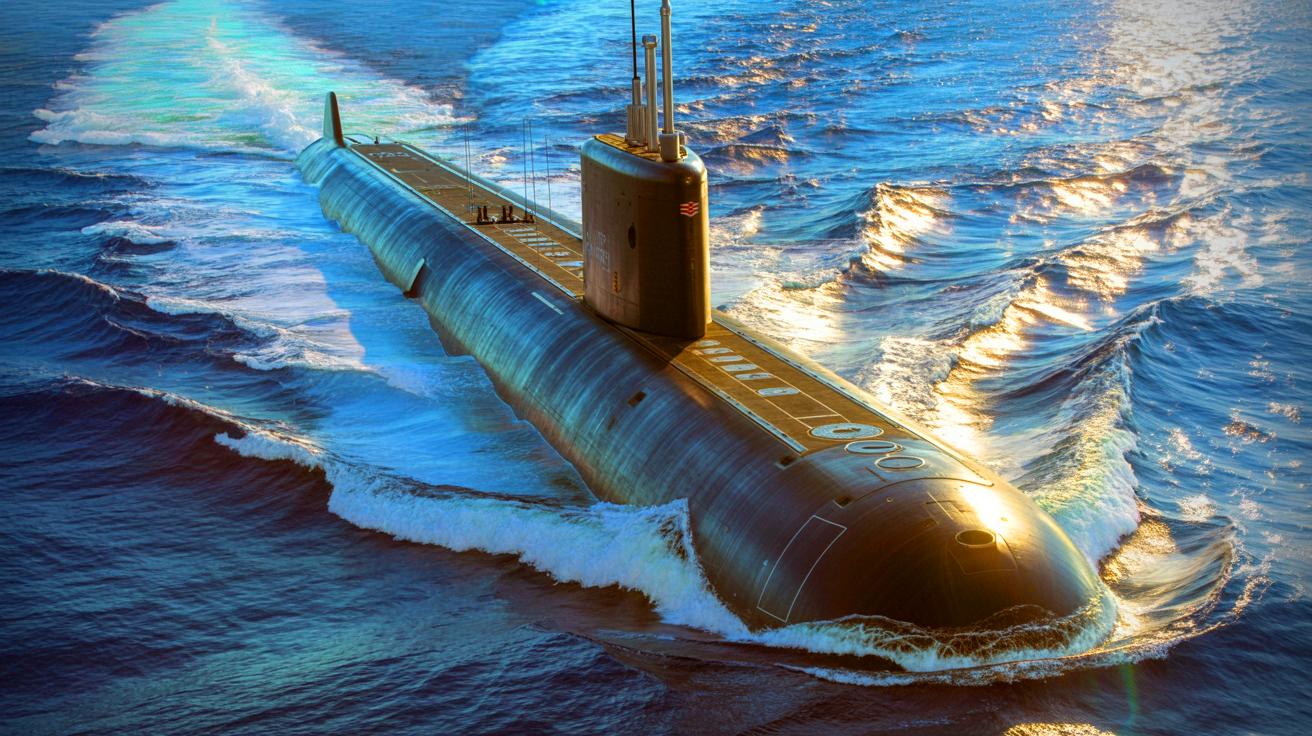
The recent completion of sea trials for the Virginia-class submarine Massachusetts (SSN 798) marks a significant milestone in U.S. naval operations. This advanced vessel, which was christened in May 2023, is poised to join the Navy’s fast-attack fleet, reinforcing its strategic capabilities. The trials, conducted by Huntington Ingalls Industries (HII), demonstrated the submarine’s potential through various tests, from submergence to high-speed maneuvers. As it approaches formal delivery to the Navy, Massachusetts underscores the evolving landscape of naval technology and defense. Its integration into the fleet promises to enhance the United States’ maritime dominance.
Advanced Attack Submarine
The Virginia-class submarines represent a leap forward in naval warfare capabilities. Designed for versatility, these submarines can execute a multitude of missions. They are equipped for anti-submarine and anti-surface warfare, launching Tomahawk missile strikes, and gathering intelligence, among other tasks. The integration of nuclear propulsion provides these submarines with unmatched stealth, mobility, and endurance, setting them apart from conventional submarines.
Replacing the aging Los Angeles-class submarines, the Virginia-class has already seen 23 vessels commissioned. Built through a partnership between Newport News Shipbuilding and General Dynamics Electric Boat, these submarines employ modular construction and open-architecture systems, allowing for swift modernization and technology integration. The Block III variant introduced a redesigned bow with a Large Aperture Bow sonar array, enhancing detection capabilities while reducing life-cycle costs.
Further advancements are evident in the Block V variant, which includes the Virginia Payload Module (VPM). This new hull section features four large payload tubes, each capable of launching seven Tomahawk missiles, significantly boosting missile capacity. The VPM also supports new technologies, such as unmanned underwater vehicles and special operations equipment, indicating the Navy’s commitment to multi-domain operations.
General Characteristics
Jointly constructed by General Dynamics Electric Boat and HII’s Newport News Shipbuilding, the Virginia-class submarines are a cornerstone of U.S. naval power. The inaugural ship, USS Virginia (SSN 774), was commissioned in 2004, heralding a new era of fast-attack submarines characterized by versatility, endurance, and stealth.
Powered by a nuclear reactor, each submarine has a virtually unlimited range and can remain submerged for extended periods without surfacing. The Virginia measures approximately 377 feet in length, with newer variants extending to 461 feet due to the Virginia Payload Module. The beam measures 34 feet, and the displacement ranges from 7,800 tons to 10,200 tons with the VPM.
These submarines are notably agile, capable of traveling over 25 knots underwater. With a crew of 145 personnel, including 17 officers and 128 sailors, the Virginia-class is equipped for diverse missions, ranging from intelligence gathering to undersea warfare and special operations.
Technological Advancements
The Virginia-class submarines demonstrate significant technological advancements. Their modular architecture and use of commercial off-the-shelf components allow for rapid upgrades, ensuring the integration of cutting-edge systems and sensors throughout their service life. This adaptability is crucial for maintaining the submarines’ relevance in an ever-evolving technological landscape.
The combination of stealth, endurance, and payload capacity solidifies these submarines’ role in U.S. naval power projection and undersea warfare. With the completion of its first sea trials, Massachusetts is on the cusp of joining the fleet, reinforcing the Navy’s strategic advantage and undersea dominance well into the 21st century.
“Proving capabilities through this first sea trial for Massachusetts is an important step,” said Kari Wilkinson, president of Newport News Shipbuilding, highlighting the significance of this milestone.
https://www.energy-reporters.com/industry/scientists-unleash-terrifying-breakthrough-nuclear-laser-revolutionizes-uranium-enrichment-a-game-changer-that-shatters-everything/
Future Implications
As the Massachusetts prepares to enter active duty, it symbolizes the future of naval warfare. The ongoing development of future Block VI and VII variants will continue to integrate advanced sensors and computing systems, ensuring the Virginia-class remains at the forefront of technological innovation. The adaptability and modernization potential of these submarines underscore their long-term value to the Navy.
The strategic importance of these submarines cannot be overstated. They provide the United States with a formidable tool for maintaining maritime security and projecting power globally. With their advanced capabilities and adaptability, the Virginia-class submarines are set to play a critical role in shaping the future of naval warfare and defense strategy.
As the Massachusetts nears its official integration into the fleet, it represents both a culmination of technological progress and a stepping stone toward future innovations. This development prompts a critical inquiry: How will advancements in submarine technology influence the broader strategic landscape of global naval power in the coming decades?




Wow, this sounds like a big deal for the Navy! 🚢 How long did the sea trials take?
Wow, the USS Massachusetts sounds like a beast! How long did the development take? 🤔
Great article! The USS Massachusetts seems like a game-changer indeed. Thanks for sharing this info. 😊
Another stealth sub? How many of these does the U.S. really need? 🤨
Can it really stay underwater indefinitely with that nuclear propulsion? 🤔
Great to see innovation in naval tech. Thanks for the update! 🚢
Awesome! But are there any environmental concerns with these nuclear-powered submarines?
With all those features, how much does it cost to build one of these submarines?
More stealth, more power! But how does it compare to other countries’ subs?
Can someone explain what a Virginia Payload Module does? Sounds fancy! 😅
Is the Virginia-class the most advanced submarine we have?
This is impressive, but I hope it doesn’t escalate tensions globally.
Can’t wait to see how this affects naval strategy. Go Navy! 🚀
Why do they need so many Tomahawk missiles? 😳
Thank you for the detailed breakdown of the capabilities. Very informative!
Seems like a lot of money… Is it worth the investment?
How does the USS Massachusetts compare to the older Los Angeles-class subs in terms of speed and stealth?
Submarines are cool, but what about the crew’s safety on these long missions?
What other countries have similar technology in their fleets?
Great job, U.S. Navy! This is the kind of innovation we need! 🇺🇸
I’m curious about the unmanned underwater vehicles. How are they deployed?
Are there plans to build more submarines like the USS Massachusetts?
How does the Virginia-class impact global naval power dynamics?
This tech is absolutely fascinating. Hats off to the engineers involved!
I wonder how the Massachusetts will hold up in actual combat scenarios.
Any idea when the USS Massachusetts will officially join the fleet?
With all these advancements, does the crew require special training?
Is it true that these subs have virtually unlimited range? Sounds too good to be true! 😮
The new missile capacity sounds impressive. How many missiles can it actually carry?
As a taxpayer, I hope this investment pays off in terms of national security.
Are these submarines detectable by enemy sonar?
Love the article, but a bit more on future implications would be great.
Is there any international cooperation involved in developing this technology?
Does the nuclear propulsion mean it’s environmentally sustainable?
Why’s it called Virginia-class when it’s named Massachusetts? 🤷♂️
Any chance we’ll see this tech in civilian applications? 🛥️