


| IN A NUTSHELL |
|
In a groundbreaking move, Qatar has embarked on creating the world’s largest 3D-printed structure, setting an ambitious new benchmark in additive construction. This project involves the construction of two massive schools in the desert, a feat that surpasses all previous records in 3D printing. With the collaboration of UCC Holding and Qatar’s Public Works Authority, the initiative marks a significant leap in digital construction technology. As the desert sands give way to innovation, the implications for the future of construction are both vast and exciting.
The Vision Behind Qatar’s Monumental Project
Qatar’s decision to pursue this monumental project is rooted in a vision of innovation and sustainability. By utilizing 3D printing technology, the nation aims to redefine construction norms and establish itself as a leader in digital infrastructure. The two schools being constructed aren’t just architectural feats; they represent a broader initiative to build 14 schools covering a total area of 40,000 square meters. This initiative underscores Qatar’s commitment to enhancing educational facilities while embracing cutting-edge technology.
The country’s collaboration with Denmark’s COBOD, a pioneer in large-scale 3D printing, ensures that the project benefits from unparalleled expertise. Equipped with custom-built printers, the construction process integrates advanced techniques with local knowledge, promoting a skilled workforce. The project does not merely focus on breaking records; it aims to create sustainable, functional, and aesthetically pleasing educational environments that blend seamlessly with Qatar’s natural topography.
Aflac Cyberattack: Insurance Giant Breached in Industry-Wide Hacking Spree
Breaking Records and Setting New Standards
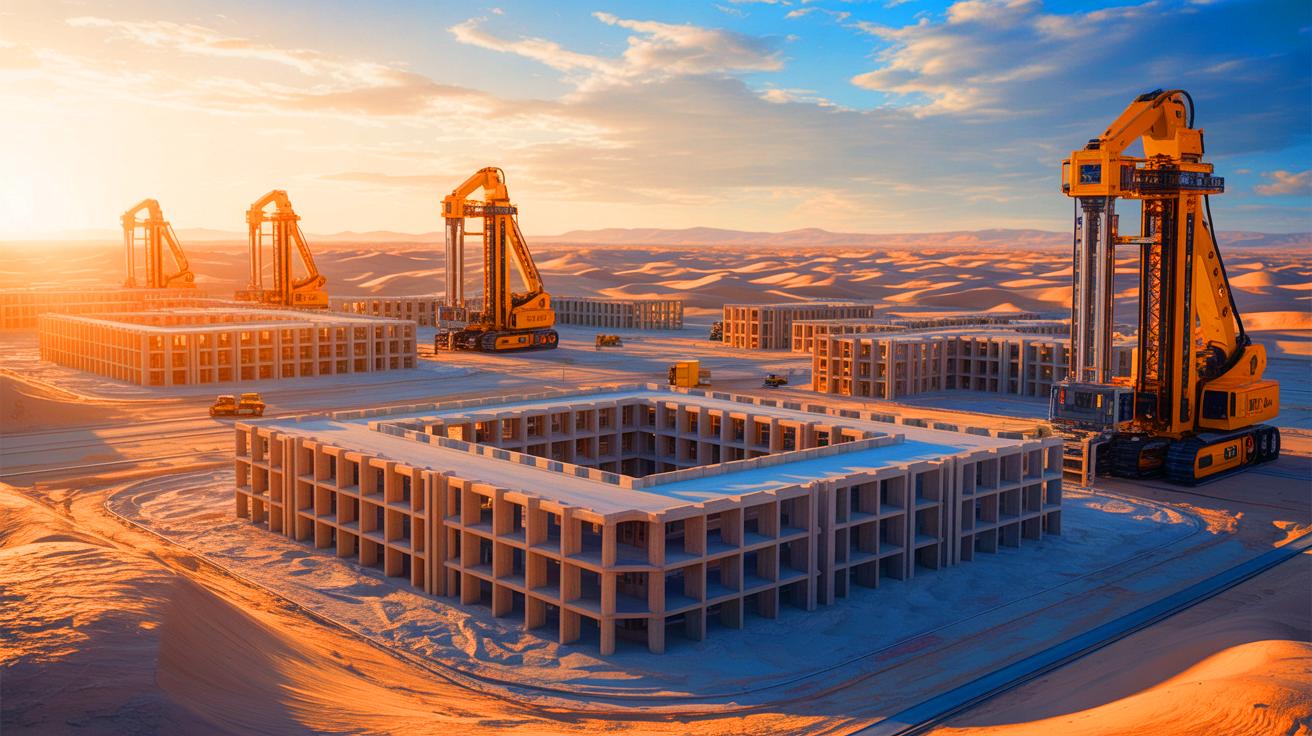
The scale of Qatar’s 3D printing project is unprecedented. The two schools will collectively span 40 times the size of the previous largest 3D-printed building, which was a luxury equestrian facility in Florida. This leap is a testament to the ambitious nature of Qatar’s undertaking and the potential of 3D printing technology. By commissioning two BODXL printers from COBOD, each as large as an airplane hangar, Qatar is pushing the boundaries of what is possible in the realm of construction.
These printers, measuring approximately 164 feet long, 98 feet wide, and 49 feet high, are capable of extruding specialized concrete to create structures that mimic the natural curves of desert dunes. This approach not only showcases the versatility of 3D printing but also highlights its ability to achieve complex designs that traditional methods would struggle to replicate. In doing so, Qatar is not just setting new construction records but redefining architectural possibilities.
Innovative Techniques and Sustainable Practices
The execution of this project relies heavily on a suite of innovative techniques and sustainable practices. Over the last eight months, a dedicated team of experts, including architects, engineers, and material scientists, has conducted extensive test prints to refine the building process. The concrete mix has been specially formulated to withstand Qatar’s harsh climate, ensuring the longevity and resilience of the structures.
To optimize the construction process, printing operations occur primarily at night. This strategy not only mitigates the effects of extreme temperatures but also enhances the structural integrity of each printed layer. Moreover, it reduces dust and noise pollution, aligning with Qatar’s commitment to sustainable development. By minimizing material waste and carbon emissions, the project exemplifies how technology can be leveraged to achieve environmentally friendly construction solutions.
US and South Korea Strengthen Naval Ties with New Shipbuilding Agreement
Implications for the Future of Construction
As Qatar’s ambitious project nears completion, it sets a precedent for the future of construction worldwide. The successful implementation of large-scale 3D printing in building infrastructure could revolutionize the industry by reducing costs, timelines, and environmental impact. The schools, expected to be completed by the end of 2025, will not only serve as educational facilities but also as symbols of Qatar’s dedication to innovation and sustainability.
This venture positions Qatar as a regional leader in engineering and digital construction, inspiring other nations to explore similar technologies. The potential applications of 3D printing extend beyond schools to various infrastructure projects, offering a glimpse into a future where construction is more efficient, sustainable, and adaptive to environmental challenges.
With Qatar leading the charge in 3D printing innovation, the construction landscape is poised for transformation. As the world watches, one must ask: How will this technological advancement influence global construction practices and redefine our built environments in the years to come?



Wow, this is mind-blowing! Can’t wait to see how it looks when it’s done. 👷♂️
Is this a practical solution for all desert environments or just Qatar?
The innovation is impressive, but what about the cost? Are these schools going to be affordable?
So they’re basically printing schools in the desert… sounds like sci-fi! 🤯
How do they ensure the structures can withstand the harsh desert climate?
3D printing is the future! Kudos to Qatar for leading the way. 🏆
Great initiative! But, how long does it actually take to print one school?
Is there a risk of sandstorms affecting the construction process?
This is a game-changer for sustainable construction. Can’t wait to see more projects like this!
Are there any environmental concerns associated with this massive printing project?
Impressive, but why build in the desert? Are there no other locations?
They live in the desert.
Hope they have a maintenance plan for these structures. Sand and wind can be relentless!
Are there any plans to build similar structures in urban areas?
Just imagine the possibilities if this tech becomes widely adopted. 🌍
What happens if one of those giant printers breaks down? Is there a backup plan?
How do they plan to power these massive printers sustainably?
Seems like Qatar is setting a new trend in architecture and construction. Hats off!
Will these buildings have any special features tailored for desert conditions?
This is cool and all, but what about the carbon footprint of operating those massive printers?
Do the schools blend in with the desert landscape, or do they stand out?
I’m skeptical. How will these schools fare in the long run? 🤔
The combination of technology and sustainability is promising—but is it scalable?
How will this project impact local construction workers? Are they involved in the process?
Such a huge leap in construction methods! It’s like witnessing history in the making. 📜
Curious about the durability of 3D printed structures compared to traditional ones. Anyone knows?
Can’t wait to see how these schools will look. I hope they upload some photos soon! 📸
Are there any other countries trying something similar, or is Qatar the first?
Bravo, Qatar! Leading the way in sustainable innovation. 🌟
3D printing a school sounds cool, but are there enough skilled workers to manage such projects?
Is the printing material completely made from desert sand? That would be amazing!
Are there any concerns about the structural integrity of these printed buildings?
What a futuristic project! Can’t wait to see how it transforms the education landscape in Qatar.
Hopefully, this initiative will inspire more sustainable construction worldwide. 🌱
Sand + technology = mind blown. What will they think of next? 🌪️
Will the schools be equipped with tech-friendly facilities or just standard classrooms?
Such a bold move by Qatar. Hope it pays off in the long run!
Impressive project, but are there any security concerns with 3D printed structures?