



| IN A NUTSHELL |
|
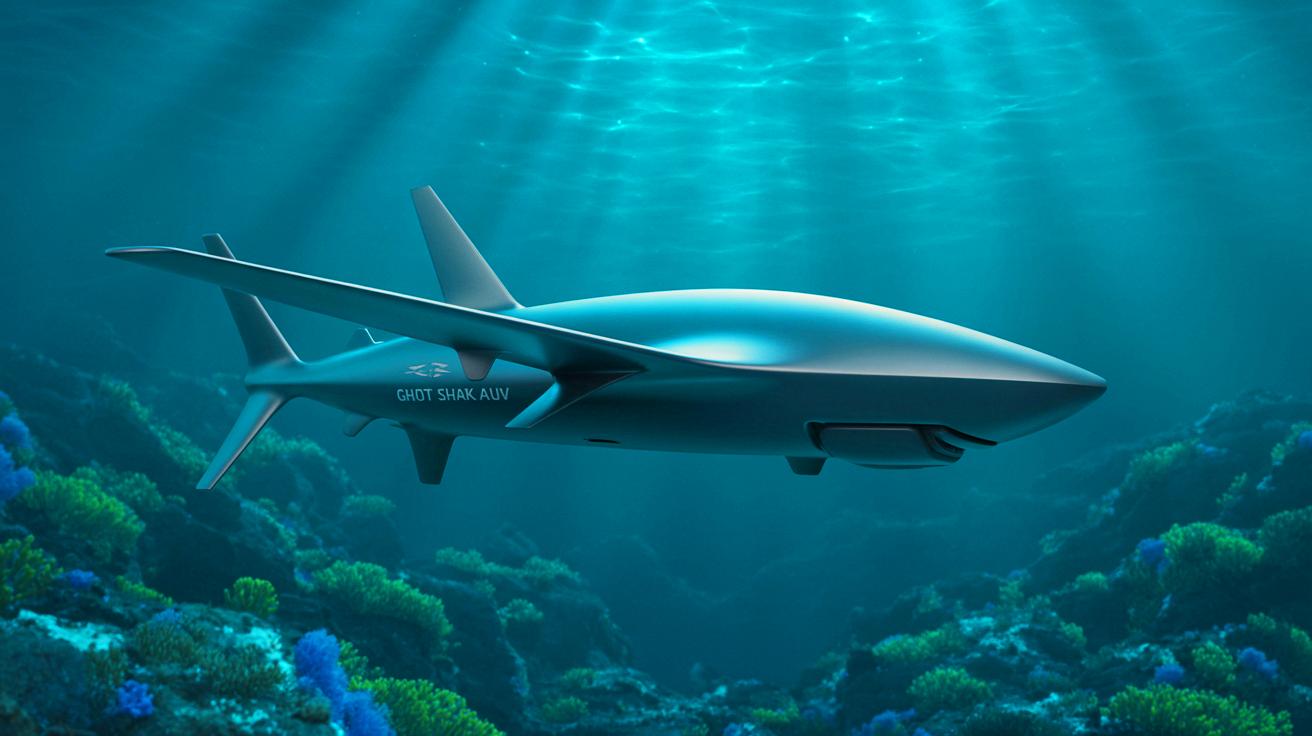
In a significant development in military technology, Australia has unveiled its new Ghost Shark Extra Large Autonomous Undersea Vehicle (XL-AUV), made possible through a collaboration with defense tech company Anduril. This move marks a significant leap in undersea warfare capabilities, placing Australia ahead of the United States, which has faced delays in similar endeavors. The Ghost Shark, designed to perform a variety of stealthy and strategic missions, will be a critical component of Australia’s naval forces. With plans to integrate advanced artificial intelligence and modular payloads, the vehicle promises to change the landscape of undersea defense.
The Fast Track to Undersea Dominance
Australia’s rapid development of the Ghost Shark undersea drone marks a milestone in defense procurement. The project, a result of a AUS$1.7 billion (US$1.1 billion) deal with Anduril, showcases how public-private partnerships can accelerate technological advancements. Both the Australian government and Anduril shared the development costs, each investing $50 million in 2022. This collaboration resulted in the first prototype being delivered in April 2024, a full year ahead of schedule.
Anduril CEO David Goodrich emphasized the ongoing development and integration of new capabilities into the Ghost Shark. Anduril’s willingness to invest its own capital demonstrates confidence in the project’s potential to redefine undersea warfare. The Australian government’s commitment to this fast-track acquisition model highlights its strategic foresight in defense capabilities.
“At the end of the day, this comes down to having seriousness, having imagination, and having the will to conceive a new era and bring it to fruition,” said Chris Brose, Anduril’s president. This sentiment underscores the innovative spirit driving Australia’s defense strategy.
The U.S. Struggles to Keep Up
The United States faces challenges in its own undersea drone program, highlighting a stark contrast with Australia’s achievements. The U.S. Navy’s Orca XLUUV program, developed by Boeing, has been in progress for nearly a decade but remains behind schedule and over budget. In contrast, Australia’s Ghost Shark was developed in less than three years and is already moving into production.
This discrepancy has been a point of discussion among defense analysts. Brose pointed out that the U.S. has spent significantly more on its program than the combined investment of the Australian government and Anduril. Despite this, the U.S. program lags behind, underscoring challenges in the country’s defense procurement processes.
Anduril is prepared to take advantage of potential opportunities beyond Australia. A large manufacturing facility in Rhode Island stands ready to produce Ghost Sharks for the U.S. if a contract materializes. Meanwhile, a U.S.-specific payload is already undergoing tests off California’s coast, indicating the project’s readiness for broader deployment.
Technological Advancements and Strategic Implications
The Ghost Shark’s capabilities are set to enhance Australia’s naval operations significantly. With the ability to conduct domain awareness operations powered by advanced artificial intelligence, the drone can remain undetected underwater for extended periods. Its all-electric powertrain further contributes to its stealthy nature.
Vice Admiral Mark Hammond of the Australian Navy highlighted the flexibility of the Ghost Shark in deployment. The drones can be launched from shore, deployed from ships, or even transported by air using large aircraft like the C-17. This adaptability was demonstrated in a test flight to Hawaii for the Rim of the Pacific (RIMPAC) exercise.
The Ghost Shark’s design allows for multiple payloads, developed through Australia’s robust R&D program. This ensures the system evolves to meet emerging threats with new weapons and smarter autonomy, maintaining its edge in undersea warfare. As Goodrich noted, “Ghost Shark will continue to evolve, as it must, with new payloads, new weapons, smarter autonomy, and adapting to the emerging threats.”
The Future of Undersea Warfare
Australia’s decision to invest in the Ghost Shark program reflects a strategic shift in its defense posture. As part of the AUKUS pact, the drone will complement future surface combatants and nuclear-powered submarines, enhancing the country’s ability to protect its maritime interests. Its role in surveillance, reconnaissance, strike operations, and coastal defense patrols marks a new era in autonomous undersea technology.
The Ghost Shark program symbolizes more than just technological advancement; it represents a strategic vision for Australia’s defense capabilities. The combination of speed, flexibility, and advanced technology ensures the country remains at the forefront of military innovation. This development raises important questions about the future of international defense collaboration and the balance of power in undersea warfare.
As Australia paves the way for a new model of defense procurement, the question remains: How will other nations respond to this shift in military strategy, and what implications will it have for global security dynamics?
This article is based on verified sources and supported by editorial technologies.




Wow, Australia is really stepping up its game! What other innovations are they working on? 🤔
Wow, Australia’s really stepping up their game with these Ghost Shark drones! 🦈
Does anyone else think “Ghost Shark” sounds like a movie title? 🤔
Isn’t it a bit dramatic to say “humiliates”? I mean, it’s just a drone, right?
Why is the U.S. so far behind on their undersea drone program?
Great job, Australia! 👏 Thanks for setting a new standard in military tech.
Bravo to Australia for delivering these drones a year early! 👏
It’s being developed by an American company…this article is trash…
Can someone explain why the US is so far behind? Seems like they have more resources! 🤷♂️
Is this the start of a new undersea arms race?
How do these drones compare to traditional submarines in terms of stealth and efficiency?
Seems like public-private partnerships are the way to go! 💡
Australia’s move is impressive, but how reliable is AI in military operations?
What are the environmental impacts of these drones on marine life?
Ghost Sharks? Sounds like something out of a sci-fi movie! 😂
Incredible achievement, but $1.1 billion is no small change. Is it worth it?
How do these drones communicate underwater without being detected?
America should take notes! This is how you innovate in defense tech!
Anduril is an American company….
The article is great, but where can I learn more about the Orca XLUUV? 🐋
Looks like Australia is the new leader in undersea warfare technology! 🇦🇺
Is it just me, or does this sound like a James Bond plot?
How will the Ghost Shark drones be integrated with existing naval forces?
Hope these drones don’t end up like the F-35 with endless delays and cost overruns!
The U.S. needs to get its act together—this is embarrassing!
Can the Ghost Shark be used for non-military purposes?
What exactly do “modular payloads” mean in this context?
Is this technology exportable to other countries, or is it exclusive to Australia?
It’s being developed by an American company…this article is trash…
Great job, but can we see some real footage of these drones in action? 🎥
How does Australia’s defense budget compare to the U.S. in terms of undersea investments?
Seems like a huge leap forward, but how reliable is the AI technology used?
The US Navy needs to catch up ASAP! This is a real wake-up call!
Can these drones be hacked? Cybersecurity must be a top concern!
Will these new drones affect global maritime security policies?
Is it possible for the U.S. and Australia to collaborate on future developments?
What does this mean for the future of manned submarines?
How are these drones powered—are they environmentally friendly?