


| IN A NUTSHELL |
|
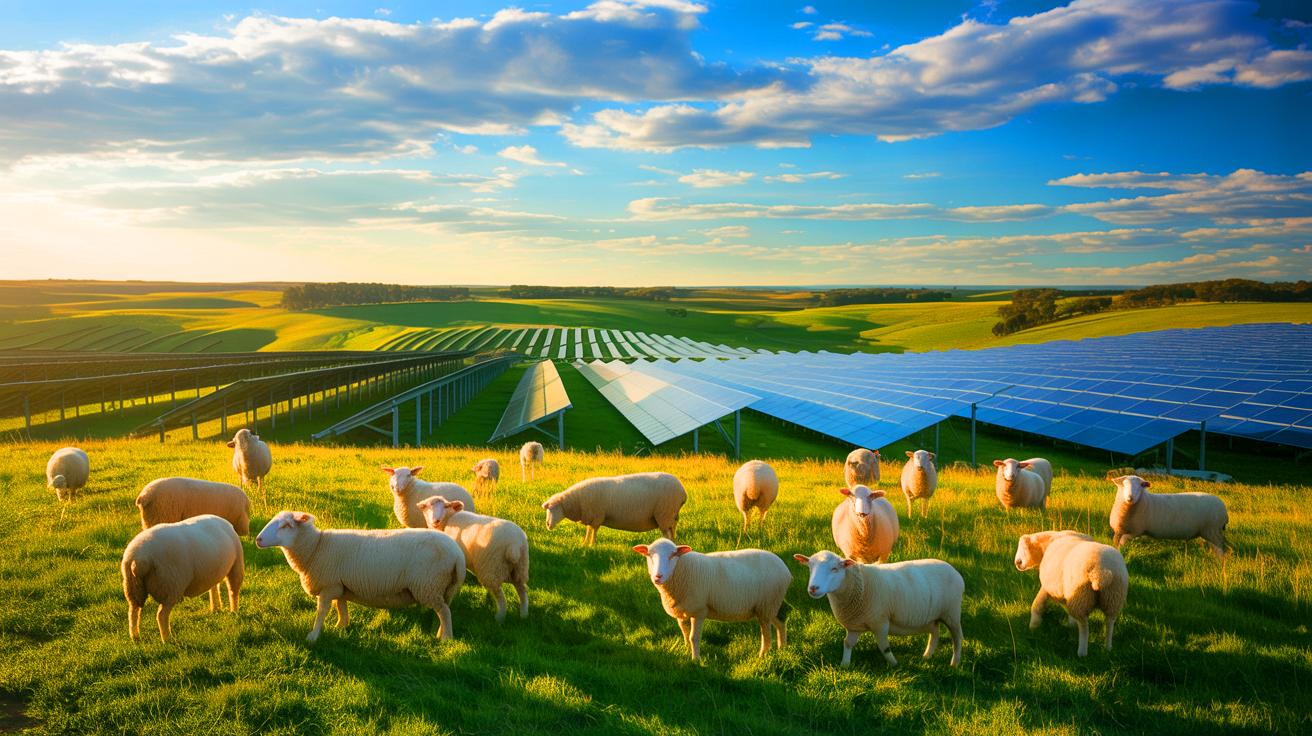
As the world grapples with the urgent need for sustainable energy solutions, an innovative approach is gaining traction in Australia: combining agriculture with solar power. This method, known as agrivoltaics or ‘solar grazing,’ allows farmers to maintain their grazing landscapes while generating electricity. The concept, already popular in Europe and Japan, is now making waves in Australia, offering a promising dual-use of land. The Glenrowan West solar farm, led by Gayle and Tom Lee, exemplifies this trend by integrating a 149-megawatt solar power station with traditional farming practices, paving the way for sustainable agriculture and energy production.
The Agrivoltaic Process: Marrying Grazing with Solar Power
Agrivoltaics, or ‘solar electric sheep,’ is a process that integrates sheep grazing with solar electricity generation. This innovative approach ensures that vegetation under and around solar panels is well-maintained, improving soil health while enabling cost-effective energy production. Australian farmer Ben Wynn has been instrumental in pioneering this model with his company Wynergy, which explores cattle grazing alongside solar farms. However, Wynn emphasizes the challenges of establishing a design that accommodates both animals and solar infrastructure. Misaligned panels or inadequate tracking systems can render solar grazing unfeasible, highlighting the importance of strategic planning.
“You need to establish a design that provides the capacity to host animals. It’s really difficult and challenging too,” Wynn stated, underscoring the complexities involved.
https://www.energy-reporters.com/environment/they-want-to-end-fossil-fuels-with-this-europes-eco-solar-cell-sparks-uproar-as-green-elites-and-industrial-workers-face-off/
Advantages for Farmers and Solar Companies
Agrivoltaics offers significant benefits for farmers who wish to retain their grazing landscapes without ceding control to large solar companies. Eric Nordberg, a researcher at the University of New England, points out that this setup benefits both farmers and solar companies. Farmers retain their land, while companies obtain free vegetation management, reducing maintenance costs. Despite the growing interest, local on-the-ground data about the benefits and drawbacks of agrivoltaics remains limited. However, initiatives like the one funded by NSW’s EnergyCo aim to bridge this gap by developing comprehensive guidelines for solar farm setups.
Boosting Wool Quality and Quantity Through Solar Grazing
Solar grazing has been linked to improved wool quality and quantity, an added advantage for farmers. In 2023, Iberdrola, a renewable energy company in Portugal, began utilizing sheep to maintain its photovoltaic farms, finding that the animals help manage land and reduce fire risks. A UK project plans to graze 4,000 sheep on a 1,600-hectare solar farm, potentially saving the project $6.71 million in mowing costs over 40 years. Reports from New South Wales also suggest that sheep grazing under solar panels have produced superior wool, highlighting another advantage of this dual-use land model.
Challenges and Future Prospects
While the agrivoltaic model presents numerous benefits, it is not without challenges. For instance, aligning solar panel infrastructure with grazing needs requires careful design and implementation. Additionally, local data on the practicalities and impacts of such setups is still sparse, necessitating further research and development. Despite these hurdles, the potential of agrivoltaics to revolutionize sustainable farming and energy production is immense. As more countries recognize the dual benefits of this model, the future of agriculture and renewable energy may increasingly intertwine, offering new opportunities for innovation and sustainability.
The integration of farming and solar energy presents a promising avenue for sustainable development, but it raises essential questions about land use and resource management. How can we best balance agricultural needs with renewable energy demands for a sustainable future?

This is such a cool concept! Who knew sheep could help save money and power farms? 🐑💡
Is there any impact on the sheep’s health from being around solar panels all the time?
Love the idea of solar sheep! Can’t wait to see this in other countries too.
How do they ensure the sheep don’t damage the solar panels?
Seems like a win-win for farmers and the environment. 🌍