


| IN A NUTSHELL |
|
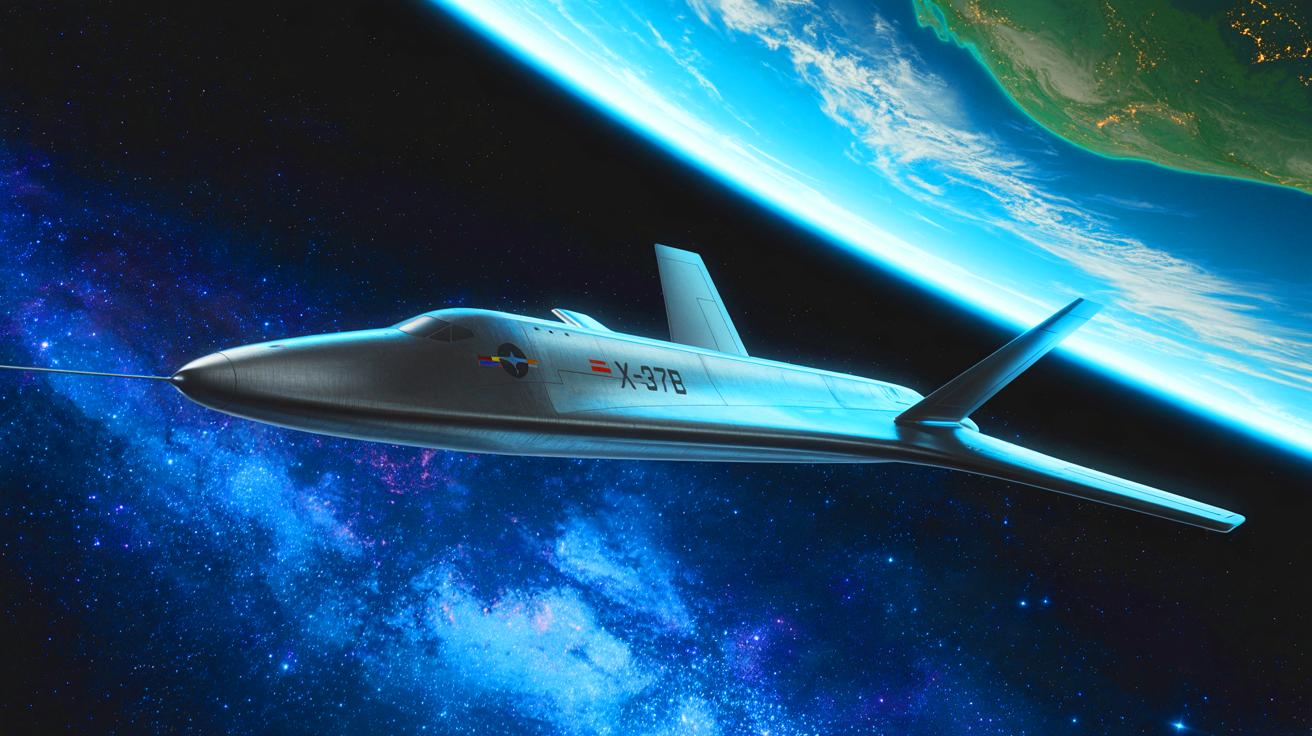
The realm of space exploration and military strategy is advancing at a rapid pace, with nations vying for supremacy beyond Earth’s atmosphere. One such development that has raised eyebrows is the U.S. military’s X-37B space plane, a marvel of modern engineering. This uncrewed, autonomous spaceplane has been at the forefront of American space endeavors, fostering both awe and apprehension globally. As it embarks on its eighth mission, concerns are being voiced, especially by Chinese experts, about its potential to be weaponized. This has led to discussions about the balance of power in space and the implications for international security.
The X-37B: A Technological Marvel
The X-37B space plane, designed and built by Boeing, is a testament to technological advancement in space exploration. This uncrewed vehicle is primarily used for experimentation and testing new technologies. Since its inception, the X-37B has completed seven successful missions, accumulating over 1.3 billion miles and spending thousands of days in orbit. Each mission has incrementally added new capabilities and tested cutting-edge technology, solidifying the X-37B’s role as a crucial platform in the advancement of space technology.
Equipped with state-of-the-art technologies, the X-37B offers exceptional performance and durability. It is capable of conducting a wide range of experiments and missions, which makes it an invaluable asset in the evolution of space capabilities. The spaceplane’s autonomous re-entry capability ensures safe and reliable returns, enabling quick refurbish, reprocess, and re-fly cycles. This adaptability not only supports a variety of scientific and technological advancements but also contributes significantly to the future of space exploration.
Security Implications and Concerns
Chinese researchers have expressed concerns about the rapid development of the X-37B, highlighting potential security risks and unnecessary international competition. They argue that with the integration of technologies like artificial intelligence and nuclear thermal propulsion, the X-37B is evolving in a smarter and more flexible direction. This trend could potentially reshape the landscape of space competition and military strategy.
“With its huge military potential, the X-37B could trigger a new round of the space arms race,” Chinese researchers warned.
https://www.energy-reporters.com/transmission/putin-offers-china-cheap-gas-deal-russia-builds-new-pipeline-with-market-based-pricing-that-could-crash-global-energy-markets-while-challenging-us-dominance-in-asia/
Reports suggest Beijing is similarly extending its military reach into space with its own reusable robotic Shenlong craft. The Shenlong, which completed its third orbital test last year, is seen as a signal of China’s advancing capabilities in space. Such developments underscore the growing competition between major powers and their quest for dominance in space.
China’s Response and Strategic Moves
In response to the advancements made by the X-37B, China has been ramping up its own space capabilities. The Shenlong craft, which landed in the Gobi Desert after 268 days in space, is seen as a direct answer to American advancements. During one of its tests, the Shenlong was suspected of sending a strong signal to Earth while passing over North America, showcasing its potential to match or counteract U.S. capabilities.
China is also reportedly enhancing its ability to target satellites, with the aim of weakening or denying adversaries access to critical space-based assets. This strategic move reflects a broader trend of militarization in space, as major powers seek to secure their interests and maintain technological parity in a rapidly evolving landscape. The interplay of these advancements is reshaping the balance of power, pushing nations to innovate and adapt in response to their rivals’ capabilities.
Future of Space Competition
The ongoing developments in space technology and military strategy pose significant questions about the future of space exploration and competition. The X-37B, with its robust maneuver capability and space domain awareness technology experiments, represents a significant leap forward in the characterization and utilization of the space domain. These advancements are not only critical for national security but also for the broader scope of scientific exploration and technological innovation.
As nations continue to push the boundaries of what is possible, the question arises: How will international laws and agreements adapt to these technological advancements? The potential weaponization of space poses ethical and strategic challenges that the global community must address. The delicate balance between advancing technology and maintaining peace and security in space is a challenge that will undoubtedly require international cooperation and dialogue.
The advancements in space technology, as demonstrated by the X-37B and Shenlong, highlight the rapid pace of change in this domain. As nations continue to vie for supremacy, the implications for global security and cooperation are profound. What measures will be necessary to ensure that space remains a frontier for peace and progress rather than conflict and competition?




Wow, 1.3 billion miles! That’s like traveling to the sun and back more than 7,000 times! 🌞
Wow, 1.3 billion miles! That’s like driving around the Earth a billion times! 🚗🌍
Is it just me or does the X-37B sound like it’s straight out of a sci-fi movie? 😄
How does the X-37B compare to other countries’ space tech? Is it really that advanced?
How does the U.S. plan to address China’s concerns about the X-37B potentially leading to an arms race?
Isn’t it ironic that space, the final frontier, might become the next battleground? 🤔
Thank you for the comprehensive overview! Very informative. 👍
Thank you for the detailed analysis! I had no idea about the Shenlong craft.
So, when are we getting an X-37B ride to Mars? Asking for a friend. 🛸
China’s Shenlong vs. America’s X-37B—sounds like a plot for the next blockbuster!
Space arms race sounds like something out of a sci-fi movie. Are we heading for Star Wars? 😅
I’m curious, how does the X-37B compare to other space planes in terms of technology and capability?
Why is there so much secretcy around these space missions?
Is there any international treaty that addresses the weaponization of space vehicles? 🤔
Great article, but I’m still skeptical about the actual threat level of these space planes.
1.3 billion miles? That’s farther than my car can go without a breakdown! 🚗😂
Does anyone else think this is just another space race like the 1960s?
How does the Shenlong’s technology stack up against the X-37B’s?
Thanks for sharing this! I learned a lot about space competition.
Could the X-37B or Shenlong be used for peaceful scientific research instead of military applications?
I wonder how much this space arms race is costing each country. 💸
What are the long-term implications of this kind of space competition for international relations?
Is there potential for collaboration between the U.S. and China in space exploration?
Space is becoming the new battlefield. Should we be worried? 😟
How do these advancements affect NASA and other space agencies?
This feels like a modern-day Cold War, but in space! 🛰️🥶
How likely is it that these space crafts could actually be weaponized?
I’m all for technological advancement, but we need to be careful about the militarization of space.
What measures are being taken to prevent an actual space arms race?
Could these space planes be used for international missions, like asteroid deflection? 🌠
Why isn’t there more public discourse about the militarization of space?
The X-37B sounds like an amazing piece of technology. Kudos to the engineers! 👏
Is it even possible to regulate space in terms of military use?
How does the X-37B’s 1.3 billion miles compare to other space missions?
Can we stop making everything about military power and focus on scientific benefits? 😒
Why is there so little information about the specific experiments conducted by these spaceplanes?
Thank you for highlighting the risks and benefits of this competition.
When will we see the first space plane race? 🚀🏁
Does anyone else think this article is a bit alarmist?
What role do private companies have in this space arms race?
I’m curious about the environmental impact of such extensive space missions.
Look at all these bots commenting. So many with the same exact idea and almost identical wording. Identical phrasing. Nothing longer than 2 sentences. How many have an emoji at the end? This is pitiful