



| IN A NUTSHELL |
|
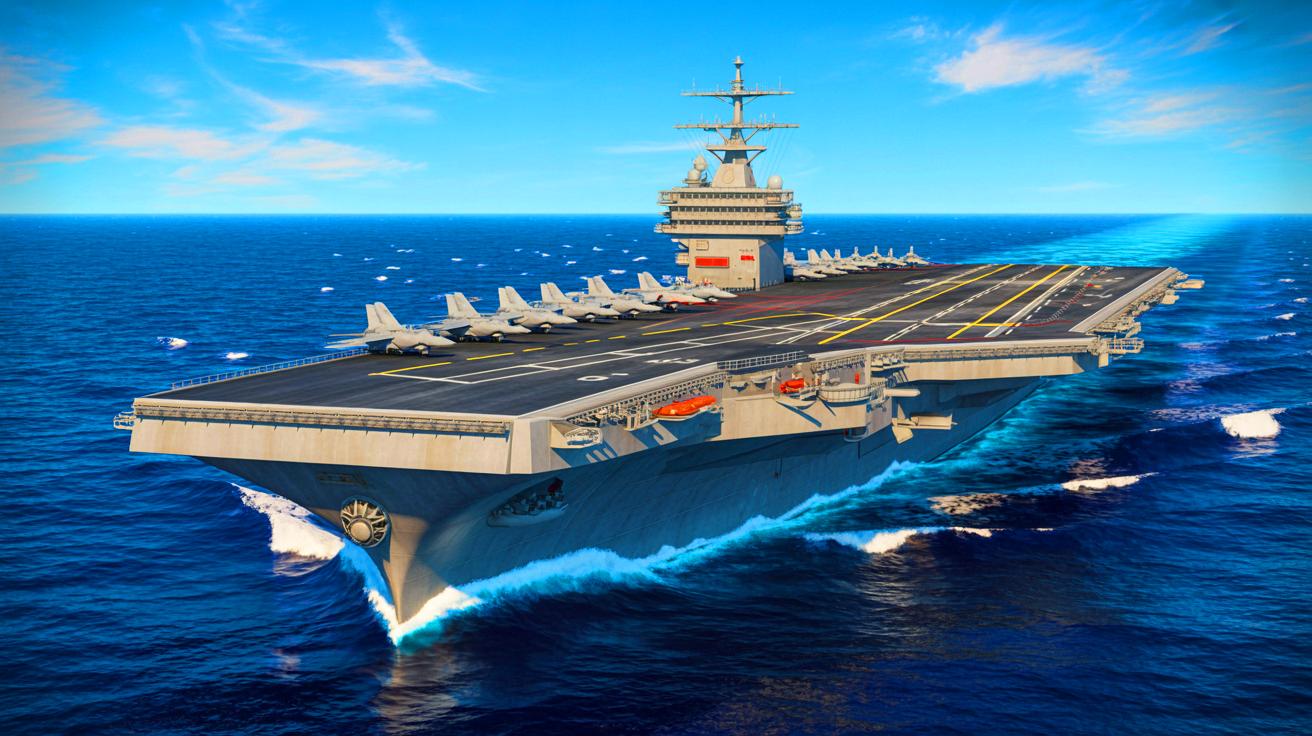
The USS Gerald R. Ford represents the pinnacle of modern naval engineering, standing as the largest and most advanced aircraft carrier in the world today. Named after the 38th President of the United States, this monumental vessel is at the forefront of the U.S. Navy’s strategic capabilities. Since its commissioning in 2017, it has become a cornerstone of naval operations, influencing global maritime strategy. With a significant investment in cutting-edge technology, the USS Gerald R. Ford continues to set the standard for future naval warfare, despite the challenges faced during its development and deployment.
The Technological Marvel of USS Gerald R. Ford
The USS Gerald R. Ford is not only the largest warship in the world, but it is also a technological marvel. The aircraft carrier measures approximately 1,106 feet in length and boasts a flight deck spanning 256 feet. With a displacement of 100,000 tons, it is powered by two nuclear reactors that drive four shafts, enabling speeds exceeding 30 knots. This allows the carrier to operate efficiently across vast distances, projecting U.S. power globally.
One of the key technological advancements is the Electromagnetic Aircraft Launch System (EMALS), which replaces the steam-powered catapults of previous carriers. This system increases sortie rates to 160 per day while reducing stress on aircraft, thus enhancing operational efficiency. Moreover, the advanced arresting gear improves recovery operations, while advanced weapons elevators ensure quick and efficient ordnance transport to the flight deck.
The warship’s power generation capacity is also noteworthy, generating three times the electrical power of its predecessors, the Nimitz-Class carriers. This is crucial for supporting the array of onboard systems, which includes sophisticated radar and defense systems, such as the SLQ-32(V)6 electronic warfare system and the Evolved Sea Sparrow Missile (ESSM) Block 1.
Strategic Importance and Global Impact
The USS Gerald R. Ford plays a vital role in U.S. naval strategy, serving as the centerpiece of the Carrier Strike Group. This group typically includes cruisers, destroyers, and supply ships, creating a formidable force capable of sustaining operations at sea. It supports air wing missions for combat, reconnaissance, and deterrence, reinforcing U.S. military presence worldwide.
Deployments to strategic locations, such as the Mediterranean, highlight its role in regional deterrence and influence. The carrier’s presence in these areas serves as a deterrent to potential adversaries, showcasing the U.S.’s commitment to maintaining global stability and peace. Its involvement in naval exercises further demonstrates its capabilities and reinforces alliances with other nations.
However, the carrier’s impact extends beyond military operations. It symbolizes technological prowess and national pride, serving as a testament to American innovation and engineering. As the most expensive warship ever constructed, with a price tag of approximately $13.3 billion, it is an investment in the future of naval warfare and security.
Challenges and Controversies
Despite its impressive capabilities, the development of the USS Gerald R. Ford was not without challenges. The carrier’s construction was plagued by delays and budget overruns, primarily due to the integration of new technologies. Issues with the certification of weapon elevators, EMALS, jet blast deflectors, and radar systems contributed to these setbacks.
These challenges underscore the complexities involved in pioneering new technologies on such a large scale. The cost overruns, which exceeded initial estimates by 30%, sparked debates over the allocation of defense spending and the prioritization of military projects. Critics argue that the resources could have been directed towards other defense needs or social programs.
Moreover, the ship’s automation systems, designed to reduce the crew size by 700, have prompted discussions about the impact on personnel and the future of naval employment. While automation reduces operational costs and improves the quality of life for the crew, it also raises questions about job security and the human element in military operations.
Future Prospects and Adaptability
The USS Gerald R. Ford is designed with future adaptability in mind. Its advanced systems allow for the integration of new technologies, such as advanced drones, ensuring its relevance in the evolving landscape of naval warfare. As threats and technologies change, the carrier can be upgraded to maintain its strategic edge.
This adaptability is crucial for addressing emerging challenges and maintaining the U.S. Navy’s superiority. The ability to incorporate new technologies ensures that the USS Gerald R. Ford remains a vital asset for decades to come, capable of responding to unforeseen threats and opportunities.
As the flagship of the Ford-class carriers, it sets the standard for future vessels, influencing the design and development of subsequent ships. The lessons learned from its construction and deployment will inform future projects, shaping the future of naval engineering and strategy.
The USS Gerald R. Ford embodies the intersection of tradition and innovation, serving as a testament to the enduring strength of the U.S. Navy. As it continues to sail the world’s oceans, the question remains: how will emerging technologies and geopolitical shifts influence the future role of such monumental vessels in global security?



Wow, those guns are massive! 🔫 But are they really necessary in today’s world?
What 100ft guns? They do not exist. Fake headline.
Isn’t this just a waste of money? Couldn’t funds be better spent elsewhere? 🤔
If we get in a war with China they will just find our ships and overload the ship’s defenses and destroy the ship! It’s a waste of time and money!
Thank you for a very informative article on naval power and technology!
I wonder how the crew feels about working on such a high-tech ship. Are there any interviews available?
As a taxpayer, I’m concerned about the cost overruns mentioned. Why is this so common in military projects?
Can’t help but think of “Transformers” with those towering guns! 🤖
How does the environmental impact of this carrier compare to older models?
What happens if the EMALS system fails? Are there backups in place?
It’s fascinating how much technology has evolved in naval warfare. Amazing read!
How does the USS Gerald R. Ford compare to other countries’ aircraft carriers?
Can these new technologies be adapted for civilian use, like in shipping industries?
The automation aspects are intriguing. Will this mean fewer jobs for sailors? 🤖
Is there any public access to tour the USS Gerald R. Ford? I’d love to see it in person!
Is this really what we need for peacekeeping, or is it just showing off military might? 🌍
Seems like a floating city! How many people does it accommodate?
Does the new electromagnetic system have any health risks for the crew?
Thanks for sharing! The blend of tradition and innovation is impressive. 🚢
Can this ship withstand modern cyber threats?
The advanced drone capabilities sound futuristic! Are they operational yet?
Why does the military keep building bigger and more expensive ships?
Incredible engineering feat, but what about the risk of accidents at sea?
How long can the USS Gerald R. Ford stay at sea without resupplying?
I find it hard to believe it only needs a crew of 700 less than previous carriers!
When will other nations catch up to this level of naval technology?
Those guns look like something out of a Sci-Fi movie! Does it really need such firepower?
With all that power, are there any environmental safeguards in place?
Great article, but can we really justify such a massive warship in times of peace?
Does the ship have any capabilities for humanitarian missions?
What’s the expected lifespan of the USS Gerald R. Ford?
Will this ship be a game-changer in how naval battles are fought in the future?