

| IN A NUTSHELL |
|
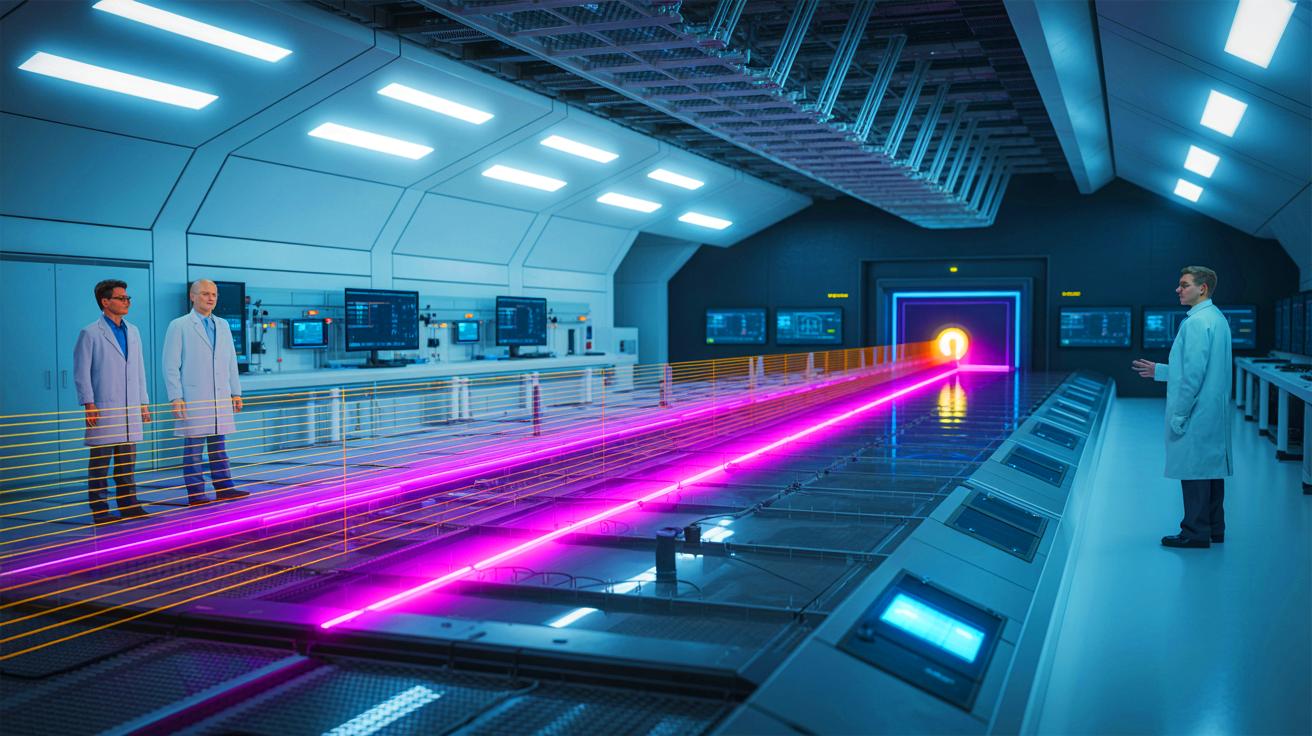
A groundbreaking achievement in power transmission has emerged from a collaborative effort led by the Defense Advanced Research Projects Agency (DARPA) and the U.S. Naval Research Laboratory. The team successfully set a new record in optical power beaming by transmitting 800 watts of power over a distance of 5.3 miles, a significant leap from the previous record of 230 watts over 1.7 miles. This advancement highlights the potential for transforming how energy is delivered to remote or critical locations, enhancing operational capabilities in military and other strategic contexts. This technological feat marks a new chapter in power distribution, possibly shaping the future of energy logistics.
The Vision for Remote Energy Delivery
Power beaming technology presents a transformative opportunity for military operations and beyond. By transmitting energy over long distances, this technology aims to circumvent the logistical challenges associated with transporting fuel and power generation equipment to remote or hazardous locations. Traditional methods of energy delivery to these areas often involve complex and risky operations. Power beaming could streamline these processes, offering a more efficient and safer alternative.
According to DARPA, energy is a critical component of military operations, and ensuring its availability at the “edge”—such as on the battlefield or in disaster zones—is paramount. By harnessing power beaming, the military envisions a future where energy can be delivered swiftly and securely, reducing the reliance on conventional supply chains. This capability is not only strategic but could also significantly cut costs and resources currently devoted to energy logistics.
Beyond military applications, power beaming could revolutionize energy distribution for civilian use, potentially enabling remote communities to access sustainable energy sources without the need for extensive infrastructure development.
Breaking Records with Innovative Technology
The recent breakthrough in power beaming was facilitated by the development of a customized receiver and the utilization of a high-energy optical laser. This setup was crucial in overcoming the limitations of previous demonstrations. The receiver’s compact aperture design minimized energy loss as the power beam passed through, ensuring that more energy reached its destination.
Once inside the receiver, the laser beam encountered a parabolic mirror, which redirected the energy to photovoltaic cells, converting it into usable electricity. This innovative approach enabled the team to achieve significant milestones in both distance and power transmitted, marking a new high in the field of optical power beaming.
The team’s achievement was not only a technical success but also an embodiment of creativity, as demonstrated by their light-hearted use of the transmitted energy to pop popcorn—a nod to the 1980s film “Real Genius.”
https://www.energy-reporters.com/environment/dysons-robot-greenhouse-grew-200000-strawberries-terrifyingly-efficient-lincolnshire-farm-uses-ai-and-renewable-power-to-redefine-sustainable-food-production/
Conducting the tests at ground level added further challenges due to atmospheric interference. However, overcoming these challenges only underscores the robustness and potential of the technology when deployed in more optimal conditions.
Looking Ahead to POWER Phase 2
Following the success of the recent demonstrations, the POWER program is entering its second phase, with ambitious goals to enhance the efficiency and scalability of the technology. The team plans to explore various improvements to their existing design, aiming to extend the reach and power capacity of their system.
Phase 2 will also focus on adapting the technology for different platforms, such as unmanned aerial vehicles (UAVs), to further expand its application scope. This adaptability could open new avenues for energy delivery, providing flexible solutions for diverse operational needs.
As DARPA moves forward, the organization is actively seeking partnerships with industry innovators to accelerate the development and implementation of power beaming technology. This collaborative approach is expected to drive further advancements, pushing the boundaries of what is possible in energy transmission.
“This demonstration broke through misconceptions about the limits of power beaming technology, and it is already spurring industry to reimagine what’s possible,” remarked Paul Jaffe, POWER Program Manager.
Implications for Future Energy Strategies
The implications of successful power beaming technology extend far beyond military applications. In a world increasingly focused on renewable energy and sustainability, the ability to transmit power efficiently over long distances could play a critical role in global energy strategies.
For remote or off-grid communities, power beaming could provide access to clean energy without the need for costly infrastructure development. This capability could also support disaster relief efforts, enabling rapid deployment of energy resources to affected areas.
Moreover, as space exploration continues to advance, power beaming could facilitate energy transmission between Earth and space, supporting long-duration missions and extraterrestrial operations. The potential to beam energy from space-based solar panels to Earth could revolutionize how we harness and utilize solar power.
As the POWER program progresses, it will be essential to monitor its developments and consider the broader implications for energy policies and infrastructure. How will power beaming reshape our approach to energy distribution in the coming decades?


Wow, 800 watts over 5.3 miles! That’s some serious power. How soon can we expect this tech to be used commercially? 🚀
This is amazing! Are there any plans to test this technology in space? 🌌
So, does this mean I can finally have a laser-powered drone? Asking for a friend. 😉
Isn’t there a risk of these beams being harmful if they miss their target?
Great achievement! Thanks for sharing the news. 🌟
How does power beaming compare to traditional methods like power lines in terms of efficiency?
No way this is real, sounds like something out of a sci-fi movie! 🤔
What’s the environmental impact of using laser beams for power transmission?
800 watts? Is that enough to power a small village or just a few devices?
Can we expect to see this tech being used for disaster relief anytime soon?
Does this mean my phone will soon be charging via laser beams? 🔋✨
Interesting, but what about the cost? How much would it take to implement this globally?
What happens if something obstructs the beam, like a bird or a plane?
Imagine using this tech to power remote islands. The possibilities are endless! 🌴
Can this technology be scaled up for larger applications, like powering cities?
This sounds cool and all, but isn’t there a chance of weaponizing this tech? 😬
I’m skeptical. How reliable is this method compared to traditional power sources?
How does the power beaming technology deal with weather interference?
Thanks to DARPA and the team for pushing the boundaries of what’s possible. 🙌
Could this technology reduce our dependency on fossil fuels?
So, when can we expect to see laser-powered cars? 🚗💨
Is there any potential for this tech to be used in everyday household applications?
How secure is power beaming? Can the beams be intercepted or hacked?
I’m excited to see where this goes! Keep us updated. 👍
What are the next steps for DARPA’s power beaming project?
Does the technology work the same way in space, considering the lack of atmosphere?
This sounds promising for remote military bases. How soon can it be deployed? 🪖
How does the efficiency of this system compare to solar panels?
How much energy is lost during transmission using the laser beams?
Can this technology be adapted for use in space exploration missions?
I’m curious, how does this technology impact human health if accidentally exposed?
Is there a practical limit to how far we can beam power with this technology?
What kind of maintenance does this system require, if any?
So, can we expect to see laser-powered flight soon? ✈️
What are the biggest challenges remaining for this technology to become mainstream?
This is fascinating! How can I learn more about the technical details?