



| IN A NUTSHELL |
|
In a groundbreaking development that could reshape the aviation industry, Swiss scientists have successfully created a process to produce carbon-neutral jet fuel using sunlight and air. This innovation holds the potential to significantly reduce the carbon footprint of aviation, which currently accounts for nearly 3% of global CO2 emissions. The new method, developed by researchers at ETH Zurich, uses solar energy to convert carbon dioxide and water from the air into syngas, which is subsequently transformed into kerosene and methanol. As the world grapples with climate change, this advancement could become a cornerstone in the global effort to decarbonize transportation, providing a sustainable alternative to traditional jet fuels.
Harnessing Solar Power for Sustainable Fuels
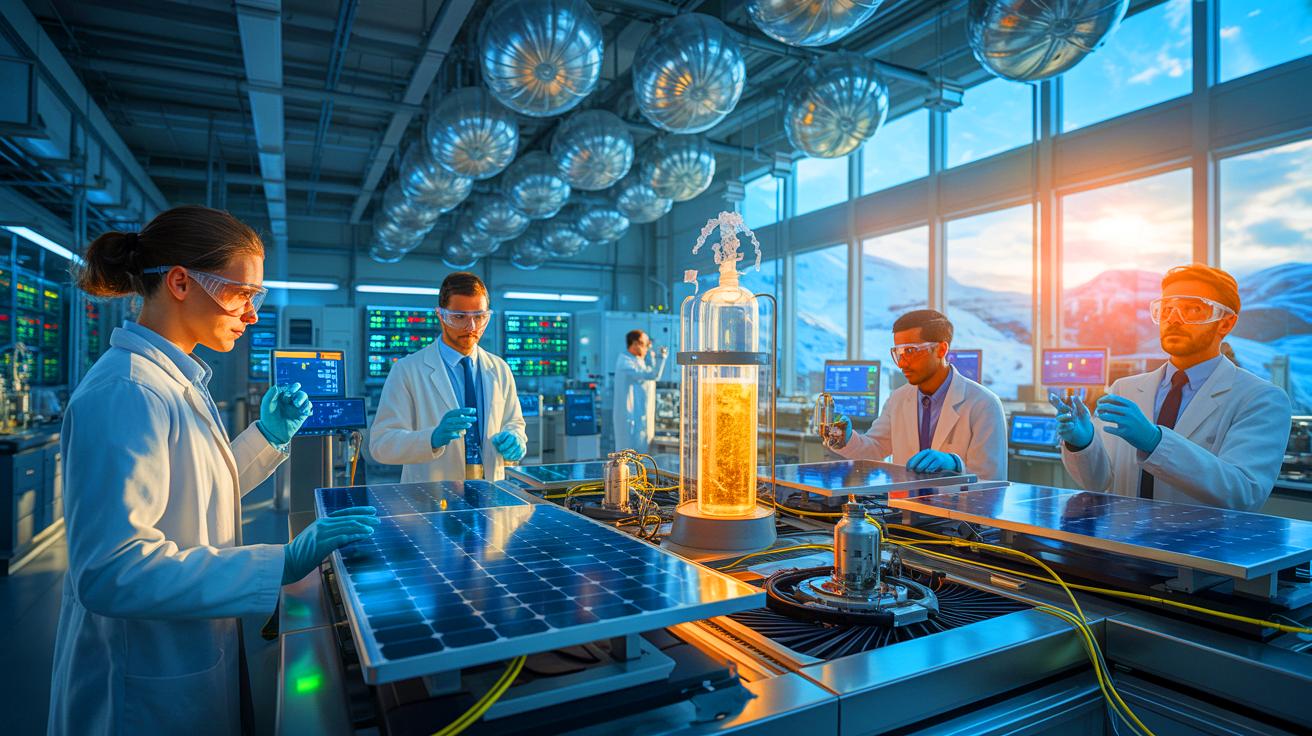
The process developed by Swiss scientists revolves around a state-of-the-art industrial plant that extracts carbon dioxide and water from the air, using solar energy to split these compounds into syngas. Syngas, a mixture of hydrogen and carbon monoxide, can then be processed into kerosene and methanol. This solar-powered transformation is revolutionary in its ability to create carbon-neutral fuels, as the CO2 emitted during combustion is offset by the CO2 absorbed during production.
Professor Aldo Steinfeld, who leads the research at ETH Zurich, emphasizes the dual impact of this technology: reducing greenhouse gas emissions from aviation and utilizing desert areas for fuel production. Unlike biofuels, which often compete with food crops for arable land, solar fuels can be generated in sun-rich desert regions, preserving valuable agricultural land. This strategic advantage not only enhances environmental sustainability but also aligns with global efforts to transition to renewable energy sources.
The Economic and Environmental Challenges
Despite its promising potential, the large-scale production of solar fuels faces significant economic and logistical challenges. Initial investments for establishing industrial-scale plants are substantial, and the current cost of solar kerosene ranges between $1.35 and $2.20 per liter. To overcome these hurdles, researchers suggest implementing policy measures such as fuel quotas, mandating airlines to source a portion of their fuel from solar-based options. Such regulatory frameworks could facilitate the scale-up of this technology, driving down costs through increased demand and production.
Moreover, the reliance on sunlight as a primary energy source presents geographical constraints. While desert areas offer optimal conditions for production, transporting these fuels to major aviation hubs necessitates a robust infrastructure, further complicating the economic viability. Addressing these challenges will require coordinated global efforts, involving governments, industry stakeholders, and financial institutions to create an ecosystem that supports sustainable aviation fuel development.
Global Implications and Industry Response
The International Air Transport Association (IATA) recognizes the critical role of sustainable aviation fuels (SAF) in achieving net-zero CO2 emissions by 2050. The International Energy Agency (IEA) projects that SAFs could meet 10% of aviation fuel demand by 2030, escalating to nearly 20% by 2040. This transition is vital as global air travel is set to rebound post-pandemic, with passenger numbers expected to reach 7.5 billion by 2035.
Initiatives like the World Economic Forum’s Clean Skies for Tomorrow Coalition are pivotal in accelerating the deployment of SAFs. Comprising over 60 stakeholders, this coalition aims to power the aviation industry with 10% sustainable fuels by 2030. Through collaborative efforts, the coalition seeks to create a demand aggregation mechanism, co-investment vehicles, and industry-specific blueprints to facilitate the adoption of carbon-neutral flying.
Future Prospects for Carbon-Neutral Aviation
As the aviation sector strives to reduce its carbon footprint, the shift from fossil fuels to sustainable alternatives is paramount. Current SAF usage accounts for less than 0.1% of total aviation fuel consumption, highlighting the need for increased production and investment. The Clean Skies for Tomorrow Coalition is spearheading initiatives to advance the commercial scale of low-carbon aviation fuels, aiming for widespread industry adoption by 2030.
The transition to carbon-neutral aviation is not without its obstacles. It demands commitment, innovation, and cross-industry collaboration among government leaders, climate experts, and industry CEOs. The success of this endeavor will hinge on the willingness of stakeholders to invest in and support sustainable fuel technologies, ultimately reshaping the future of air travel.
The breakthrough in producing jet fuel from sunlight and air marks a significant milestone in the quest for sustainable aviation. While challenges remain, the potential environmental benefits and alignment with global climate goals underscore the importance of continued research and investment in this field. As the world seeks viable solutions to combat climate change, can the aviation industry rise to the challenge and lead the charge toward a carbon-neutral future?


Wow, this is like something straight out of a sci-fi movie! 🌞✈️
Is there a timeline for when airlines might start using this fuel?
Finally, a way to reduce emissions without giving up travel! 🙌✈️
Are there any other countries working on similar projects?
How much land would be required for these solar plants?
This is groundbreaking! Hope it becomes mainstream soon.
What would the impact be on airline industry jobs?
Will this tech be available for commercial flights or just for cargo?
The future of aviation looks bright (and sunny)! 😎
Sounds too good to be true. What’s the catch?
How will this affect airline CO2 taxes?
Is it just me, or does this sound like magic? 🎩✨
Can this technology be adapted for other forms of transportation too?
What are the major hurdles in producing this fuel at scale?
Thank you to the scientists working on this important issue!
Will this make flights more affordable in the long run?
How do they capture the CO2 from the air exactly?
I’m curious, how many planes could this fuel potentially power?
Great news for the planet! 🌍✈️ Thanks for the update.
Hope they can overcome the economic challenges soon.
What will happen to the existing fuel infrastructure?
Finally a ray of hope for sustainable flying! 🌞✈️
Can’t wait to see this tech take off… literally!
Will this fuel work in all types of aircraft?
How does this compare to electric planes in terms of sustainability?
Such innovation! Thank you to all the brilliant minds behind this.
Can individuals invest in this technology somehow?
Would love to hear more about the Clean Skies for Tomorrow Coalition!
Sounds promising, but how long until we see this implemented on a large scale?
Swiss scientists are always up to something cool! 🇨🇭
What are the potential environmental downsides, if any?
This sounds amazing! Thank you for sharing such an exciting development. 😊
So, will plane tickets be more expensive if they use this fuel?
How does the efficiency of this fuel compare to traditional kerosene?