
Close Menu
  • Featured
    • News
    • Consumption
    • Environment
    • Industry
    • Opinion
    • Policy
    • Production
    • Storage
    • Transmission
  • About Us
  • Advertise
  • Contact Us

Subscribe to Our Newsletter

News, investigations, and analysis — our top stories every morning to start your day right.

Trending
The Key Benefits of Oil
CO2 Emissions: How Carbon Dioxide Affects the Environment and the Planet
Ocean Warming: A Growing Threat to Marine Ecosystems and the Global Environment
Facebook X (Twitter) LinkedIn YouTube TikTok
Energy Reporters
Facebook X (Twitter) RSS
Subscribe
  • Featured
  • News

    Researchers Discover That Diamonds Can Generate Electricity

    09/03/2026

    South Africa: Thousands of Dead Sardines Disrupt Koeberg Nuclear Power Plant

    08/28/2026
    Illustration of Abu Dhabi National Oil Company's $11 billion financing deal for future gas production projects.

    ADNOC Secures $11 Billion for Gas Expansion, Transforming Energy Future and Boosting Local Economies

    12/19/2025
    Illustration of Energy Transfer LP's Lake Charles LNG project suspension and strategic shift to pipeline infrastructure.

    Energy Transfer Suspends Lake Charles LNG Project, Sparking Concerns Over Job Losses and Future Energy Solutions

    12/19/2025
    Illustration of a U.S. judge blocking Michigan's attempt to shut down Enbridge's Line 5 pipeline.

    Judge Blocks Michigan’s Effort to Shut Down Enbridge’s Line 5 Pipeline, Sparking Environmental and Economic Debate

    12/18/2025
  • Use

    How energy subsidies affect the market and consumers

    08/11/2026

    Steps to make your business more energy efficient

    06/16/2026

    How to conduct an energy audit for your home

    05/19/2026

    The impact of energy consumption on climate change

    05/12/2026

    Tips for choosing the best energy provider

    05/05/2026
  • Climate

    CO2 Emissions: How Carbon Dioxide Affects the Environment and the Planet

    10/14/2026

    Ocean Warming: A Growing Threat to Marine Ecosystems and the Global Environment

    10/09/2026
    renewable energy industry

    The Benefits of Renewable Energy for the Climate

    09/15/2026

    How to evaluate the carbon footprint of your energy use

    07/21/2026

    The connection between energy use and water resources

    07/07/2026
  • Industry

    How France Produces Its Electricity: Nuclear Power at the Heart of a Changing Energy Mix

    10/02/2026

    The Importance of Oil in Logistics

    09/10/2026
    A bunch of black and white objects with a green arrow above them

    The Ongoing Bribery Case Against Hithium’s Chairman Wu Zuyu Highlights the Stakes for Battery Investors

    02/22/2026
    Illustration of Ford's strategic shift from electric vehicles to gas and hybrid models.

    Ford Reveals $19.5 Billion Charge as EV Strategy Unravels, Impacting Jobs and Future Mobility Choices

    12/17/2025

    US Drillers Cut Oil and Gas Rigs Again, Exposing Potential Economic and Environmental Impacts on Local Communities

    12/13/2025
  • Opinion
    lighted city skyline at night

    Korean Companies Are Losing Ground to China: Why Governance Failures at Conglomerates Like Young Poong Group Matter More Than Ever

    03/22/2026

    Pulling back the curtain on Turkey’s natural gas strategy

    09/01/2020

    How West Africa can expand power supply and meet climate goals

    06/15/2020

    Review: Oil and the Great Powers: Britain and Germany, 1914 to 1945

    06/09/2020

    Eastern Mediterranean gas: testing the field

    05/27/2020
  • Policy

    Understanding dynamic pricing in electricity markets

    06/23/2026

    The influence of artificial intelligence on energy management

    06/02/2026
    renewable energy industry

    How government policies are shaping the energy sector

    04/14/2026

    What you need to know about smart energy management

    02/24/2026

    Trump Administration Faces Delays in Finalizing 2026 Biofuel Quotas, Raising Questions About Future Energy Policies

    12/14/2025
  • Output

    The Key Benefits of Oil

    10/20/2026

    How France Produces Its Electricity: Nuclear Power at the Heart of a Changing Energy Mix

    10/02/2026

    The Importance of Oil in Logistics

    09/10/2026

    Researchers Discover That Diamonds Can Generate Electricity

    09/03/2026

    South Africa: Thousands of Dead Sardines Disrupt Koeberg Nuclear Power Plant

    08/28/2026
  • Storage
    renewable energy industry

    How energy storage can stabilize renewable sources

    06/30/2026

    Innovations in battery technology for energy storage

    03/17/2026
    Illustration of Venezuela's oil storage facilities nearing maximum capacity amid U.S. sanctions.

    Venezuela Faces Oil Storage Crisis as Tanker Restrictions Expose Vulnerabilities in Energy Infrastructure and Economy

    12/18/2025
    time lapse photography of square containers at night

    ‘Mega Batteries’ are Powering the Future of Energy Consumption

    10/23/2025
    Illustration of a gravity-based energy storage system integrated into a skyscraper, utilizing renewable energy sources.

    Gravity Battery Innovation Transforms Skyscrapers into Renewable Energy Storage, Revealing New Possibilities for Urban Sustainability

    10/18/2025
  • Grid

    Understanding energy grids and their modernization

    04/28/2026
    Illustration of Ovintiv and Pembina's collaboration on LNG export from the Cedar LNG facility.

    Ovintiv Agreement for Cedar LNG Capacity Sparks New Era in North American Energy Collaboration and Innovation

    12/16/2025
    Illustration of Star Catcher Industries' power beaming technology at NASA's Kennedy Space Center.

    Star Catcher Achieves Breakthrough, Sets New 1.1-kW Power Beaming Record, Transforming Future Energy Solutions

    11/25/2025
    Illustration of U.S. LNG exports navigating global market challenges and expanding into Asian regions amidst rising competition.

    US LNG Export Dominance Faces Challenge as Sellers Explore New Markets Beyond Europe’s Energy Demand

    11/23/2025
    Illustration of the race to develop new pipelines in response to California refinery closures and rising fuel prices.

    California Refinery Closures Drive Urgent Pipeline Race, Transforming Energy Supply Dynamics on the West Coast

    11/19/2025
Energy Reporters

“Abandoned Coal Hole Leaks 235 Tons”: Australian Scientists Discover Hidden Methane Super Emitter In Farm Paddock That’s 80 Times Worse Than Carbon Dioxide

An abandoned coal borehole in rural Queensland, Australia, has been identified as a significant "super-emitter" of methane, highlighting a potentially widespread and underreported environmental threat.
Eirwen WilliamsEirwen Williams09/07/202516
Share Twitter Facebook LinkedIn Telegram WhatsApp Email Copy Link
Follow Us
Google News
Illustration of an abandoned coal borehole in rural Queensland identified as a super-emitter of methane.
Share
Twitter Facebook LinkedIn WhatsApp Email Copy Link
IN A NUTSHELL
  • 🌍 An abandoned coal borehole in Queensland, Australia, is a significant “super-emitter” of methane.
  • 🔬 Researchers used advanced LiDAR technology to measure emissions from a borehole about 328 feet deep.
  • 🚨 Methane has a warming effect 80 times stronger than carbon dioxide, urging experts to audit leaking boreholes.
  • 💡 Sealing high-emission boreholes offers a cost-effective way to reduce greenhouse gas emissions.

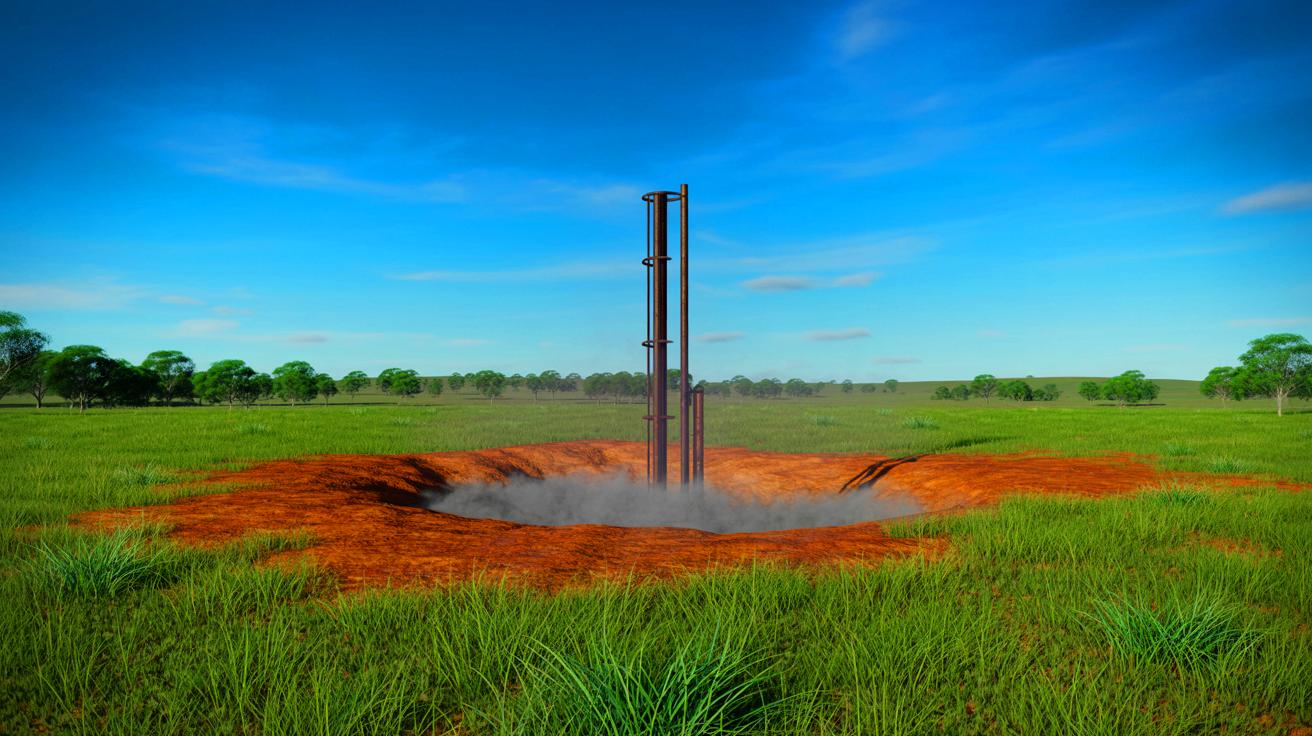
In a seemingly ordinary cattle paddock in rural Queensland, Australia, an environmental revelation has emerged. Beneath what appears to be a simple “patch of bare ground,” an abandoned coal borehole has been identified as a “super-emitter” of methane, a potent greenhouse gas. Researchers from the University of Queensland discovered this site using advanced LiDAR technology, revealing that the borehole releases 235 tons of methane annually. This discovery highlights a potentially widespread and previously unreported environmental issue. The implications of this finding could reshape our understanding of methane emissions and prompt urgent actions to address these hidden sources of pollution.

Methane Emission Readings

The revelation of the abandoned borehole came to light when a gas company conducting local surveys noticed the peculiar patch of bare ground. Although the borehole was covered by dirt, the absence of grass in the area was a key indicator of its presence. Researchers from the University of Queensland spent a week at a farm in the Surat Basin, Queensland, conducting methane emission readings from a borehole approximately 328 feet deep.

Utilizing a portable Quantum Gas LiDAR system, the researchers were able to take precise emission readings. This advanced system is more accurate than standard handheld sensors, allowing it to account for variations caused by changing weather and temperature conditions. The week-long measurement period enabled the team to extrapolate the data and determine a reliable weekly emission rate.

Despite the borehole’s existence for around two decades, it remains uncertain how long it has been leaking methane. The findings suggest that abandoned boreholes could represent a significant, previously unreported source of methane emissions. With thousands of old coal holes scattered across Queensland, the extent of their emissions and their sealing quality remain largely unknown.

“We Just Cracked The Code Of Plant Power”: Swiss Scientists Create Breakthrough Molecule That Stores Four Charges To Mimic Photosynthesis For Solar Fuels

Sealing the Holes

Methane’s warming effect on the planet is 80 times stronger than carbon dioxide over a 20-year period. This high potency makes methane a critical target for climate experts seeking rapid ways to curb global heating. Experts are calling for a comprehensive audit to identify all leaking boreholes and quantify the extent of the unreported methane pollution.

The research has also highlighted a potential solution: sealing the worst-emitting boreholes can be a straightforward and cost-effective way to reduce emissions. Typically, these holes are sealed with cement. Researchers plan to expand their study to include a larger number of boreholes, including those used for water, to better understand the full scope of the issue and identify more opportunities to reduce emissions.

As one of the study’s authors, Dr. Sebastian Hoerning noted, “While the majority of these boreholes won’t be emitters, our measurements show they could be a major source of greenhouse gas emissions that is currently unreported.” The researchers hope their work will eventually contribute to reducing overall greenhouse gas emissions across Queensland and beyond.

“Imagine A Swarm Of These After A Hurricane”: Finnish Engineers Create Hydrogen Airship That Flies 12 Hours While NATO Prepares Major Drone Exercise

The Role of Advanced Technology

The use of advanced LiDAR technology was instrumental in uncovering the methane emissions from the abandoned borehole. LiDAR, which stands for Light Detection and Ranging, uses laser light to measure distances and can provide precise data even under varying environmental conditions. This technology allowed researchers to accurately assess the emissions from the borehole over an extended period.

By employing such sophisticated tools, the researchers were able to gather data that was previously unattainable with standard equipment. The study exemplifies the critical role that technology can play in identifying and addressing environmental challenges. It also underscores the need for continued investment in technological advancements to enhance our ability to monitor and mitigate environmental impacts.

The insights gained from this study may pave the way for further technological innovations in environmental monitoring and management. As the researchers continue to expand their study, the integration of cutting-edge technology will remain a key component of their efforts to address the issue of abandoned boreholes and their emissions.

“We Found Enough Hydrogen To Power Earth For 170,000 Years”: Oxford Scientists Discover Vast Natural Reserves Beneath Our Feet Using Ancient Rock Reactions

Implications for Climate Policy

The discovery of methane emissions from the abandoned borehole has significant implications for climate policy. Methane is a potent greenhouse gas, and its emissions are a crucial factor in the global effort to combat climate change. This study highlights the need for policymakers to consider previously overlooked sources of methane emissions in their climate strategies.

Addressing the issue of abandoned boreholes requires a coordinated effort between government agencies, researchers, and industry stakeholders. Policymakers may need to implement regulations that mandate the proper sealing of boreholes and establish protocols for monitoring emissions from existing sites. Additionally, funding and support for research initiatives aimed at identifying and mitigating methane emissions should be prioritized.

The findings from this study could serve as a catalyst for broader discussions on methane emissions and their role in climate change. As the global community continues to grapple with the challenges of reducing greenhouse gas emissions, the insights gained from this research offer valuable guidance for developing effective climate policies.

The study of the abandoned coal borehole in Queensland has revealed a hidden source of methane emissions with far-reaching environmental implications. As researchers continue their work, the potential to uncover additional sources of emissions and identify solutions remains significant. How will this research influence future policies and actions aimed at curbing greenhouse gas emissions on a global scale?

This article is based on verified sources and supported by editorial technologies.

Subscribe to Our Newsletter

News, investigations, and analysis — our top stories every morning to start your day right.

environmental impact methane Queensland
Follow on Google News Follow on X (Twitter)
Share. Facebook Twitter LinkedIn Telegram WhatsApp Email Copy Link
Previous Article“Nearly 2000 Missiles Ordered”: US Army Awards $9.8 Billion Contract For Advanced Interceptors That Destroy Hypersonic Weapons Using Hit To Kill Technology
Next Article “China Unveils Nuclear Triad For First Time”: Military Parade Reveals Hypersonic Missiles That Fly At Mach 10 While New Stealth Fighters Target Distant Enemies
Eirwen Williams
  • X (Twitter)

Eirwen Williams is a Brussels-based journalist at Energy Reporters, specializing in European energy policy, market trends, technological innovation, and energy security. Trained in journalism through a renowned program in New York, he examines how nations and industries are navigating the continent’s energy transition. With a focus on the forces driving change, his reporting highlights the interplay between regulation, infrastructure, and new technologies shaping Europe’s energy future. Contact: eirwen.williams@energy-reporters.com

Keep Reading

CO2 Emissions: How Carbon Dioxide Affects the Environment and the Planet

Ocean Warming: A Growing Threat to Marine Ecosystems and the Global Environment

renewable energy industry

The Benefits of Renewable Energy for the Climate

View 16 Comments
16 Comments
  1. Marina on 09/07/2025 6:54 AM

    Wow, 235 tons is a lot! How many more of these boreholes could be out there? 🤔

    Reply
  2. stephanieemerald on 09/07/2025 6:54 AM

    Wow, that’s a huge amount of methane! Are there other places like this that we don’t know about? 🤔

    Reply
  3. Adrienne on 09/07/2025 7:29 AM

    This is terrifying. We’ve been ignoring these hidden emitters for too long!

    Reply
  4. Christina0 on 09/07/2025 7:39 AM

    This is why we need more funding for environmental research. Great job, scientists! 👏

    Reply
  5. kamal5 on 09/07/2025 8:05 AM

    Are there any plans to make this LiDAR technology more widely available?

    Reply
  6. sebastian on 09/07/2025 8:23 AM

    Can LiDAR be used to find emissions from other sources too?

    Reply
  7. Paulainfinity4 on 09/07/2025 8:39 AM

    So much for a quiet farm paddock! 😅

    Reply
  8. luke on 09/07/2025 9:06 AM

    235 tons? That’s a LOT of methane! How did no one notice this before? 😲

    Reply
  9. Nicholas on 09/07/2025 9:14 AM

    How do they seal these boreholes and how effective is it?

    Reply
  10. Francistreasure on 09/07/2025 9:49 AM

    Why weren’t these emissions discovered earlier? Seems like a huge oversight.

    Reply
  11. Mohammed on 09/07/2025 9:50 AM

    Is it really possible to seal all these boreholes? Seems like a massive task.

    Reply
  12. Kamalmiracle on 09/07/2025 10:23 AM

    Great work by the scientists! This could make a big impact on reducing emissions.

    Reply
  13. Jamila on 09/07/2025 10:34 AM

    Thanks for the info! I had no idea abandoned boreholes could do this much damage.

    Reply
  14. oliver0 on 09/07/2025 10:59 AM

    Can methane from these boreholes be captured and used for energy somehow?

    Reply
  15. Maxalchemy6 on 09/07/2025 11:17 AM

    Does the article mention who is responsible for sealing these boreholes?

    Reply
  16. christopherfairytale on 09/07/2025 11:32 AM

    Is this specific to Australia, or could this be a global problem?

    Reply
Leave A Reply Cancel Reply

Subscribe to Our Newsletter

News, investigations, and analysis — our top stories every morning to start your day right.

Trending
The Key Benefits of Oil
CO2 Emissions: How Carbon Dioxide Affects the Environment and the Planet
Ocean Warming: A Growing Threat to Marine Ecosystems and the Global Environment
News by category
  • Featured
  • News
  • Use
  • Climate
  • Industry
  • Opinion
  • Policy
  • Output
  • Storage
  • Grid
Information
  • About Us
  • Advertise
  • Meet the Team
  • Contact Us
  • Legal Notice
  • Privacy Policy

Subscribe to Our Newsletter

News, investigations, and analysis — our top stories every morning to start your day right.

Facebook X (Twitter) RSS
© Energy-Reporters.com. All rights reserved.

Type above and press Enter to search. Press Esc to cancel.