



| IN A NUTSHELL |
|
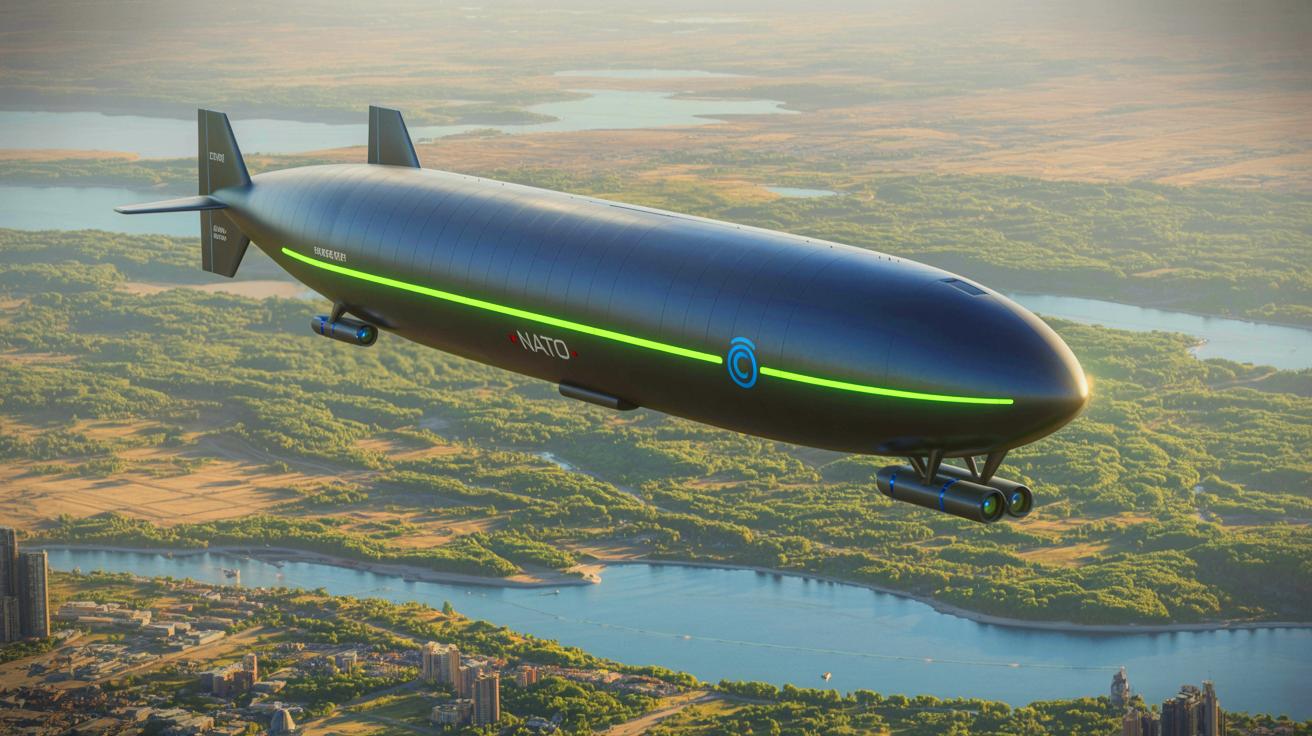
The landscape of surveillance technology is evolving rapidly, with innovative solutions emerging from unexpected quarters. One such leap comes from Kelluu, a Finnish firm that has developed a hydrogen-powered airship, roughly the size of a car. This cutting-edge platform is set to redefine both civilian and military surveillance capabilities. By integrating advanced sensors and autonomous flight technology, Kelluu’s airship offers a promising alternative to traditional aerial platforms. As it prepares to participate in NATO’s largest drone exercise, the airship’s potential to transform intelligence gathering and environmental monitoring is coming into sharp focus.
Revolutionizing Aerial Surveillance
Kelluu’s hydrogen-powered airship marks a significant departure from traditional blimps. At approximately 40 feet long, it combines compact design with innovative technology, making it a versatile tool for various applications. Unlike conventional drones or helicopters, this airship can remain airborne for over 12 hours per mission, offering unparalleled endurance.
The airship’s hydrogen propulsion system is a game-changer, with emissions reduced by an impressive 99.5 percent compared to standard aerial platforms. This makes it one of the cleanest options for persistent surveillance. Built with a patented hydrogen-safe structure, the airship can operate quietly and safely in diverse conditions, including sub-zero Arctic environments. Its low-noise operation is particularly advantageous for both civilian and defense surveillance.
Kelluu’s facility in Joensuu, Finland, is Northern Europe’s only airship factory. From here, the company produces its hydrogen-powered fleet, with bases in Finland and Sweden and plans for further international expansion. Despite its modest size, the airship can carry payloads of up to 13 pounds, enabling missions with a variety of sensors.
Advanced Sensor Capabilities and Civilian Applications
The Kelluu airship is equipped with cutting-edge sensors, making it a powerful tool for data collection and analysis. Configurations can include LiDAR, spectral cameras, and thermal imagers, with one popular option being the AgEagle RedEdge-P multispectral camera. This camera captures high-resolution RGB and multispectral imagery, providing pixel-aligned outputs ideal for mapping and monitoring.
With these tools, the airship can create digital twins of areas up to 186 miles in diameter from a single station. Finnish mining company Terrafame has utilized the system to generate 3D digital models of a 60-square-mile industrial site, optimizing operations and monitoring slope stability.
Civilian applications for this technology are vast. In forestry, sensors can detect bark beetle infestations, while in agriculture, they enable precision crop mapping. Kelluu describes its platform as a data-as-a-service system, with airships operating autonomously while artificial intelligence processes the collected information.
Expanding into Defense
Initially focused on civilian uses, Kelluu’s autonomous airship is now attracting significant interest from defense organizations. The platform is set to participate in NATO’s Robotic Experimentation and Prototyping with Maritime Unmanned Systems (REPMUS 25) exercise in Portugal. This event is one of the largest trials of unmanned technologies within the alliance.
In this context, Kelluu will showcase how its endurance and GNSS-denied navigation capabilities can support intelligence, surveillance, and reconnaissance missions in contested zones. Unlike satellites, which are weather-dependent, or drones with limited endurance, the hydrogen airship offers persistent monitoring below the clouds, ensuring a continuous flow of intelligence.
Kelluu’s inclusion in NATO’s DIANA innovation accelerator reflects a broader trend in Europe, where small technology firms are developing platforms for both commercial and defense needs. The airship’s participation in the Atlantic Trident 25 exercise marks the first time a hydrogen-powered autonomous airship has been involved in such a drill.
Implications for Future Surveillance
The advantages of Kelluu’s platform lie in its unique blend of endurance, silence, and flexibility. By bridging the gap between drones and satellites, it offers NATO and civilian agencies a persistent, low-emission surveillance solution. Hydrogen power allows the airship to fly longer, quieter, and cleaner than most conventional aerial platforms. While it may not replace existing systems, it provides a valuable complement where endurance and resilience are critical.
Kelluu’s hydrogen airship is part of a new breed of unmanned vehicles, used for tasks ranging from industrial mapping to international defense exercises. This innovation signifies a revival of lighter-than-air flight, empowered by modern technology. As the platform continues to develop, its role in shaping the future of surveillance is becoming increasingly evident.
As Kelluu’s hydrogen-powered airship prepares for its debut in NATO’s major drone exercise, its potential to revolutionize surveillance is undeniable. By offering a sustainable, versatile, and efficient alternative to traditional aerial platforms, Kelluu is positioning itself at the forefront of technological innovation. The question remains: how will this technology continue to evolve, and what new frontiers will it unlock in the realm of aerial surveillance?




Wow, this sounds like something out of a sci-fi movie! 🚀
Wow, a hydrogen airship that lasts 12 hours! Imagine using this for disaster relief. 🚁
When will these airships be available for commercial use?
12 hours of flight! That’s longer than most drones, right?
How quiet are these airships? Can they really go unnoticed?
This could change the way we do disaster relief. Amazing!
Are there any environmental concerns with using hydrogen?
What kind of sensors can it carry? Are they interchangeable?
This is fascinating technology. The future is now! 🚀
Why doesn’t the article mention the cost of these airships?
How does this compare to traditional drones in terms of cost-effectiveness?
Can it fly in extreme temperatures, like during a snowstorm?
So cool to see innovation like this coming from Finland! 🇫🇮
I hope we see these in action soon. Can’t wait! 🤩
Is there any risk of hydrogen leaks? How do they prevent it?
How do these airships navigate? Are they fully autonomous?
How does it handle in bad weather, though? That’s gotta be a concern, right?
Thank you for the detailed article! Very informative.
Will these airships participate in other international exercises?
Looks like the future of surveillance just got a lot greener! 🌿
Hydrogen propulsion sounds futuristic, but is it practical?
Can these airships be used for non-surveillance purposes?
How does it perform compared to traditional satellites?
This could be a game-changer for environmental monitoring!
I’m curious about the maintenance requirements for these airships.
Is there a limit to how high these airships can fly?
How does it compare to other hydrogen-powered vehicles?
Is the airship’s design inspired by any past technologies?
Seems interesting, but how does it handle in extreme weather conditions like hurricanes?
What are the biggest challenges in deploying these airships?
An airship that flies for 12 hours on hydrogen? That’s impressive! 💨
Is the hydrogen used in these airships sustainable?
Thank you for the informative article! It’s great to see clean energy solutions in aviation. 🌿
What’s the payload capacity? Can it carry heavy sensors?
Thank you for sharing this amazing innovation! 🌟
Hydrogen is great and all, but isn’t it kinda dangerous to use in airships? 🤔
Can these airships be used for civilian purposes too?
Imagine seeing a sky full of these after a hurricane! 😮
How do they plan to manage the hydrogen supply for these airships in remote areas?
How do they ensure the hydrogen doesn’t pose an explosion risk?