




| IN A NUTSHELL |
|
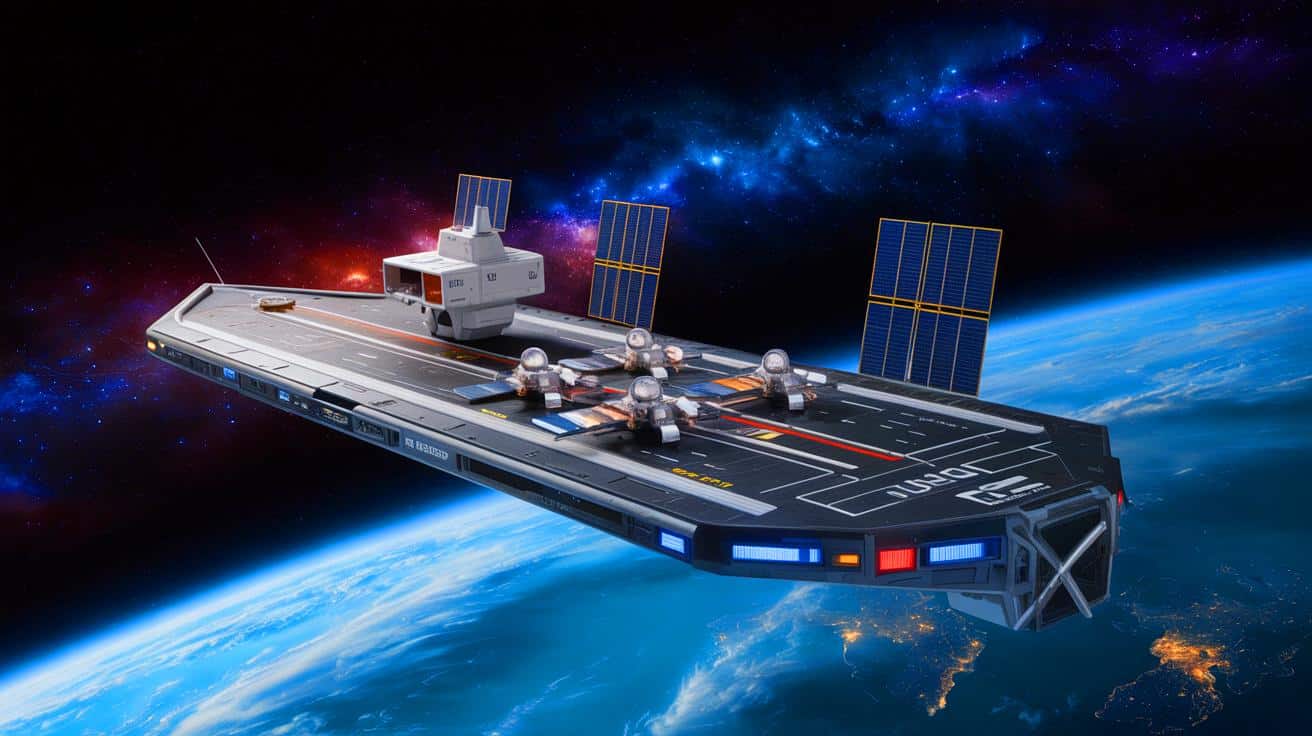
The United States is embarking on a groundbreaking journey in space technology, aiming to redefine satellite deployment through the innovative development of an orbital aircraft carrier. This ambitious project is spearheaded by Gravitics, in collaboration with the U.S. Space Force, marking a significant strategic commitment to space as a vital domain. As tensions rise globally, the U.S. is taking decisive steps to secure its dominance in the space arena. This endeavor not only highlights the importance of collaboration between private companies and national defense agencies but also underscores the pivotal role of space technology in shaping future security and international relations.
The Vision Behind the Orbital Aircraft Carrier
Gravitics, in collaboration with the U.S. Space Force, is leading a $60 million initiative to create an orbital aircraft carrier that promises to revolutionize satellite deployment. This cutting-edge platform will facilitate the direct launch of satellites from Earth’s orbit, providing a nimble and prompt response to national security threats. By bypassing the traditional rocket launch method, the U.S. gains a substantial strategic edge in military operations.
The establishment of this orbital carrier aligns with the U.S. military’s goal of maintaining a strong presence in space amid concerns of a burgeoning space arms race. A pre-positioned platform in orbit enables the U.S. to deploy satellites swiftly, addressing immediate and long-term security needs. This technological advancement reinforces the United States’ leadership in the space sector, positioning it at the forefront of global space capabilities.
Enhancing Space Security and Superiority
The orbital aircraft carrier designed by Gravitics is engineered to house multiple satellites in an unpressurized environment, safeguarding them from the severe conditions of space. Protecting sensitive electronics and batteries is crucial in an era defined by electronic warfare and cyber threats. By isolating and shielding these satellites, the United States strengthens its space security capabilities.
Moreover, the carrier's ability to conceal satellites from adversaries offers a tactical advantage. Gravitics CEO Colin Doughan describes the carrier as a transformative development that aligns seamlessly with the Space Force's mission of achieving orbital dominance. This project not only enhances military capabilities but also sets a precedent for future technological advancements in space exploration.
Public-Private Partnerships and Their Impact
The development of the orbital aircraft carrier underscores the growing importance of public-private partnerships in the space sector. Gravitics, in collaboration with Axiom Space, is also working on a pressurized space module, demonstrating a commitment to both national defense and commercial solutions. This dual approach showcases Gravitics's alignment with the Department of Defense's objectives and reflects its potential for growth.
Such collaborations are essential for integrating innovative technologies into national defense strategies. By joining forces, private companies and government entities strengthen the U.S.'s position in space while nurturing the development of technologies with potential civilian applications. The success of these partnerships could pave the way for new market opportunities and further advancements in space technology.
The Future of Space Exploration
The advent of technologies like the orbital aircraft carrier heralds a new era of space exploration and utilization. This technological leap has the capacity to transform security, surveillance, and communication paradigms, affecting both military operations and private sector involvement. The implications are vast, signaling a shift in how space is utilized and governed.
As the U.S. Space Force and companies like Gravitics prepare to confront future challenges, questions about international space cooperation arise. How will these innovations influence diplomatic relations between nations? More importantly, how can we ensure that space remains a domain of shared peace and progress, benefiting all of humanity?




Wow, this sounds like something straight out of a sci-fi movie! 🚀
Wow, this looks like something straight out of a sci-fi movie! 🚀
Isn’t this a bit too ambitious? I mean, building an aircraft carrier in space?
Isn’t space supposed to be a realm of peace? How does this align with that vision?
Gravitics and the U.S. Space Force are onto something big. Impressive collaboration!
I’m impressed by the innovation but concerned about the potential militarization of space. Thoughts?
How long until this project is complete? Can’t wait to see it in action!
How many satellites can this carrier actually hold at once?
Another step towards militarizing space. Is this really necessary? 🤔
This is great news! It’s about time we see more advancements in space tech. 😊
Thank you for this insightful article! It’s exciting to see such advancements. 😊
Can someone explain how this is different from a regular rocket launch?
Orbital aircraft carrier? Sounds like a game-changer for satellite deployment!
Gravitics sounds like a company to keep an eye on! Their projects are fascinating.
How will this affect international relations? Seems like a big strategic move.
Pretty cool, but $60 million seems like a lot. Is it worth it?
This is a bit scary if you think about the implications for warfare. 😬
Will this technology eventually be available for commercial use?
Are there any environmental concerns with deploying something like this in orbit?
How long before we can see this in action? I’m curious about the timeline.
Public-private partnerships are the future. This project is proof of that!
Is this related to the Space Force’s other initiatives or completely separate?
What measures are in place to prevent space debris from this carrier?
Great read! Thanks for keeping us informed about space advancements. 🙌
How does this compare to other countries’ space capabilities?
Impressive but cautious about how it might escalate space tensions.
Is this project purely for defense, or are there other applications?
Gravitics & Space Force sound like a dynamic duo. Excited to see where this goes!
What happens if something goes wrong with the carrier in orbit?
Can this technology help in space exploration beyond Earth’s orbit?
Looks like the future of satellite deployment is here. 🚀🛰️
Does this mean faster internet from space satellites? Asking for a friend. 😄
Could this lead to new jobs in the space industry? 🚀
I’m skeptical. What are the risks involved here?
Amazing! Thank you for sharing this exciting development in space technology.