

| IN A NUTSHELL |
|
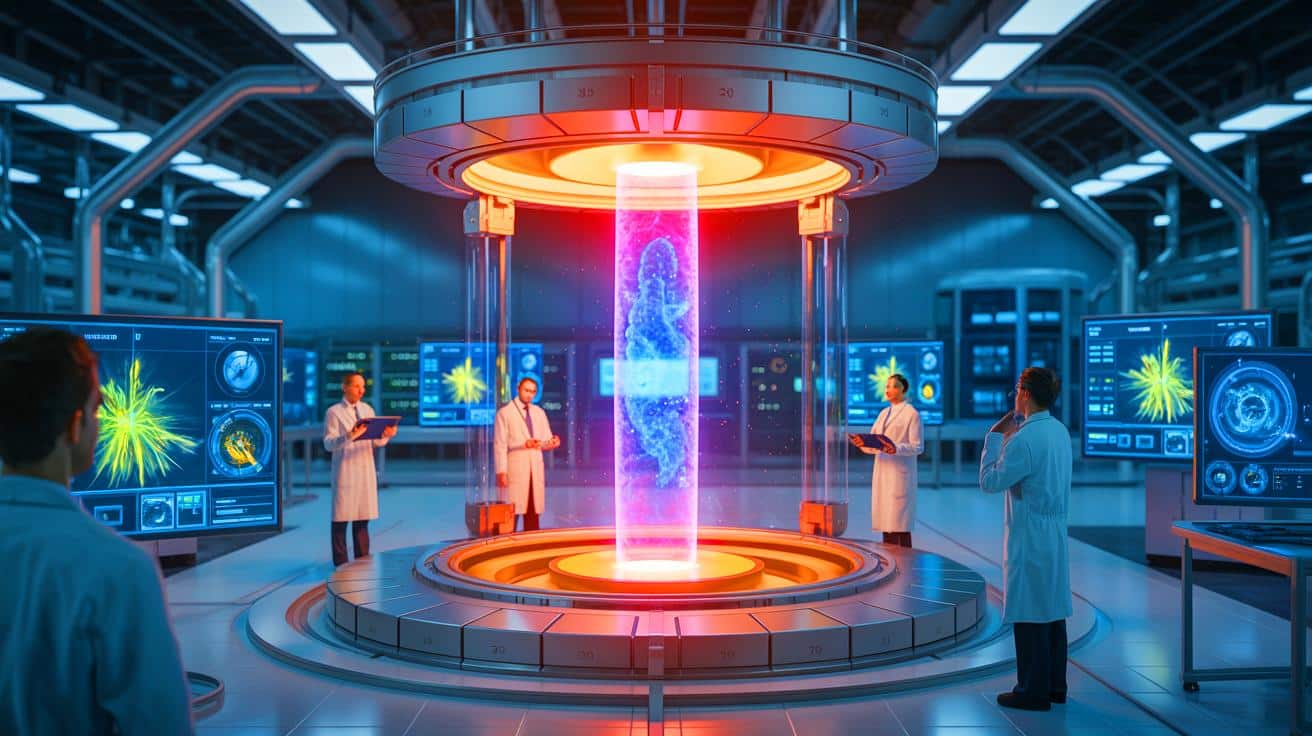
As the world grapples with the urgent need for sustainable energy solutions, nuclear fusion emerges as a beacon of hope. Unlike nuclear fission, fusion promises a clean, abundant, and safe energy source. By merging light nuclei, such as hydrogen, into heavier nuclei, it releases an immense amount of energy without the long-lived radioactive waste or greenhouse gases. However, replicating the sun’s reactions on Earth presents a formidable challenge. Technological and scientific barriers have made fusion a costly and complex endeavor. In recent years, advancements in artificial intelligence (AI) have begun to play a pivotal role in overcoming these challenges, offering new ways to control and optimize fusion processes.
AI and Magnetic Confinement Fusion
In the realm of magnetic confinement fusion, AI has made significant strides. Tokamaks, donut-shaped reactors, are at the forefront of this research. They confine plasma using powerful magnetic fields. Each experiment generates massive amounts of data, including images, magnetic fields, and temperature readings. In 2022, researchers at the Swiss Plasma Center and DeepMind developed an AI capable of real-time plasma control in the TCV tokamak. This AI uses deep reinforcement learning to adjust magnetic fields dynamically, maintaining plasma stability. This breakthrough, published in Nature, highlights AI’s potential to transform fusion research.
Another critical application of AI in magnetic confinement is disruption prediction. Sudden instabilities, known as disruptions, can severely damage reactors. AI models, such as neural networks, are trained to detect early signals of potential disruptions. On the DIII-D tokamak in the United States, an AI model anticipated a disruption 300 milliseconds ahead of time, allowing for timely intervention. These advancements underscore AI’s ability to enhance the safety and efficiency of fusion reactors.
Beyond real-time control, AI improves diagnostics and identifies anomalies in sensor data. It also accelerates simulations through digital twins, which are virtual replicas of physical systems. These models, powered by AI, enable faster and more accurate plasma simulations, aiding in reactor design and optimization.
AI's Role in Inertial Confinement Fusion
Inertial confinement fusion relies on the rapid compression of fuel capsules using lasers. Facilities like the National Ignition Facility (NIF) in the United States utilize hundreds of lasers to achieve this. The process is costly and resource-intensive, making each experiment crucial. AI plays a vital role in optimizing these laser shots. At the University of Rochester's OMEGA system, AI has been trained to enhance laser pulse shapes, increasing fusion yield significantly.
AI's ability to bridge the gap between simulation and reality is transformative. By optimizing laser configurations, AI models have achieved a threefold increase in fusion yield. This achievement was published in Nature and demonstrates AI's capacity to explore vast experimental possibilities without exhaustive testing.
Furthermore, AI assists in diagnosing and correcting simulation errors, proposes inverse designs, and automates experimental setups. As fusion research progresses, AI aims to fully automate and adapt experiments, maximizing efficiency and outcomes.
Challenges and Future Prospects of AI in Fusion
The integration of AI in fusion research presents challenges. As projects like ITER anticipate massive data generation, managing this information becomes crucial. AI models must deliver rapid, reliable, and interpretable results to support plasma control. They also need to be adaptable across different reactors without extensive retraining.
Researchers are working on physics-informed AI systems that explain their decisions, aligning with fundamental laws. Limited data availability in some facilities, such as NIF, necessitates combining experimental and simulated data to enhance learning. Ensuring robust and generalizable models is vital to advancing fusion research.
Despite technical hurdles, like real-time data processing and reliable prediction in chaotic plasma environments, AI integration raises ethical and legal questions. Determining responsibility in case of AI-induced failures is critical, given the energy scales involved. Addressing these issues is essential as AI continues to influence fusion research.
The Potential Impact of AI on Fusion Energy
Artificial intelligence holds the promise of accelerating progress toward commercially viable fusion energy. As AI technologies advance, they could unlock the potential of fusion as the ultimate clean energy source. By addressing current limitations and ethical considerations, AI could play a pivotal role in realizing the dream of sustainable fusion power.
The future of fusion energy depends on continued innovation and collaboration across scientific disciplines. As AI continues to enhance fusion research, will it be the key to unlocking the long-sought dream of limitless clean energy?



Wow, this is mind-blowing! Could this really be the end of energy scarcity as we know it? 🤯
Wow, this could be a game-changer for the energy crisis! 🌍
Is it safe to rely on AI for something as critical as nuclear fusion?
How soon can we expect to see fusion energy powering our homes?
Finally, some good news about the future of energy. Thank you, scientists! 😊
AI and nuclear fusion—a match made in heaven or a recipe for disaster? 🤔
How long before we see this technology in commercial use?
Thanks for the informative article! Fingers crossed this leads to a cleaner future. 🙏
I’m skeptical. What happens if the AI makes a mistake? 🤔
What are the main ethical concerns with using AI in nuclear fusion research?
Isn’t nuclear fusion always “just around the corner”? We’ve heard this before.
This feels like the plot of a sci-fi movie where AI takes over. Should we be worried? 😅
Sounds promising! Are there any environmental risks involved?
Can AI really handle the unpredictability of nuclear fusion?
Great, now AI is taking over nuclear fusion too. What’s next? 🤖