


Close Menu
  • Featured
    • News
    • Consumption
    • Environment
    • Industry
    • Opinion
    • Policy
    • Production
    • Storage
    • Transmission
  • About Us
  • Advertise
  • Contact Us

Subscribe to Our Newsletter

News, investigations, and analysis — our top stories every morning to start your day right.

Trending
The Key Benefits of Oil
CO2 Emissions: How Carbon Dioxide Affects the Environment and the Planet
Ocean Warming: A Growing Threat to Marine Ecosystems and the Global Environment
Facebook X (Twitter) LinkedIn YouTube TikTok
Energy Reporters
Facebook X (Twitter) RSS
Subscribe
  • Featured
  • News

    Researchers Discover That Diamonds Can Generate Electricity

    09/03/2026

    South Africa: Thousands of Dead Sardines Disrupt Koeberg Nuclear Power Plant

    08/28/2026
    Illustration of Abu Dhabi National Oil Company's $11 billion financing deal for future gas production projects.

    ADNOC Secures $11 Billion for Gas Expansion, Transforming Energy Future and Boosting Local Economies

    12/19/2025
    Illustration of Energy Transfer LP's Lake Charles LNG project suspension and strategic shift to pipeline infrastructure.

    Energy Transfer Suspends Lake Charles LNG Project, Sparking Concerns Over Job Losses and Future Energy Solutions

    12/19/2025
    Illustration of a U.S. judge blocking Michigan's attempt to shut down Enbridge's Line 5 pipeline.

    Judge Blocks Michigan’s Effort to Shut Down Enbridge’s Line 5 Pipeline, Sparking Environmental and Economic Debate

    12/18/2025
  • Use

    How energy subsidies affect the market and consumers

    08/11/2026

    Steps to make your business more energy efficient

    06/16/2026

    How to conduct an energy audit for your home

    05/19/2026

    The impact of energy consumption on climate change

    05/12/2026

    Tips for choosing the best energy provider

    05/05/2026
  • Climate

    CO2 Emissions: How Carbon Dioxide Affects the Environment and the Planet

    10/14/2026

    Ocean Warming: A Growing Threat to Marine Ecosystems and the Global Environment

    10/09/2026
    renewable energy industry

    The Benefits of Renewable Energy for the Climate

    09/15/2026

    How to evaluate the carbon footprint of your energy use

    07/21/2026

    The connection between energy use and water resources

    07/07/2026
  • Industry

    How France Produces Its Electricity: Nuclear Power at the Heart of a Changing Energy Mix

    10/02/2026

    The Importance of Oil in Logistics

    09/10/2026
    A bunch of black and white objects with a green arrow above them

    The Ongoing Bribery Case Against Hithium’s Chairman Wu Zuyu Highlights the Stakes for Battery Investors

    02/22/2026
    Illustration of Ford's strategic shift from electric vehicles to gas and hybrid models.

    Ford Reveals $19.5 Billion Charge as EV Strategy Unravels, Impacting Jobs and Future Mobility Choices

    12/17/2025

    US Drillers Cut Oil and Gas Rigs Again, Exposing Potential Economic and Environmental Impacts on Local Communities

    12/13/2025
  • Opinion
    lighted city skyline at night

    Korean Companies Are Losing Ground to China: Why Governance Failures at Conglomerates Like Young Poong Group Matter More Than Ever

    03/22/2026

    Pulling back the curtain on Turkey’s natural gas strategy

    09/01/2020

    How West Africa can expand power supply and meet climate goals

    06/15/2020

    Review: Oil and the Great Powers: Britain and Germany, 1914 to 1945

    06/09/2020

    Eastern Mediterranean gas: testing the field

    05/27/2020
  • Policy

    Understanding dynamic pricing in electricity markets

    06/23/2026

    The influence of artificial intelligence on energy management

    06/02/2026
    renewable energy industry

    How government policies are shaping the energy sector

    04/14/2026

    What you need to know about smart energy management

    02/24/2026

    Trump Administration Faces Delays in Finalizing 2026 Biofuel Quotas, Raising Questions About Future Energy Policies

    12/14/2025
  • Output

    The Key Benefits of Oil

    10/20/2026

    How France Produces Its Electricity: Nuclear Power at the Heart of a Changing Energy Mix

    10/02/2026

    The Importance of Oil in Logistics

    09/10/2026

    Researchers Discover That Diamonds Can Generate Electricity

    09/03/2026

    South Africa: Thousands of Dead Sardines Disrupt Koeberg Nuclear Power Plant

    08/28/2026
  • Storage
    renewable energy industry

    How energy storage can stabilize renewable sources

    06/30/2026

    Innovations in battery technology for energy storage

    03/17/2026
    Illustration of Venezuela's oil storage facilities nearing maximum capacity amid U.S. sanctions.

    Venezuela Faces Oil Storage Crisis as Tanker Restrictions Expose Vulnerabilities in Energy Infrastructure and Economy

    12/18/2025
    time lapse photography of square containers at night

    ‘Mega Batteries’ are Powering the Future of Energy Consumption

    10/23/2025
    Illustration of a gravity-based energy storage system integrated into a skyscraper, utilizing renewable energy sources.

    Gravity Battery Innovation Transforms Skyscrapers into Renewable Energy Storage, Revealing New Possibilities for Urban Sustainability

    10/18/2025
  • Grid

    Understanding energy grids and their modernization

    04/28/2026
    Illustration of Ovintiv and Pembina's collaboration on LNG export from the Cedar LNG facility.

    Ovintiv Agreement for Cedar LNG Capacity Sparks New Era in North American Energy Collaboration and Innovation

    12/16/2025
    Illustration of Star Catcher Industries' power beaming technology at NASA's Kennedy Space Center.

    Star Catcher Achieves Breakthrough, Sets New 1.1-kW Power Beaming Record, Transforming Future Energy Solutions

    11/25/2025
    Illustration of U.S. LNG exports navigating global market challenges and expanding into Asian regions amidst rising competition.

    US LNG Export Dominance Faces Challenge as Sellers Explore New Markets Beyond Europe’s Energy Demand

    11/23/2025
    Illustration of the race to develop new pipelines in response to California refinery closures and rising fuel prices.

    California Refinery Closures Drive Urgent Pipeline Race, Transforming Energy Supply Dynamics on the West Coast

    11/19/2025
Energy Reporters

“Turns Out Ice Makes Power”: Scientists Discover Hidden Electrical Force That Could Finally Explain How Lightning Forms (And It’s Shockingly Simple)

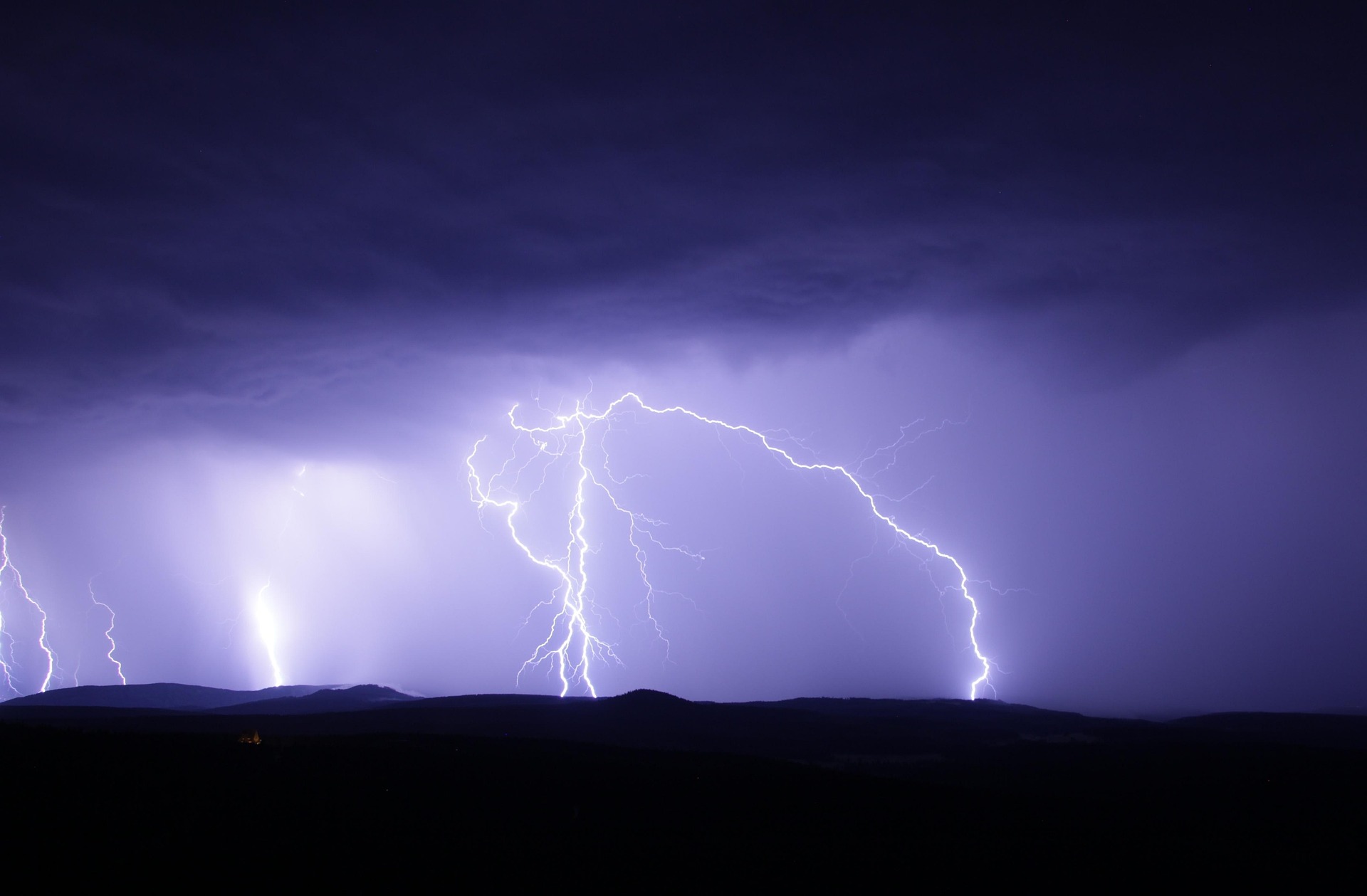
In a groundbreaking study published in Nature Physics, scientists have uncovered that ordinary ice can generate electricity when deformed, potentially unraveling the long-standing mystery of how electrical charges build up in thunderclouds, leading to lightning.
Eirwen WilliamsEirwen Williams10/17/202517
Share Twitter Facebook LinkedIn Telegram WhatsApp Email Copy Link
Follow Us
Google News
Share
Twitter Facebook LinkedIn WhatsApp Email Copy Link
IN A NUTSHELL
  • ⚡ Scientists have discovered that ordinary ice can generate electricity when deformed, potentially explaining how charges build up in thunderclouds.
  • ❄️ The study reveals that ice exhibits flexoelectric properties similar to advanced electroceramic materials, offering insights into its unique behavior.
  • 🌩️ The research suggests that flexoelectricity might be the missing link in understanding how electric fields develop in storm clouds, leading to lightning.
  • 🔬 Future studies are needed to explore the practical applications of ice’s electrical properties in cold environments and advanced technologies.

For decades, scientists have puzzled over the mysterious process by which ice particles in storm clouds become electrically charged, thus leading to lightning. A new study, however, may have shed light on this enigmatic phenomenon. Published in Nature Physics, the research, conducted by an international team of scientists, reveals that ice can generate electricity when bent or deformed through a process known as the flexoelectric effect. This groundbreaking discovery suggests that flexoelectricity might be the key to understanding how electrical charges build up in thunderclouds, providing a potential explanation for the origins of lightning. The implications of this study are vast, encompassing both atmospheric sciences and potential technological applications.

A Shocking Property of Ice

The study uncovers a surprising behavior in ice that aligns it with certain minerals and ceramics known for their electric properties. Researchers demonstrated that ice behaves similarly to titanium dioxide, which can become electrically charged when subjected to stress. The team conducted experiments by applying controlled forces to slabs of ice, using metal plates equipped with sensitive instruments to detect measurable electrical charges. Their findings reveal that ice exhibits flexoelectric properties from the freezing point down to extremely low temperatures.

In their quest to understand this phenomenon, the scientists discovered a thin ferroelectric layer on the surface of ice at temperatures below –113 °C. This layer, much like a magnet, can develop a natural polarization that is reversible. Dr. Xin Wen, a lead author of the study, emphasized that the experiments demonstrated two distinct electrical behaviors in ice: flexoelectricity at higher temperatures and ferroelectricity at very low temperatures. These findings not only place ice among advanced electroceramic materials but also suggest potential technological applications in the future.

Scientists Warn: “Nature’s Fury Unleashed” as Lightning Shatters Record with 515-Mile Flash Across the US, Sparking Global Climate Fears

Lightning’s Hidden Mechanism

The implications of these findings extend beyond the laboratory and into the realm of meteorology. Lightning is formed as electric potential builds inside clouds, often due to collisions between ice particles. Traditionally, scientists have been baffled by how these particles become charged, as ice is not inherently piezoelectric. The discovery of flexoelectricity in ice offers a plausible explanation. It suggests that when ice grains deform irregularly, this effect generates the necessary electric potential.

Professor Gustau Catalán, leader of the Oxide Nanophysics Group at ICN2, noted that these results match observations from storm cloud ice-particle collisions. If further research supports these findings, flexoelectricity could be the missing link explaining the development of large electric fields in storm clouds and the subsequent occurrence of lightning. This potentially groundbreaking insight could transform our understanding of meteorological phenomena.

“This Is The Lightning Strike That Shattered Records” 500-Mile Flash From Texas To Kansas City Reveals Nature’s Deadly Power

Beyond the Storm

The ability of ice to generate electricity under stress could have far-reaching practical applications beyond meteorology. Devices designed to function in extremely cold environments might one day harness this property. Possible applications could include polar sensors or satellite components for missions to icy moons. The study’s results strongly indicate that ice exhibits electrical properties akin to those of engineered materials, suggesting a natural explanation for lightning while opening the door to future cold-environment electronics.

However, the researchers caution that while these findings are promising, practical applications remain uncertain. The potential for utilizing the flexoelectric effect in ice is still in its infancy, and further exploration is necessary to determine viable technological uses. Nevertheless, the study lays the groundwork for innovative approaches to designing electronic devices capable of operating in frigid conditions.

“This Could Control Lightning”: NTT Uses Drones To Trigger Strikes And Aim To Harvest Renewable Energy

Future Studies

The research team underscores the need for additional studies to explore the extent to which flexoelectricity contributes to lightning in the natural environment. Upcoming research will aim to verify whether these electrical effects, observed in laboratory settings, also occur in real storm clouds. The study highlights the remarkable properties of ice, placing it alongside other electroceramic materials used in advanced technologies like sensors and capacitors.

This newfound understanding of ice’s electrical behavior positions it as a potentially crucial field of study, whether for explaining lightning’s origins or developing new technologies for cold environments. The discovery that a common material like ice possesses such unique properties challenges conventional thinking and opens new avenues for research in both atmospheric science and materials engineering.

As we continue to explore the intricacies of the natural world, the discovery of the flexoelectric effect in ice raises intriguing questions about the limits of what we know. How might further research into this phenomenon reshape our understanding of both natural and technological processes? The answers could redefine our approach to studying weather phenomena and inspire innovations in materials science.

This article is based on verified sources and supported by editorial technologies.

Subscribe to Our Newsletter

News, investigations, and analysis — our top stories every morning to start your day right.

Flexoelectricity Ice Lightning
Follow on Google News Follow on X (Twitter)
Share. Facebook Twitter LinkedIn Telegram WhatsApp Email Copy Link
Previous Article“They’re Drawing Crystals With Light”: Scientists Use Ultrafast Lasers to Create New Materials on Demand (And It Could Change Everything)
Next Article “Scientists Turn Pollution Into Profit”: New Nickel Catalyst Converts CO2 Into Valuable Fuel at a Fraction of the Cost (And It’s Ready to Scale)
Eirwen Williams
  • X (Twitter)

Eirwen Williams is a Brussels-based journalist at Energy Reporters, specializing in European energy policy, market trends, technological innovation, and energy security. Trained in journalism through a renowned program in New York, he examines how nations and industries are navigating the continent’s energy transition. With a focus on the forces driving change, his reporting highlights the interplay between regulation, infrastructure, and new technologies shaping Europe’s energy future. Contact: eirwen.williams@energy-reporters.com

Keep Reading

CO2 Emissions: How Carbon Dioxide Affects the Environment and the Planet

Ocean Warming: A Growing Threat to Marine Ecosystems and the Global Environment

renewable energy industry

The Benefits of Renewable Energy for the Climate

View 17 Comments
17 Comments
  1. fabianuniverse on 10/17/2025 10:07 AM

    This is incredible! 🌩️ Who would have thought ice could do more than just chill drinks? 🍹

    Reply
  2. fabian on 10/17/2025 10:08 AM

    Whoa, who knew ice could hold such shocking secrets? 😲

    Reply
  3. camila on 10/17/2025 10:35 AM

    Could this discovery lead to new ways to prevent or control lightning strikes?

    Reply
  4. philip on 10/17/2025 10:58 AM

    How does this discovery impact our current understanding of climate change?

    Reply
  5. yusuf on 10/17/2025 11:03 AM

    Thank you for shedding light on such a fascinating topic! ⚡

    Reply
  6. ameliaflight on 10/17/2025 11:30 AM

    So now we need to worry about electrified ice? What’s next, electric snowmen? ⛄️😂

    Reply
  7. Faith_blessing5 on 10/17/2025 11:49 AM

    So, we’re basically saying ice is electrifying? I guess Elsa was onto something! ❄️⚡

    Reply
  8. alan on 10/17/2025 11:58 AM

    Does this mean we might harness ice for renewable energy in the future?

    Reply
  9. adrian_serenade on 10/17/2025 12:25 PM

    The science is amazing, but how practical is this in real-world applications?

    Reply
  10. Aurelia_magma on 10/17/2025 12:40 PM

    Can someone explain how flexoelectricity differs from piezoelectricity?

    Reply
  11. Francis on 10/17/2025 12:53 PM

    Great article! It’s always exciting to see how nature’s hidden mechanisms are unraveled. 🔍

    Reply
  12. ben on 10/17/2025 1:21 PM

    I still find it hard to believe that something as simple as ice can have such complex properties. 🤔

    Reply
  13. peter on 10/17/2025 1:29 PM

    This is fascinating! Thanks for sharing such insightful research.

    Reply
  14. lauren on 10/17/2025 1:48 PM

    Any chance this research could help us understand other weather phenomena?

    Reply
  15. Jeremy6 on 10/17/2025 2:15 PM

    Thanks for the insight! This could revolutionize our understanding of storm formation. 🌪️

    Reply
  16. frankquasar on 10/17/2025 2:19 PM

    Are there any practical applications being considered for this phenomenon?

    Reply
  17. isabellapatience on 10/17/2025 2:42 PM

    Is this discovery applicable to other planets or moons with icy surfaces? 🌌

    Reply
Leave A Reply Cancel Reply

Subscribe to Our Newsletter

News, investigations, and analysis — our top stories every morning to start your day right.

Trending
The Key Benefits of Oil
CO2 Emissions: How Carbon Dioxide Affects the Environment and the Planet
Ocean Warming: A Growing Threat to Marine Ecosystems and the Global Environment
News by category
  • Featured
  • News
  • Use
  • Climate
  • Industry
  • Opinion
  • Policy
  • Output
  • Storage
  • Grid
Information
  • About Us
  • Advertise
  • Meet the Team
  • Contact Us
  • Legal Notice
  • Privacy Policy

Subscribe to Our Newsletter

News, investigations, and analysis — our top stories every morning to start your day right.

Facebook X (Twitter) RSS
© Energy-Reporters.com. All rights reserved.

Type above and press Enter to search. Press Esc to cancel.