




| IN A NUTSHELL |
|
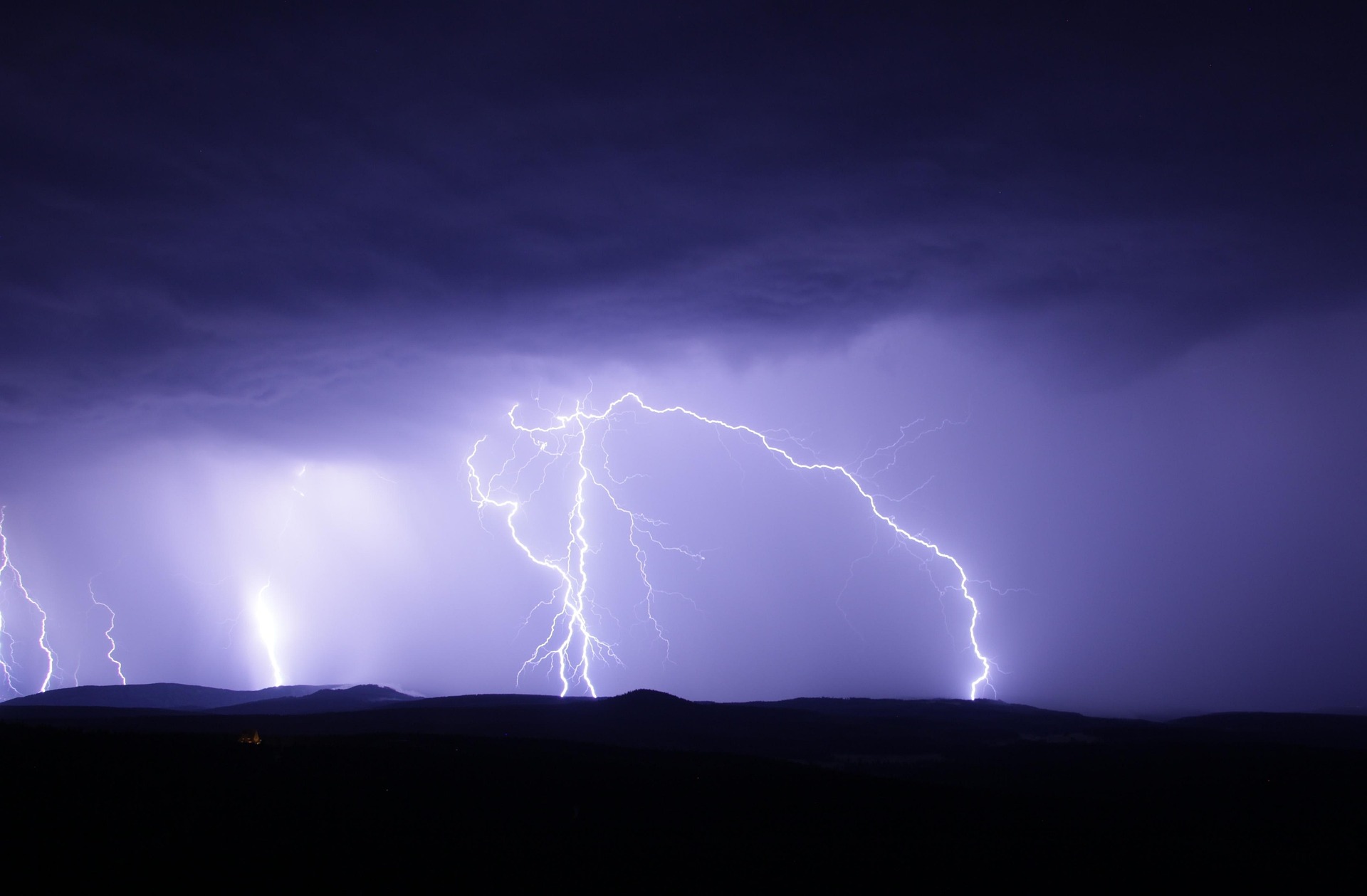
For decades, scientists have puzzled over the mysterious process by which ice particles in storm clouds become electrically charged, thus leading to lightning. A new study, however, may have shed light on this enigmatic phenomenon. Published in Nature Physics, the research, conducted by an international team of scientists, reveals that ice can generate electricity when bent or deformed through a process known as the flexoelectric effect. This groundbreaking discovery suggests that flexoelectricity might be the key to understanding how electrical charges build up in thunderclouds, providing a potential explanation for the origins of lightning. The implications of this study are vast, encompassing both atmospheric sciences and potential technological applications.
A Shocking Property of Ice
The study uncovers a surprising behavior in ice that aligns it with certain minerals and ceramics known for their electric properties. Researchers demonstrated that ice behaves similarly to titanium dioxide, which can become electrically charged when subjected to stress. The team conducted experiments by applying controlled forces to slabs of ice, using metal plates equipped with sensitive instruments to detect measurable electrical charges. Their findings reveal that ice exhibits flexoelectric properties from the freezing point down to extremely low temperatures.
In their quest to understand this phenomenon, the scientists discovered a thin ferroelectric layer on the surface of ice at temperatures below –113 °C. This layer, much like a magnet, can develop a natural polarization that is reversible. Dr. Xin Wen, a lead author of the study, emphasized that the experiments demonstrated two distinct electrical behaviors in ice: flexoelectricity at higher temperatures and ferroelectricity at very low temperatures. These findings not only place ice among advanced electroceramic materials but also suggest potential technological applications in the future.
Lightning’s Hidden Mechanism
The implications of these findings extend beyond the laboratory and into the realm of meteorology. Lightning is formed as electric potential builds inside clouds, often due to collisions between ice particles. Traditionally, scientists have been baffled by how these particles become charged, as ice is not inherently piezoelectric. The discovery of flexoelectricity in ice offers a plausible explanation. It suggests that when ice grains deform irregularly, this effect generates the necessary electric potential.
Professor Gustau Catalán, leader of the Oxide Nanophysics Group at ICN2, noted that these results match observations from storm cloud ice-particle collisions. If further research supports these findings, flexoelectricity could be the missing link explaining the development of large electric fields in storm clouds and the subsequent occurrence of lightning. This potentially groundbreaking insight could transform our understanding of meteorological phenomena.
Beyond the Storm
The ability of ice to generate electricity under stress could have far-reaching practical applications beyond meteorology. Devices designed to function in extremely cold environments might one day harness this property. Possible applications could include polar sensors or satellite components for missions to icy moons. The study’s results strongly indicate that ice exhibits electrical properties akin to those of engineered materials, suggesting a natural explanation for lightning while opening the door to future cold-environment electronics.
However, the researchers caution that while these findings are promising, practical applications remain uncertain. The potential for utilizing the flexoelectric effect in ice is still in its infancy, and further exploration is necessary to determine viable technological uses. Nevertheless, the study lays the groundwork for innovative approaches to designing electronic devices capable of operating in frigid conditions.
Future Studies
The research team underscores the need for additional studies to explore the extent to which flexoelectricity contributes to lightning in the natural environment. Upcoming research will aim to verify whether these electrical effects, observed in laboratory settings, also occur in real storm clouds. The study highlights the remarkable properties of ice, placing it alongside other electroceramic materials used in advanced technologies like sensors and capacitors.
This newfound understanding of ice’s electrical behavior positions it as a potentially crucial field of study, whether for explaining lightning’s origins or developing new technologies for cold environments. The discovery that a common material like ice possesses such unique properties challenges conventional thinking and opens new avenues for research in both atmospheric science and materials engineering.
As we continue to explore the intricacies of the natural world, the discovery of the flexoelectric effect in ice raises intriguing questions about the limits of what we know. How might further research into this phenomenon reshape our understanding of both natural and technological processes? The answers could redefine our approach to studying weather phenomena and inspire innovations in materials science.

This is incredible! 🌩️ Who would have thought ice could do more than just chill drinks? 🍹
Whoa, who knew ice could hold such shocking secrets? 😲
Could this discovery lead to new ways to prevent or control lightning strikes?
How does this discovery impact our current understanding of climate change?
Thank you for shedding light on such a fascinating topic! ⚡
So now we need to worry about electrified ice? What’s next, electric snowmen? ⛄️😂
So, we’re basically saying ice is electrifying? I guess Elsa was onto something! ❄️⚡
Does this mean we might harness ice for renewable energy in the future?
The science is amazing, but how practical is this in real-world applications?
Can someone explain how flexoelectricity differs from piezoelectricity?
Great article! It’s always exciting to see how nature’s hidden mechanisms are unraveled. 🔍
I still find it hard to believe that something as simple as ice can have such complex properties. 🤔
This is fascinating! Thanks for sharing such insightful research.
Any chance this research could help us understand other weather phenomena?
Thanks for the insight! This could revolutionize our understanding of storm formation. 🌪️
Are there any practical applications being considered for this phenomenon?
Is this discovery applicable to other planets or moons with icy surfaces? 🌌