




| IN A NUTSHELL |
|
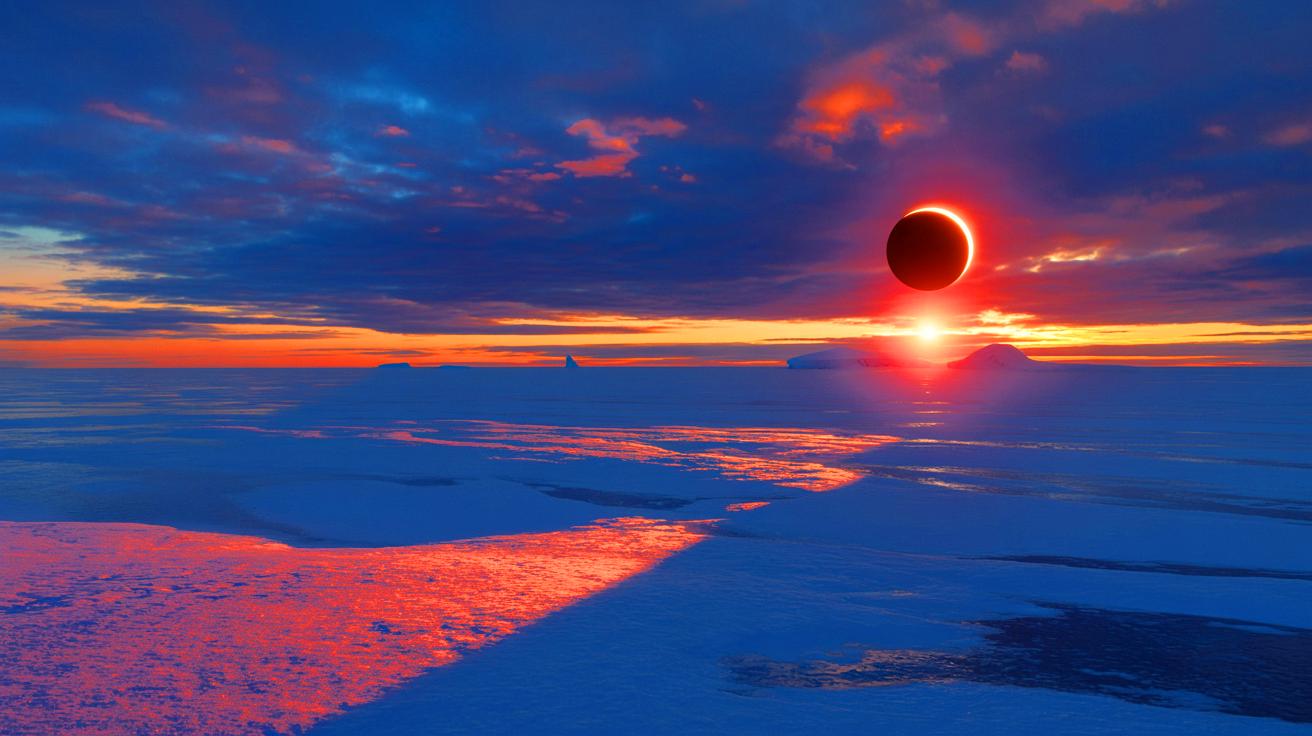
A celestial event of great interest is poised to capture the attention of skywatchers and scientists alike: the partial solar eclipse occurring on September 21, 2025. This phenomenon, occurring just a day before the equinox, will provide an exciting opportunity for observation across New Zealand, Antarctica, and parts of the South Pacific. Although it will not be a total eclipse, the moon will cover up to 86% of the sun, offering dramatic views, particularly from locations in the Southern Hemisphere. This article delves into the specifics of this ‘equinox eclipse,’ exploring its visibility and significance.
The Eclipse and Its Timing
The upcoming partial solar eclipse is set to occur on September 21, 2025, aligning closely with the September equinox. This timing enhances the event’s uniqueness, as the equinox marks the moment when the sun crosses the celestial equator, ushering in spring in the Southern Hemisphere and autumn in the Northern Hemisphere. The alignment of these two celestial events adds an extra layer of intrigue for observers and scientists.
The eclipse will not achieve totality, but it is classified as a deep partial eclipse. The moon will cover a substantial portion of the sun, with southern New Zealand and Antarctic research stations experiencing the most significant coverage. This provides a rare opportunity for individuals in these regions to witness a remarkable cosmic event. Some Pacific islands will also have the chance to observe the eclipse, although to a lesser extent.
“Even though it is not a total eclipse, the event’s timing near the equinox makes it a rare and significant occurrence,” experts have noted.
Antarctica: A Prime Viewing Location
Antarctica stands out as a prime location for viewing the partial solar eclipse. Various research stations on the continent will experience significant eclipse coverage, with the Mario Zucchelli Station seeing up to 72% of the sun obscured. McMurdo Station will not be far behind with a 69% eclipse, while the Ross Ice Shelf will witness approximately 65% coverage.
The geographic isolation of Antarctica makes this a unique opportunity for scientists stationed there to conduct observations and collect data. These observations can provide insights into solar activity and its impacts, contributing to a broader understanding of our solar system. However, the extreme conditions in Antarctica pose challenges, requiring specialized equipment and precautions to ensure safe viewing.
As the eclipse path moves farther east, the percentage of obscuration decreases, with the Antarctic Peninsula experiencing only a 12% eclipse at sunset.
New Zealand: Accessible Views for All
New Zealand offers some of the most accessible views of the partial solar eclipse, making it a popular destination for eclipse chasers and tourists. The event will already be underway at sunrise, creating dramatic crescent-shaped dawns that are sure to captivate viewers. Key cities like Auckland, Christchurch, and Wellington will experience significant coverage, with percentages ranging from 60% to 72%.
New Zealand’s accessibility and infrastructure make it an attractive option for those interested in witnessing the eclipse firsthand. The country’s diverse landscapes also offer a range of backdrops for photography and observation, from urban settings to remote natural environments. This accessibility allows a broader audience to engage with the event, fostering public interest in astronomy and science.
“New Zealand provides a rare chance for people to witness a significant partial solar eclipse without having to travel to remote or extreme locations,” local astronomers have suggested.
South Pacific Islands: A Smaller But Notable Show
The South Pacific islands will also experience the partial solar eclipse, though to a lesser extent compared to Antarctica and New Zealand. Island nations such as Tonga, Fiji, the Cook Islands, and Samoa will witness varying degrees of coverage, ranging from 17% to 32%. While these percentages may not be as high, the event still offers a significant opportunity for skywatchers in these regions.
The cultural significance of celestial events in many of these island communities adds an additional layer of interest. These regions may organize local observation events and educational programs to engage the public and promote scientific awareness. The eclipse provides an opportunity for these communities to connect with the broader global fascination with celestial phenomena.
“The partial eclipse will be a significant event for the island nations, offering a chance to engage with the wonders of the universe,” a local science advocate stated.
As the world looks forward to the partial solar eclipse on September 21, 2025, it is clear that this event holds interest for a diverse range of observers, from scientists in Antarctica to tourists in New Zealand and communities across the South Pacific. The unique timing near the equinox adds to the event’s allure, providing an opportunity to reflect on the interconnectedness of our planet and the cosmos. With such a significant celestial event on the horizon, one might wonder: How will future eclipses continue to captivate and inspire both scientific research and public imagination?


Wow, 86% coverage sounds incredible! 🌒 Can’t wait to see it in New Zealand!
Wow, didn’t know the equinox could affect an eclipse! Mind blown! 🌒
Can someone explain why the equinox makes this eclipse more significant? 🤔
Is there any scientific proof that this eclipse is related to the equinox? 🤔
The timing is fascinating, but I doubt there’s any “terrifying” connection.
Is it safe to watch the eclipse without any protection?
Thank you for the detailed explanation. Can’t wait to see it from New Zealand!
So exciting! Thanks for the detailed info on where to watch. 😃
Why are scientists divided over this event? Seems pretty straightforward to me.
Why is this eclipse dividing scientists? What’s the controversy?
Great article! I’m planning to visit New Zealand just for this. 🌏
I’m just here for the cool crescent-shaped dawns. 😎
Antarctica’s going to be the place to be! Too bad it’s not exactly easy to get there.
Is it really going to be that visible in the South Pacific? I hope so!
I’ve read that eclipses can affect animal behavior. Is that true?
Thanks for the heads up! Gonna mark my calendar right now. 📅
Is there a chance this could impact satellite communications? 📡
Sounds amazing! Will there be any live streams for those who can’t travel?
What kind of data can scientists collect during an eclipse like this?
I’m skeptical about the “terrifying” part. Clickbait much?
Planning a trip to New Zealand for this! Hope the weather cooperates. ☀️
Why is it called an “equinox eclipse”? Just because of the timing?
Love how these events bring people together across the world. 🌍
Do you think such eclipses have any historical significance for indigenous cultures?
Too bad the coverage is so low in the South Pacific. 😕
Is there any risk of power outages during an eclipse like this?
What precautions are needed for safe viewing? I don’t want to damage my eyes!
Thanks for the info! Will try to catch it from Tonga. 🌴
Would love to see a follow-up article on the scientific findings from this eclipse.
Spelling error in the article: “celestial” is misspelled in one of the headers.
New Zealand is always so lucky with these natural events! 🇳🇿
Interesting read, but I’m not convinced about any “terrifying” aspects. 🙄
Can I use my regular sunglasses to watch the eclipse? 🕶️
Is there a specific time when the eclipse will be at its peak?
Great insights! How often do such significant partial eclipses occur?
Are there any apps to help track the eclipse progress in real-time?
Thanks for the heads-up, didn’t even know this was happening! 🌞
How does this differ from a total eclipse besides not covering the entire sun?