




| IN A NUTSHELL |
|
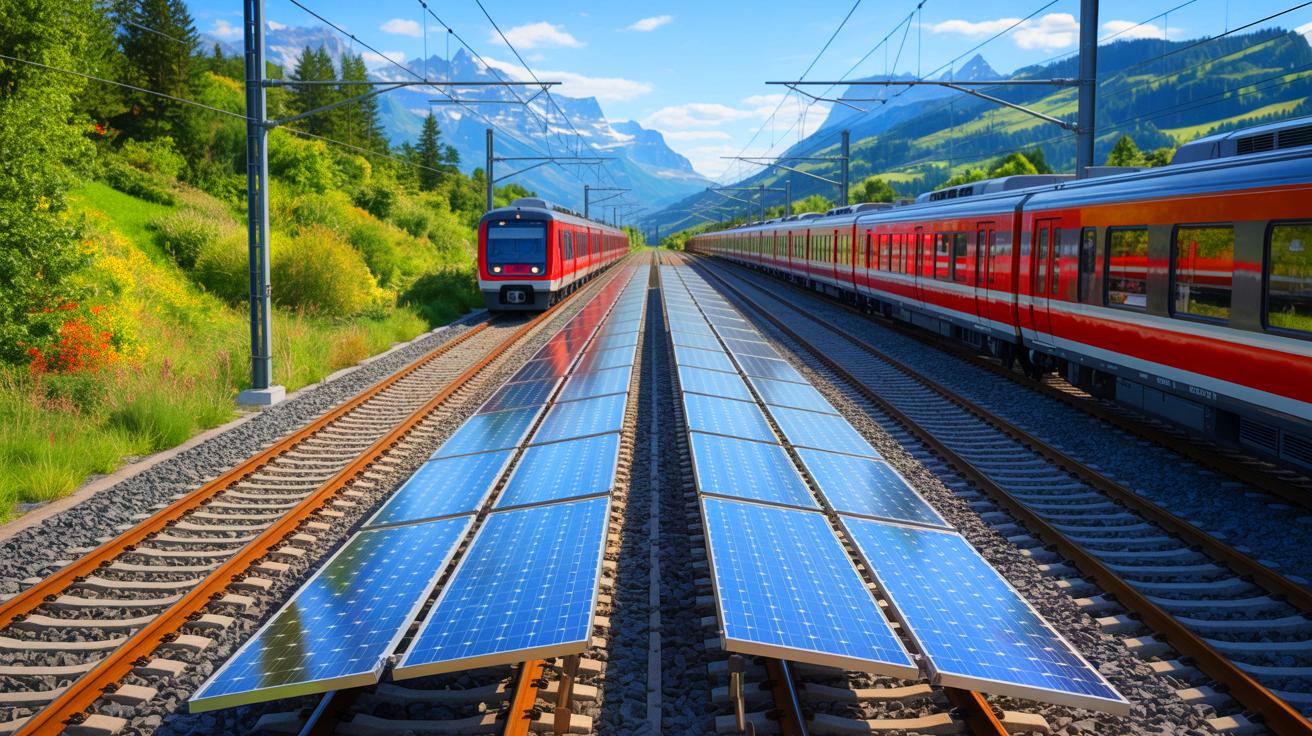
In an ambitious move toward sustainable energy, Swiss startup Sun-Ways has initiated a groundbreaking project to install solar panels directly onto railway tracks. This innovative approach promises to harness solar energy without disrupting existing train operations. The pilot project is currently underway along a 328-foot stretch of track in Buttes, Switzerland. Backed by twelve partner companies and Switzerland’s innovation agency Innosuisse, this initiative is part of a broader effort to explore new, efficient ways to generate renewable energy. The project, which costs approximately $640,000, represents a significant technological advancement in the field of solar energy.
Revolutionizing Solar Energy on Railway Tracks
Sun-Ways has pioneered a world-first technology to integrate solar panels with active railway lines, a feat previously considered challenging due to the need to maintain uninterrupted train services. By mounting solar panels onto the track sleepers, this system allows for quick installation and removal without disrupting rail operations. A specially designed machine enables this seamless process, highlighting the project’s potential to revolutionize renewable energy production.
The panels are designed to withstand the rigors of train travel, remaining clean thanks to brushes fitted underneath passing trains. This ensures maximum efficiency in energy production. The innovation is not just about energy generation but also about maintaining the integrity and functionality of the railway infrastructure. This unique approach could set a new standard for renewable energy integration into existing transport networks.
Potential Impact on Switzerland’s Energy Consumption
Switzerland’s extensive 3,300-mile rail network presents a vast opportunity for solar energy production. Sun-Ways estimates that widespread implementation of this technology could generate up to 1 billion kilowatt-hours of electricity annually. This figure represents about 2 percent of Switzerland’s total electricity consumption, enough to power approximately 300,000 households.
Such an increase in renewable energy production could significantly contribute to Switzerland’s energy goals, reducing reliance on traditional energy sources and lowering carbon emissions. The project’s success could also serve as a model for other countries looking to integrate sustainable energy solutions into their transportation infrastructure, thereby promoting a broader transition to renewable energy.
International Interest and Future Prospects
The innovative solar panel system has attracted attention from several countries, eager to explore its potential within their own rail networks. Nations such as Indonesia, South Korea, Japan, and the United States have expressed interest in adopting the technology. South Korea, for example, plans to launch its pilot project later this year.
In Indonesia, the solar energy engineering firm Mutitron Automa is preparing to implement the system in Bogor, West Java. This international interest underscores the global relevance of Sun-Ways’ innovation and highlights the potential for widespread adoption. The project represents a significant step forward in the global pursuit of sustainable energy solutions, aligning with international efforts to combat climate change.
Challenges and Future Considerations
While the project has garnered significant attention and support, it is not without challenges. Swiss transportation authorities have only approved a three-year trial period to assess the long-term impact on railway infrastructure. The trial in Buttes was chosen for its low-speed operation, with trains running at a maximum speed of 43.5 miles per hour, which minimizes potential risks.
The future success of this initiative will depend on overcoming technical challenges and proving the long-term reliability and efficiency of the solar panels. As the trial progresses, the data collected will be crucial in determining the feasibility of expanding the system across Switzerland and beyond. This trial period will also offer insights into any necessary adjustments to the technology or implementation strategies.
As Sun-Ways continues to pioneer this novel approach to solar energy production, the world watches with anticipation. The potential implications of their success stretch far beyond Switzerland’s borders, offering a glimpse into a future where transportation infrastructure and renewable energy converge seamlessly. What remains to be seen is how quickly and effectively this innovation can be scaled globally, potentially transforming the landscape of energy production worldwide. How will other countries adapt and implement such groundbreaking technology in their own transportation systems?

Wow, this is super innovative! How do they ensure the panels don’t get damaged by the trains? 🚆🌞
Are there any environmental concerns regarding the materials used in these solar panels?
Interesting project. How does the energy output compare to traditional solar farms?
Hats off to Sun-Ways for thinking out of the box! What’s next, solar-powered planes? ✈️🔋
Can these panels be adapted for high-speed train tracks?
This sounds great, but what about the initial installation disruption? Any data on that?
How do they ensure the panels stay clean and efficient over time?
As a Swiss citizen, I’m proud to see us leading in renewable energy innovation! 🇨🇭
Could this be a potential hazard for wildlife around the tracks?
This is a brilliant idea. What about snow or ice in winter? Doesn’t it affect efficiency?
What happens if there’s a malfunction? Can trains still operate safely?
Are these panels weatherproof? Would they withstand heavy rains or storms?
How does this technology compare cost-wise to other renewable energy sources?
It’s great to see countries like South Korea and Indonesia showing interest too! 🤩
Would love to see a follow-up article on the results of these trials!
Is the energy generated stored, or does it go directly into the grid?
Sounds good, but can they be stolen easily? What’s the security like?
Thanks for the article! How about noise pollution? Any impact on that?
Can this technology be scaled to other public transport systems like buses or trams?
I’m curious, how long did the development of this technology take?
Is there any impact on train speeds or efficiency due to these panels?
Do the panels have any impact on the visual landscape of the railway tracks?
I’m skeptical. How will they deal with the wear and tear from trains passing over them?
Bravo to Sun-Ways! Can’t wait to see how this develops. 👏
How do they plan to address potential vandalism of the solar panels?
Is this a standalone project, or are there plans for more such initiatives?
Thank you for sharing this! It’s amazing to see renewable energy being integrated in such unique ways. 😊
Can these panels be used on all types of railway tracks, or are there limitations?
This is incredible, but what about the maintenance costs? Could it outweigh the benefits?
Why doesn’t every country adopt such innovative solutions? The world needs more of this! 🌍
Well, that’s one way to electrify the rails! Very punny! 😂
How long do these panels last before they need to be replaced?