




| IN A NUTSHELL |
|
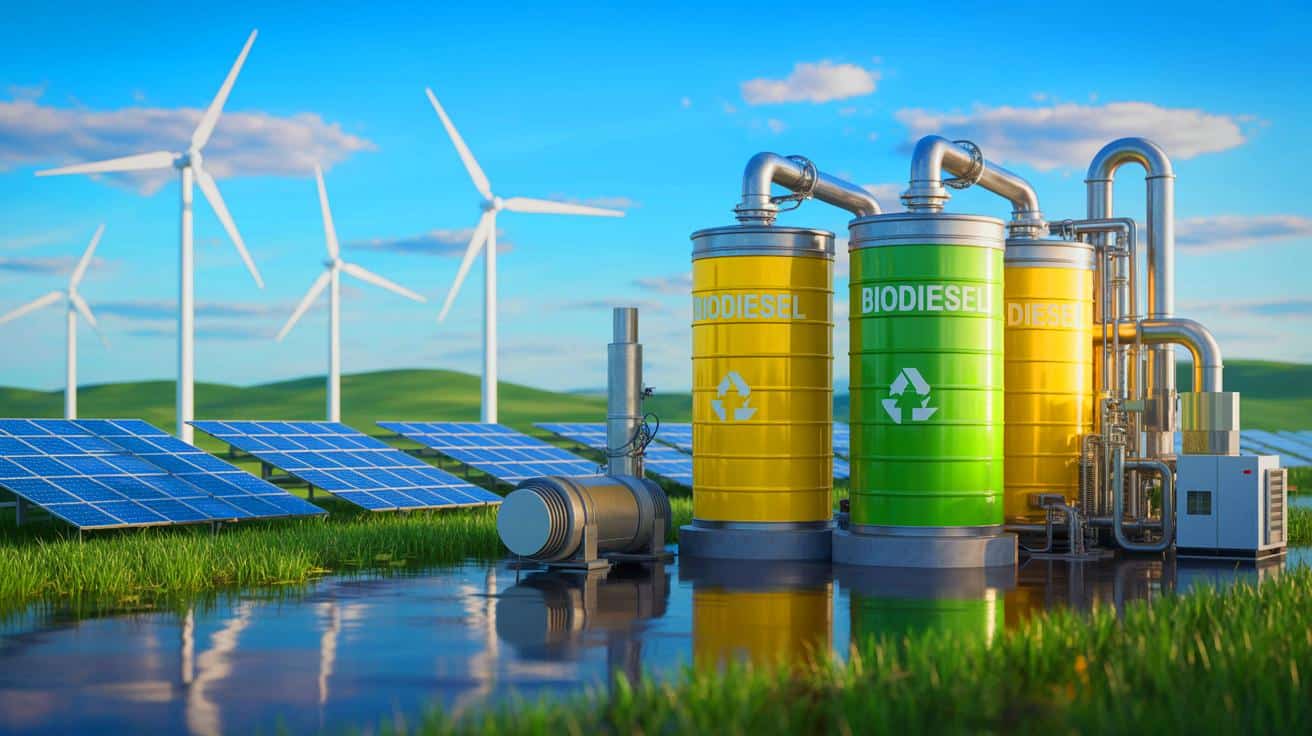
A groundbreaking innovation from Loughborough University promises to revolutionize the biodiesel industry by transforming waste into a valuable asset. R3V Tech, a spin-out company led by Dr. Adriano Randi and Professor Benjamin Buckley, has developed an eco-friendly process that converts crude glycerol, a low-value by-product of biodiesel production, into solketal, a high-value solvent. This technology not only reduces emissions and energy consumption but also opens up new revenue streams for biodiesel producers. With a global market value estimated at $78 billion, solketal is used in various industries, including pharmaceuticals and cosmetics, positioning R3V Tech at the forefront of sustainable innovation.
From Burden to Benefit
Biodiesel, derived from plant oils, animal fats, and recycled cooking oils, is recognized for its environmental benefits compared to petroleum diesel. However, its production yields over 220 pounds of crude glycerol for each tonne of biodiesel produced. This by-product is often contaminated with residual chemicals, making its disposal both challenging and costly. Traditionally, biodiesel producers have had to sell this crude glycerol at a low price to refineries for solketal production. This process involves energy-intensive methods and contributes to emissions through international shipping.
R3V Tech offers a solution that changes this dynamic. By enabling on-site conversion of crude glycerol into solketal, the company’s electrochemical system eliminates the need for transport and energy-heavy refining processes. Operating at room temperature and atmospheric pressure, the system significantly reduces energy consumption and operational costs. Additionally, it utilizes waste carbon dioxide, further minimizing the carbon footprint associated with biodiesel production.
Electricity-Powered Innovation
The core of R3V Tech’s innovation lies in its ability to transform waste into a valuable product using electricity. The process begins with filtering crude glycerol and mixing it with a carbon dioxide-saturated solution. This mixture is then passed through an electrochemical reactor, where electricity facilitates the conversion into solketal. The outcome is a liquid product ready for immediate use or sale.
R3V Tech’s system was developed with support from the EPSRC Impact Acceleration Account and ICURe programme, both funded by Innovate UK. The company recently received a grant to construct a pilot demonstrator at a biodiesel plant. The long-term vision is to offer a modular, plug-in system that allows biodiesel producers to efficiently refine their own waste. Dr. Randi emphasizes that integrating this system creates new revenue streams, reduces emissions, and enhances sustainability.
Empowering Producers and Advancing Sustainability
R3V Tech’s innovation is not just about technological advancement; it’s a step towards empowering producers and fostering a circular economy. By refining their own by-products, biodiesel producers can increase profitability while contributing to a low-carbon future. The company’s motto, “Reduce, Reuse, Revalue,” embodies this spirit of sustainability and innovation.
Selected for initiatives like the Shell Start-Up Engine and the Royal Society of Chemistry Change Makers programme, R3V Tech is strategically positioned to lead in clean-tech innovation. Dr. Randi envisions a future where every biodiesel company adopts this process, leaving a legacy that benefits both the planet and future generations. As the industry shifts towards more sustainable practices, R3V Tech stands as a beacon of innovation and environmental stewardship.
The Future of Biodiesel Production
As the world grapples with the pressing need for sustainable energy solutions, R3V Tech’s innovation offers a promising path forward. By transforming waste into a valuable resource, the company addresses both economic and environmental challenges. The potential for widespread adoption of this technology could significantly impact the biodiesel industry, reducing its carbon footprint while enhancing profitability.
Looking ahead, the question remains: How will the implementation of such technologies shape the future of renewable energy and resource management in the biodiesel sector? As more companies explore sustainable innovations, the potential for positive environmental impact grows, driving the industry towards a more circular and low-carbon economy.

Wow, this sounds like a game-changer! How soon can we expect this technology to be widely adopted? 🌍
Wow, this tech sounds revolutionary! How soon do they expect to roll this out on a large scale? 🚀
Isn’t this essentially just recycling on steroids? 😂
Can someone explain what solketal is? Never heard of it before. 🤔
Great job R3V Tech! This is exactly the kind of innovation we need to combat climate change. 🌍
Great innovation! Thanks to Dr. Randi and team for moving us closer to a greener future. 🌿
How does this process affect the cost of biodiesel production overall?
How cost-effective is this process compared to traditional methods of dealing with biodiesel waste?
Is this tech viable for smaller biodiesel producers, or is it only for the big guys?
Can this technology be adapted for other types of industrial waste?