


| IN A NUTSHELL |
|
In a groundbreaking move, China has commenced the construction of the world’s first commercial underwater data center off the coast of Shanghai. This ambitious project represents a significant leap forward in addressing the growing environmental and energy challenges posed by traditional data centers. By utilizing the ocean’s natural cooling properties and harnessing wind energy, China aims to create a sustainable model that could transform the future of data storage and processing globally.
The Environmental Cost of Data Centers
The rapid expansion of artificial intelligence and cloud computing has led to a substantial increase in the demand for data centers. These facilities consume enormous amounts of energy and water, posing significant challenges. Traditional data centers require vast quantities of electricity, with approximately 40% dedicated solely to cooling systems. This is due to the immense heat generated by servers operating around the clock.
Furthermore, these centers often compete with essential human needs for water resources. In a bid to mitigate humidity-induced damage, many companies have established their infrastructures in arid regions such as Arizona and parts of the Middle East. This practice exacerbates the strain on already limited water supplies, raising concerns about the sustainability of current data storage solutions.
Innovative Ocean-Based Solutions
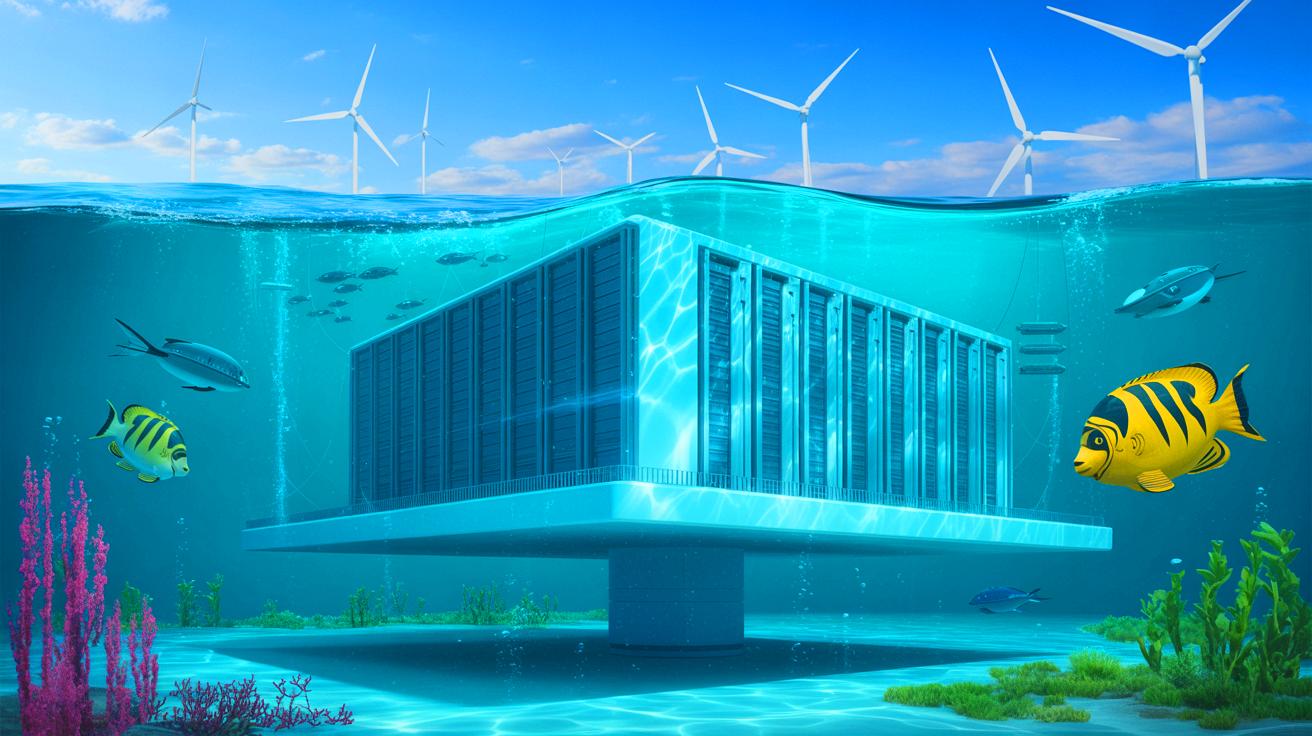
In response to these challenges, China has embarked on an innovative approach by submerging its data centers in the ocean. The Shanghai pilot project, spearheaded by the company Hailanyun, utilizes seawater as a natural cooling system. Cold water is pumped through radiators positioned behind server racks, effectively dissipating heat without the need for freshwater consumption.
This initiative not only addresses water scarcity but also reduces energy consumption by 30% compared to land-based centers. The facility is set to be powered by an offshore wind farm, supplying 97% of its energy needs. The first phase of the project will house 198 server racks, demonstrating the commercial viability of this concept despite its smaller scale compared to land-based giants.
Microsoft’s Pioneering Efforts
While this technology might seem new, it was first explored by Microsoft through its Natick project in 2018. Microsoft submerged a capsule containing 800 servers off the coast of Scotland, achieving remarkable results. The underwater environment, sealed and filled with nitrogen, resulted in fewer server failures compared to traditional data centers.
Despite the success, Microsoft did not transition to commercial deployment. In contrast, China has swiftly moved from prototype testing to commercial implementation within just 30 months, showcasing an execution capability that American companies have yet to match in this domain.
Environmental Concerns and Challenges
Although promising, underwater data centers are not without potential environmental risks. Research by Microsoft indicated a slight localized increase in seawater temperature, albeit minor. However, concerns have been raised regarding the impact of warmer, less oxygenated water on marine biodiversity, particularly during heatwaves.
Security is another challenge. A 2024 study highlighted the vulnerability of submerged systems to potential attacks via underwater sound waves. Nevertheless, Hailanyun downplays these risks, citing a 2020 assessment showing minimal temperature increases. “The impact is virtually negligible,” states Li Langping, a company spokesperson.
A Global Technological Race
The Chinese project’s success could ignite a global shift towards underwater data centers. South Korea has announced similar explorations, while Japan and Singapore are considering floating data centers. This technological race underscores the 21st-century challenge of balancing the increasing demand for computing power with environmental sustainability.
If China succeeds in its underwater venture, it could redefine global standards for sustainable computing and gain a strategic advantage in the global tech landscape. The future of the Internet might very well be shaped in the ocean’s depths.
As the world watches China’s underwater data center venture unfold, it raises important questions about the future of technology and sustainability. Can this innovative approach truly meet the growing demands of the digital age while safeguarding our planet’s resources? What other groundbreaking solutions might emerge in the quest for sustainable computing?


Wow, this is like something out of a sci-fi movie! 🌊🌐
Has anyone considered the impact on marine life? 🤔
30% energy savings is impressive, but what about maintenance costs underwater?
Every innovation has its risks, but this could be a game-changer. Thanks for sharing!
Cool idea, but I hope they don’t accidentally create a giant internet squid. 🦑💻
How secure are these underwater data centers against hacking or physical tampering?
Is this the same concept as underwater hotels? Just with servers instead of guests? 😂
Does anyone know what happens if there’s a leak? Water and servers don’t mix well. 💦
Bold move by China! Excited to see how this develops over time. 📈
I’m skeptical about the “near-zero emissions” claim. Can we see some data on that?
Are there any contingency plans for natural disasters like tsunamis? 🌊
Great article! This shows the power of combining technology and sustainability. 🌍
Hope they’re not planning to sink my emails along with it! 😂📧
Wonder how this will affect the cost of data storage for consumers?
I’m curious about the logistics of installing and maintaining these underwater systems.
How will they monitor the environmental impact over time?
What a fascinating concept! Can’t wait to see this in action. 🚀
Honestly, I’m just here for the memes about underwater Wi-Fi. 📶🐠
Could this technology be adapted for use in other countries with coastal access?
The innovation is great, but let’s not forget about the potential risks. 🌊⚠️
30 months from prototype to commercial? That’s some serious execution speed! ⏱️
What about the impact on local fishing industries? Any thoughts?
They should add a live stream from inside the data center. I’d watch that! 📹🐟
How will they prevent marine growth on the equipment underwater?
Are there plans to expand this concept to other parts of the world?
Does anyone else think this could lead to underwater internet cafes? Just me? 😄
What are the long-term benefits expected from this project?
Hope they have a plan for underwater earthquakes! 🤞
This article is great! Thanks for the detailed breakdown of the project. 🙌
pro-tip, you can use the ocean-water for cooling without dunking the entire datacenter, you just need to submerge the cooling loops.
Unsatisfied with creating a warmer world through “normal” climate change, China decides to cut out the middle man and proceed straight to heating up the ocean directly.