




| IN A NUTSHELL |
|
In the rapidly evolving field of renewable energy, Texas-based Janta Power has emerged as a notable innovator. The company has recently secured $5.5 million in seed funding to further develop its pioneering three-dimensional solar tower systems. Unlike traditional solar farms that rely on flat panels, Janta Power’s vertical design is transforming the way solar energy is harvested. This funding marks a significant milestone for the company, reflecting growing investor confidence in its unique approach. By maximizing sunlight capture and minimizing land use, Janta Power aims to redefine efficiency in solar power generation.
Revolutionizing Solar Energy with Vertical Design
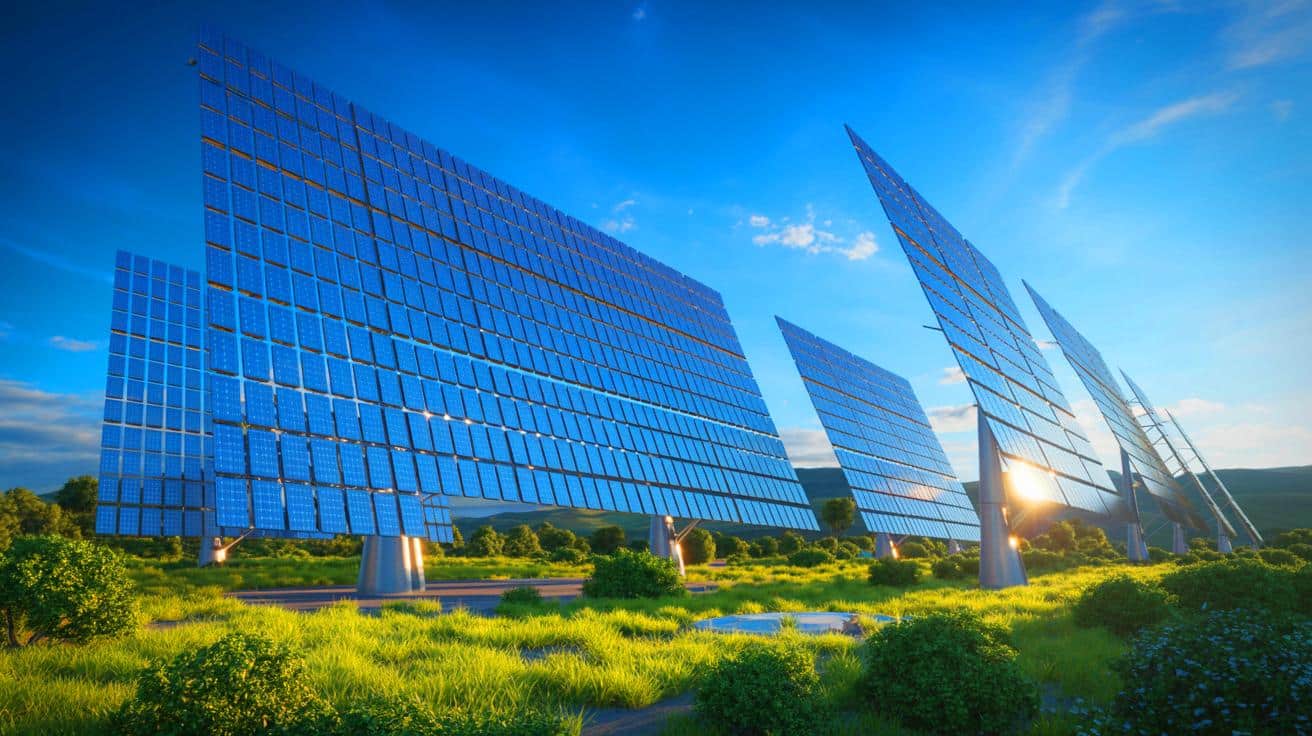
Janta Power’s innovative approach to solar energy stems from its use of vertical solar towers. Unlike conventional flat-panel installations that spread across large areas, Janta’s towers stack solar panels vertically. This design allows for more panels in a smaller footprint, akin to how skyscrapers maximize space in urban landscapes. By doing so, Janta Power not only optimizes land use but also enhances the energy capture capabilities of solar farms.
The vertical orientation of these towers offers distinct advantages. They are equipped with smart tracking systems that pivot the towers to follow the sun’s path throughout the day. This ensures continuous exposure to sunlight, including during early morning and late afternoon when flat panels might underperform. As a result, the towers provide a more consistent and prolonged electricity output, addressing one of the key limitations of traditional solar systems.
Efficiency and Economic Benefits
Janta Power claims that its solar towers can generate up to 50% more electricity than conventional flat-panel systems while using only one-third of the land. This leap in efficiency is attributed to the towers’ ability to capture sunlight from multiple angles throughout the day. The company reports a capacity factor of about 32%, significantly higher than the 22% typically achieved by flat panels.
Moreover, Janta Power’s systems offer economic advantages by delivering power at a lower cost. The company estimates its energy cost to be as low as $0.05 per kilowatt-hour, compared to a global average of $0.15. This cost-effectiveness, combined with the towers’ durability—they are rated to withstand winds up to 170 mph—adds to their appeal for a variety of applications.
Applications and Future Prospects
Janta Power has already implemented pilot programs at major airports, including Munich International and Dallas-Fort Worth. These installations serve as a proof of concept, demonstrating the viability and benefits of the company’s technology. The recent funding aims to expand these efforts, targeting deployments across data centers, electric vehicle charging stations, telecom towers, universities, and industrial facilities.
This expansion highlights the versatile applications of Janta Power’s technology, which can be tailored to meet the energy needs of diverse sectors. The company’s focus on scalability and adaptability positions it well in the growing renewable energy market. As demand for sustainable solutions rises, Janta Power’s innovative approach could play a crucial role in meeting global energy challenges.
Investors’ Confidence and Market Potential
The recent $5.5 million funding round underscores investor confidence in Janta Power’s potential to disrupt the solar energy landscape. As the world increasingly shifts towards renewable energy, innovations like Janta’s are critical for enhancing efficiency and sustainability. The company’s ability to attract investment reflects its promise and the increasing recognition of the advantages offered by its solar tower systems.
Looking ahead, Janta Power is poised to capitalize on market opportunities as industries seek more efficient and cost-effective energy solutions. The continued development and deployment of its technology could significantly influence the future of solar energy, offering a blueprint for maximizing energy production with minimal environmental impact.
As Janta Power continues to innovate and expand, the question remains: How will its advancements influence the broader renewable energy landscape, and what implications will this have for traditional solar power systems?

Wow, 50% more energy? That’s incredible! 🌞
Wow, 50% more energy efficiency? 🚀 That’s incredible! How soon can we expect to see these towers in our neighborhoods?
I’m a bit skeptical about the durability of these towers. Can they really withstand winds up to 170 mph? 🤔
How do these 3D solar towers compare to traditional panels in terms of maintenance costs?
This is a game-changer for urban areas where space is limited. Thank you, Janta Power! 🌆
I’m curious if this technology can be adapted for home use. Anyone know? 🏠
Does anyone know how long it takes to install one of these towers compared to traditional solar panels?
Janta Power’s approach sounds promising, but what about efficiency during cloudy days?
Great concept! But what happens when it rains? Do the towers still work effectively? 🌧️
Why haven’t we seen more vertical solar solutions before? Seems like a no-brainer!
Hope they roll this out in more places soon! We need more clean energy solutions like this. 🌍
Are there any plans to expand this technology internationally?
What’s the expected lifespan of these vertical solar towers?
Vertical solar towers sound promising, but what about the cost? Is it affordable for small communities?