



| IN A NUTSHELL |
|
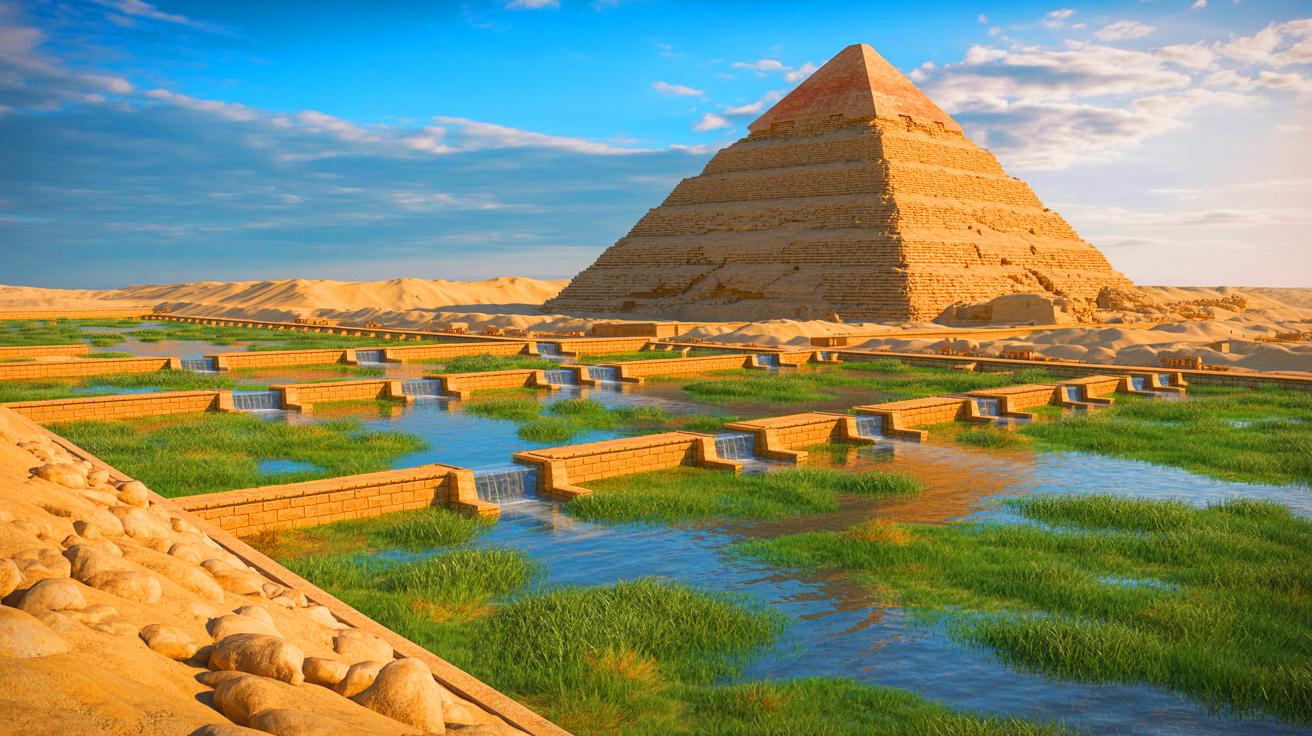
Recent archaeological discoveries in Egypt are rewriting our understanding of ancient engineering marvels. Researchers have unearthed a sophisticated water management system near the Pyramid of Djoser, shedding light on the advanced engineering techniques employed by the ancient Egyptians. This intricate network, buried beneath the sands of time, suggests that seasonal floodwaters were skillfully harnessed to aid in monumental construction projects. These revelations not only challenge long-held beliefs about the capabilities of ancient civilizations but also open new avenues for exploring the technical ingenuity of the ancient world.
Ingenious Stone Dam Capturing Desert Floodwaters
The enigmatic structure at Saqqara, known as the Gisr el-Mudir, has long puzzled scholars with its grand scale and ambiguous purpose. Recent research led by Xavier Landreau and his team has clarified its role as a sophisticated stone dam. This ancient edifice, stretching nearly 1,180 feet, was designed to capture seasonal floodwaters from nearby wadis, ensuring a reliable water supply for large-scale construction projects.
Through meticulous analysis of terrain slopes, ancient watercourses, and erosion patterns, researchers have reconstructed the hydrological dynamics of the area. It is estimated that the dam could hold up to 14 million cubic feet of water, a volume sufficient to sustain extensive construction activities. Additionally, seasonal floods would deposit nutrient-rich sediments, enhancing the site’s agricultural potential. This discovery shifts our understanding of Saqqara, highlighting its strategic importance for both religious and hydrological reasons.
How Hydraulic Construction of Pyramids Worked
While a stable water supply was crucial, the true innovation of the Djoser complex lay in its hydraulic engineering. Beneath the pyramid, a network of interconnected basins and shafts formed a complex water management system. Known as the “Deep Trench,” this network served as a water purification and transportation system, beyond its symbolic significance.
This system likely powered a hydraulic elevator mechanism, utilizing water pressure in vertical shafts to float heavy limestone blocks on platforms. This ingenious use of water reduced the mechanical effort required for construction, offering a practical solution to the challenges of lifting massive stones. The structures observed in the galleries and underground compartments support this hypothesis, suggesting an advanced understanding of hydraulic principles.
Sophisticated Technology Matching Pharaohs’ Ambitions
The hypothesis of hydraulic construction might seem bold, but it is supported by compelling evidence. The dam, basins, galleries, and shafts form a coherent system, indicative of advanced engineering. The ancient Egyptians were not novices in hydraulic technology. Their expertise in irrigation, canal systems, and water management is well-documented, reflecting a deep understanding of hydraulic engineering.
This study suggests that such advanced techniques could have reduced reliance on labor-intensive methods like massive ramps, enhancing construction efficiency and precision. The Pyramid of Djoser, often considered a prototype, may have been a pinnacle of sophisticated engineering, a testament to the technical prowess of the Old Kingdom. This challenges traditional narratives and underscores the Egyptians’ ability to adapt and innovate in response to environmental challenges.
How Saqqara’s Hydraulic Remains Alter Our Historical Perspective
Traditionally, pyramids have been analyzed primarily for their architectural and symbolic significance. However, the discovery of a comprehensive hydraulic system at Saqqara shifts this perspective. It reveals that ancient builders were not only creating religious monuments but also developing sustainable technical ecosystems.
This multidisciplinary approach, integrating archaeology, hydrology, and geotechnics, enriches our understanding of ancient Egypt. It highlights a sophisticated work organization and resource management, suggesting that pyramid construction was as much a feat of engineering as it was of manpower. This insight invites a reevaluation of other historical sites, encouraging the search for similar hydraulic systems that may have been overlooked.
As we continue to uncover the engineering marvels of ancient Egypt, we are left pondering: What other technological innovations remain hidden, waiting to redefine our understanding of history?



Wow, I never thought water could be used like that! 💧
Is it possible that this system was used for other purposes too, like agriculture?
This sounds like a plot twist in a history documentary!
I’m skeptical. How come we’re only discovering this now?
Could this technology have been used in other ancient civilizations?
Are there any other pyramids with similar hydraulic systems?
How much of this is speculation versus proven fact?
Thanks for the article, it’s fascinating to see how much we’re still learning about ancient Egypt!
Did they find any tools or artifacts related to this water management system?
Fascinating! I wonder if this discovery will impact modern engineering in any way. 🤔
The ancient Egyptians never cease to amaze me with their ingenuity!
Maybe aliens taught them how to do it. Just kidding! 🛸
What kind of materials did they use to build these hydraulic systems?
How long did it take for them to construct such a sophisticated system?
Is there any more evidence to support this theory? Seems quite far-fetched.
Has this affected tourism to these sites in any way?
Incredible! Makes me wonder what other secrets are buried under the sand…
Could this be applied to modern sustainable building practices?
How do they plan to preserve these findings for future generations?
Were there any indications of similar systems in other parts of Egypt?
This article is amazing, but are there any peer-reviewed studies on this? 🤓
Did the researchers face any challenges while uncovering these systems?
This is mind-blowing, thanks for sharing this amazing discovery!
How did they even come up with such advanced engineering techniques back then?
If this is true, it completely changes our understanding of ancient history!
Seems like the Egyptians were way ahead of their time! 🚀
Can someone explain how a hydraulic elevator would actually work in this context?