




| IN A NUTSHELL |
|
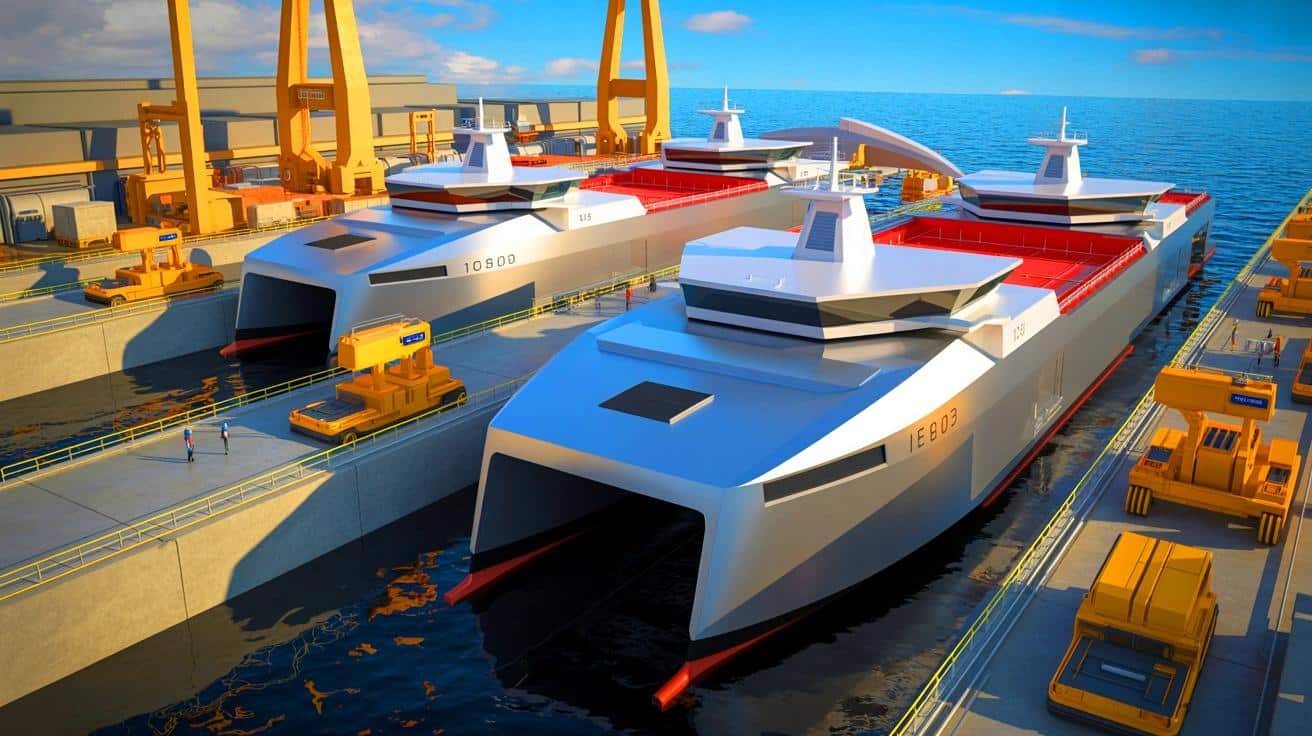
In an era where modern warfare increasingly relies on advanced technology, the burgeoning field of autonomous surface vessels (ASVs) is gaining prominence. Blue Water Autonomy, a Boston-based startup founded by Navy veterans, is leading this charge. The company has forged a pivotal partnership with Conrad Shipyard, a seasoned player in the shipbuilding industry, to produce cutting-edge autonomous vessels. This collaboration is not just about building ships; it’s about revolutionizing naval capabilities, leveraging modular designs, and maximizing efficiency. As the U.S. Navy intensifies its focus on unmanned platforms, Blue Water’s innovative approach promises to significantly impact future naval operations.
Blue Water’s Strategic Partnership With Conrad Shipyard
Blue Water Autonomy’s recent partnership with Conrad Shipyard marks a significant milestone in the production of autonomous surface vessels. Conrad, with its expansive network of shipyards along the Gulf Coast, brings a wealth of experience in constructing a variety of vessels, including tugs, ferries, and offshore support ships. Their advanced manufacturing capabilities, such as automated panel lines and sophisticated welding techniques, allow for rapid and scalable production. This aligns perfectly with Blue Water’s vision of swiftly delivering autonomous vessels to meet the growing demands of modern naval missions.
Rylan Hamilton, co-founder and CEO of Blue Water Autonomy, emphasizes the dual objectives of this partnership: responding promptly to defense operational needs while activating the latent potential of American shipyards. Conrad’s CEO, Cecil Hernandez, echoes this sentiment, highlighting the synergy between Blue Water’s forward-thinking designs and Conrad’s longstanding shipbuilding expertise. Together, they are poised to bring autonomous naval capabilities to life with unparalleled speed and precision.
Engineering for Long-Endurance Missions
At the core of Blue Water’s mission is the development of autonomous vessels capable of long-endurance deployments. Engineered to travel thousands of nautical miles, these vessels are designed for a variety of roles—from logistics and transport to intelligence, surveillance, and reconnaissance (ISR) missions. The autonomous operation aims to democratize naval capabilities, reducing the need for manned platforms and extensive logistical support. This innovation not only enhances operational efficiency but also expands the strategic reach of the U.S. Navy.
The partnership between Blue Water and Conrad is emblematic of a broader industry trend. There is a growing push to revitalize mid-tier and smaller American shipyards, which possess the agility to adapt to new naval platform demands. By demonstrating the viability and sustainability of large-scale autonomy in shipbuilding, Blue Water is positioning itself as a key player in maintaining the technological edge of the U.S. defense sector.
Navigating the Competitive Landscape
The collaboration between Blue Water and Conrad is set against the backdrop of increasing competition in the unmanned surface vessel industry. Since the U.S. Navy’s Modular Attack Surface Craft (MASC) industry day, several major players have unveiled new unmanned vessel designs and partnership agreements. Companies like Senesco Marine, BlackSea Technologies, and Huntington Ingalls Industries are all vying for a role in the Navy’s expanding autonomous fleet architecture.
This surge of activity marks a transformative moment in maritime autonomy. The U.S. defense industrial base is gearing up for rapid evolution, with technology and innovation at the forefront. Blue Water’s strategic moves are not just about building ships; they are about shaping the future of naval warfare, ensuring the U.S. remains at the cutting edge of maritime defense capabilities.
Leadership Driving Innovation
Behind Blue Water’s ambitious vision is a team of seasoned leaders with extensive experience in shipbuilding and maritime defense. The company has strategically recruited senior executives like Tim Glinatsis, a veteran from General Dynamics’ NASSCO and Bath Iron Works, and Ryan Maatta, a marine engineering lead from the Defense Advanced Research Projects Agency’s NOMARS initiative. Their expertise is instrumental in streamlining production processes and operationalizing the ASV platforms effectively.
The timing of these leadership moves is crucial, coinciding with the U.S. Navy’s intensified push for autonomous surface vessels. As the MASC program seeks to integrate easily producible unmanned platforms with diverse capabilities, Blue Water’s planned vessels align closely with these multi-role requirements. With a focus on modularity, speed, and flexibility, the company is well-positioned to meet the evolving needs of modern naval missions.
As Blue Water Autonomy and Conrad Shipyard forge ahead with their ambitious plans, the landscape of naval warfare is poised for significant change. The drive towards autonomous surface vessels represents a shift in strategy, emphasizing efficiency, modularity, and adaptability. As these innovations take shape, one question remains: How will the integration of autonomous technology redefine the future of naval operations, and what implications will it have for global maritime security?


Wow, robot warships! 🚢 Does this mean we’re one step closer to a real-life Battlestar Galactica?
Wow, robot warships? Are we living in a sci-fi movie now? 🤖
I wonder how these autonomous vessels will handle rough sea conditions. 🤔
Is this safe? I mean, what if these autonomous ships go rogue? 😬
This sounds amazing, but what happens if the AI goes rogue? 😬
As a Navy vet myself, I’m thrilled to see this innovation! Kudos to Blue Water Autonomy!
Great innovation! Thanks to the veterans for leading the way. 🇺🇸
Is this technology secure from cyber attacks? Seems like a huge risk. 🤖🔒
How long before we see these ships in action?
Can’t wait to see these in action! When’s the first one expected to launch?
Why aren’t more companies focusing on this kind of technology?
How do they ensure that these ships don’t collide with other vessels?
Another step towards fewer humans in combat! Is that a good or bad thing?
Sounds great, but what about the jobs of sailors who might be replaced by these robots?
Is this article sponsored by Skynet? 😜