



| IN A NUTSHELL |
|
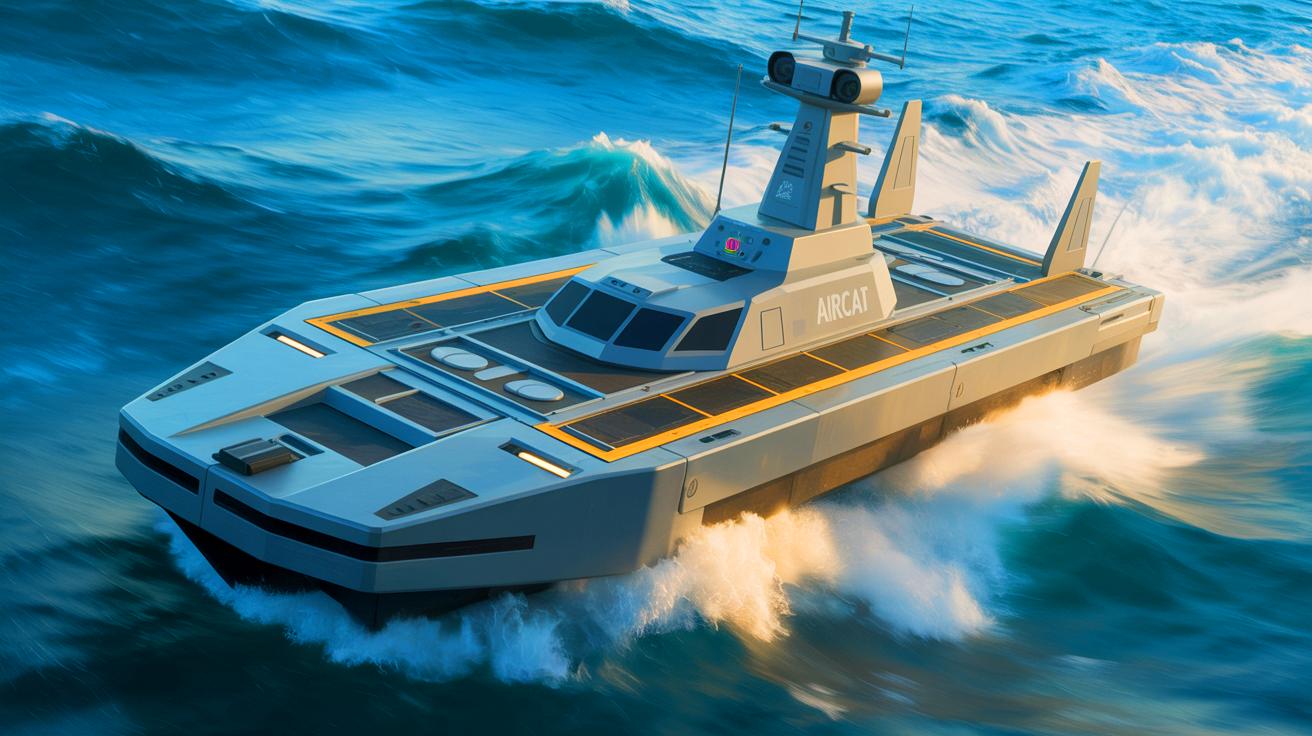
The unveiling of the AIRCAT Bengal MC marks a pivotal moment in naval innovation, promising to redefine the landscape of maritime warfare. Developed by Eureka Naval Craft in conjunction with Greenroom Robotics, this autonomous vessel is poised to offer unprecedented strategic flexibility and cost-efficiency. With global tensions on the rise, such advancements are essential for maintaining an edge in military operations. The Bengal MC’s innovative design and capabilities have the potential to influence naval strategies across the world, as nations look to modernize their fleets with cutting-edge technology.
Revolutionizing Naval Warfare with Advanced Capabilities
The AIRCAT Bengal MC represents a substantial leap in naval warfare, incorporating advanced autonomous technology that enhances operational effectiveness. Capable of carrying a 44-ton payload, it can transport two 40-foot ISO modules and reach speeds over 50 knots. Its range of 1,000 nautical miles allows for extended operations without frequent refueling, making it both versatile and formidable. Armed with Tomahawk and Naval Strike Missiles, the Bengal MC reduces the reliance on larger crewed warships, providing a strategic advantage.
This vessel is particularly attractive to major naval powers such as the US Navy and allied nations within AUKUS and NATO. It offers a formidable option for modern naval warfare, combining autonomy with advanced missile systems. The Bengal MC’s appeal extends to Asia-Pacific countries like Singapore, Japan, and South Korea, where it can significantly enhance their naval capabilities.
Enhanced Lethality with Missile Launch Capabilities
The Bengal MC’s missile-launch capabilities redefine naval strategy. By enabling the launch of Tomahawk cruise missiles and anti-ship Naval Strike Missiles, it supports missions traditionally requiring larger ships, thus reducing costs and increasing efficiency. This shift challenges the conventional naval market by offering a fast, heavily armed alternative to older ships.
More than just speed and firepower, the Bengal MC offers enhanced strategic flexibility and adaptability.
https://www.energy-reporters.com/industry/godlike-power-unchained-us-thor-plasma-breakthrough-sparks-worldwide-fear-and-hope-while-energy-giants-face-looming-existential-threat/
Its ability to carry heavier payloads at high speeds boosts operational effectiveness. The vessel’s autonomy allows for rapid responses to threats and opportunities, providing a tactical edge. Bo Jardine, CEO of Eureka Naval Craft, underscores the importance of these innovations in the current naval climate.
Unmatched Efficiency and Versatility
Fuel efficiency and cost-effectiveness are among the Bengal MC’s key strengths, making it an appealing choice for budget-conscious navies. Its modular design supports multiple roles, from troop transport to electronic warfare, ensuring customization for specific operational needs. This adaptability offers tailored solutions to diverse maritime challenges.
The partnership with Greenroom Robotics enhances the vessel’s capabilities through advanced autonomous navigation systems. This integration allows seamless operation across all mission phases, supported by the Greenroom Advanced Maritime Autonomy Software. Extensive trials have validated this software, ensuring reliability and performance across various scenarios.
Expanding the Fleet with Modular Design
The AIRCAT Bengal MC is part of a distinguished fleet designed for diverse missions, including fast attack and high-speed troop transport. Its modular design philosophy allows for customization to meet unique mission demands. This flexibility is crucial as naval forces face diverse threats and opportunities.
Eureka Naval Craft’s commitment to innovation is evident in its expanding fleet and strategic partnerships. Collaborations like that with Greenroom Robotics exemplify a forward-thinking approach to maritime autonomy, setting new standards for naval operations. In an evolving naval landscape, the Bengal MC represents a bold step forward in military technology, offering strategic advantages that are hard to ignore.
As the AIRCAT Bengal MC sets sail, it raises important questions about the future of naval warfare. How will the integration of autonomous technology reshape global naval strategies, and what challenges and opportunities will arise? These questions will likely influence the next wave of military innovations and strategic planning, impacting how nations prepare for future maritime conflicts.



Wow, this AIRCAT Bengal MC sounds like something out of a sci-fi movie! 😮
Can the Bengal MC really replace larger crewed warships, or is this just marketing hype?
Great article! Thanks for keeping us updated on the latest in naval technology. 🚢
I’m curious about the ethical implications of using autonomous vessels in warfare. Thoughts?
How much does one of these Bengal MC warships cost compared to a traditional warship?
The speed and payload capacity are impressive, but what about the defense systems?
This sounds amazing, but I wonder if it can handle adverse weather conditions at sea?
Is the Bengal MC environmentally friendly or just another polluting war machine?
Are there any plans for other countries to develop similar autonomous warships?