


| IN A NUTSHELL |
|
The international scientific community has made a significant advancement in the quest for sustainable energy with the latest achievement of the ITER project. The completion of the sixth and final component of the reactor’s central solenoid marks a major milestone. This magnet, capable of lifting an aircraft carrier, represents a technological breakthrough that could transform energy production and space exploration. Beyond its technological impact, this achievement underscores the power of international collaboration in addressing global challenges.
Understanding the Role of the Central Solenoid
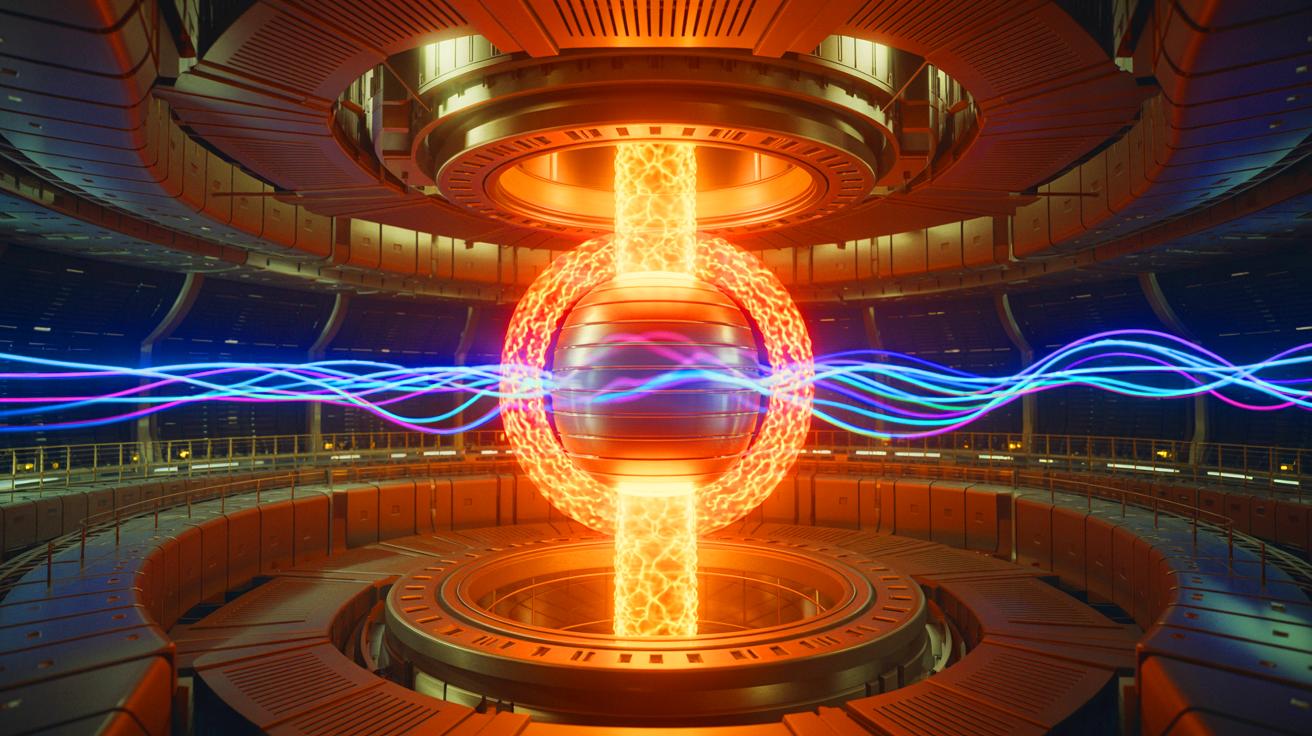
At the core of the ITER Tokamak reactor lies the central solenoid, a vital component that drives the fusion process. This superconducting magnet is essential for creating and maintaining the superheated plasma required for nuclear fusion. The plasma core, composed of ionized hydrogen gas, reaches a staggering 150 million degrees Celsius, which is ten times hotter than the sun’s core. Under these conditions, atomic nuclei fuse, releasing large quantities of energy in what is known as a fusion reaction.
The fully assembled solenoid will weigh nearly 3,000 tons and measure 42.6 feet in height and 13.1 feet in width. Working alongside other magnetic systems, it creates a magnetic cage that confines the plasma, allowing engineers to regulate the fusion reaction. Withstanding forces equivalent to 13.5 million pounds, the solenoid exemplifies the engineering prowess fueling this fusion breakthrough.
The Significance of a Magnet That Can Levitate an Aircraft Carrier
The central solenoid’s ability to levitate an aircraft carrier highlights the extreme conditions essential for nuclear fusion. Given the reactor’s high temperatures, no material container can endure them. Therefore, magnetic fields are used to suspend the plasma in mid-air, preventing contact with the reactor walls. The solenoid provides the necessary magnetic force to keep the plasma suspended for 300-500 seconds.
This capability is not merely a display of strength but a crucial requirement for achieving the desired fusion reaction. The solenoid’s stored magnetic energy of 6.4 gigajoules attests to its power. With this technology, ITER aims to generate 500 megawatts of power from an input of just 50 megawatts, hinting at a future where clean, plentiful energy is within reach.
International Collaboration and Its Impact
The ITER project epitomizes the strength of international cooperation. Europe has taken on 45% of the costs, while six other nations contribute 9% each, making ITER a global initiative to meet energy demands. The project’s success highlights how countries can set aside differences to address pressing issues like climate change and energy security.
Pietro Barabaschi, Director-General of ITER, underscores that the project’s technical complexity and international collaboration are critical to its success. Despite the varied political landscapes, this partnership has remained robust, demonstrating humanity’s ability to unite for the greater good. As the project advances, global attention is fixed on the transformative potential that nuclear fusion promises for the future.
Challenges Ahead and the Road to Completion
Despite its successes, ITER faces hurdles before the reactor becomes operational. Initiated in 2007, the team now anticipates the first operation by 2035. This timeline reflects the project’s intricate nature, demanding precise engineering and international coordination.
As reactor assembly continues, integrating complex systems and ensuring safety standards present ongoing challenges. However, the progress made so far fuels optimism that the ultimate goal is within sight. Successful ITER operation could herald a new era in energy production, with significant implications for industries and societies worldwide.
The completion of the central solenoid signifies a pivotal step in the journey toward harnessing fusion energy. As the ITER project moves forward, it stands as a testament to human innovation and collaboration. Could this fusion breakthrough set the stage for a sustainable energy future, reshaping how we power our lives and explore the universe?



Wow, a magnet that can lift an aircraft carrier? That’s mind-blowing! How does it even work? 🤯
I’m skeptical about the 2035 timeline. We’ve been hearing about fusion for decades, but it’s always “just around the corner.
Thank you for this article. It’s inspiring to see countries working together for a better future. 🌍❤️
So, when can I expect to have fusion power in my home? Asking for a friend. 😅
What are the environmental impacts of building and running such a massive project?
This sounds promising, but what happens if something goes wrong with the fusion reactor?