




| IN A NUTSHELL |
|
The introduction of the AIRCAT Bengal MC represents a significant leap forward in naval technology, offering a versatile and cost-effective solution for modern maritime challenges. Developed by Eureka Naval Craft in collaboration with Greenroom Robotics, this autonomous vessel is designed to redefine naval operations. With its advanced modular design and missile-launching capabilities, the Bengal MC promises to enhance strategic flexibility and operational efficiency. As global tensions rise, such innovations are crucial for maintaining a competitive edge in naval warfare strategies. The implications of this technological breakthrough are poised to influence military strategies worldwide.
Revolutionizing Naval Warfare with Advanced Capabilities
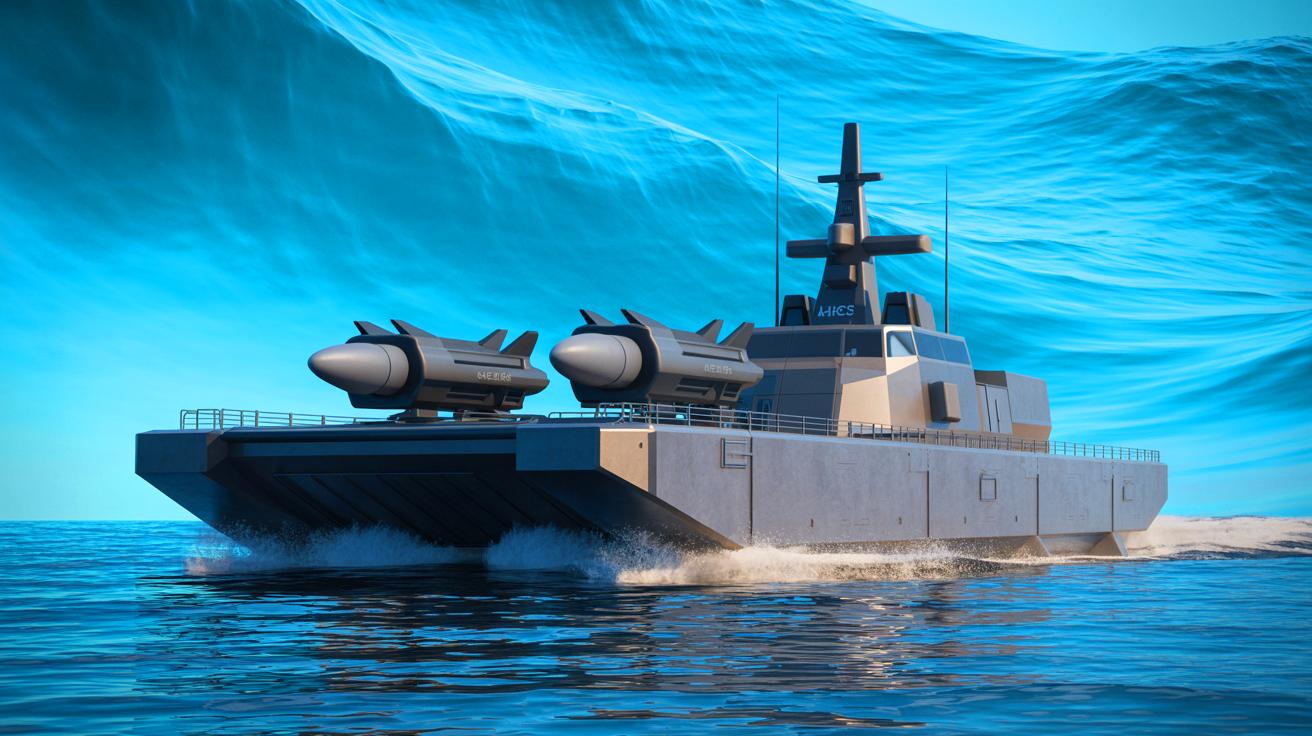
The AIRCAT Bengal MC signifies a transformative shift in naval warfare, introducing a new level of autonomous technology. Capable of carrying a 44-ton payload, the vessel can transport two 40-foot ISO footprint modules while exceeding speeds of 50 knots. With a range of 1,000 nautical miles, it can operate in distant theaters without frequent refueling. This makes the Bengal MC not only versatile but also highly lethal, as it is equipped to launch Tomahawk and Naval Strike Missiles. Such capabilities reduce the need for larger, more costly crewed warships, providing a strategic advantage for navies around the world.
Targeted at major naval powers, including the US Navy and its allies like AUKUS and NATO nations, the Bengal MC offers formidable force in modern naval warfare. Its autonomous operation and compatibility with advanced missile systems make it an attractive addition to any fleet. Potential buyers also include nations in the Asia-Pacific region, such as Singapore, Japan, and South Korea, who may benefit from its cutting-edge capabilities.
Enhanced Lethality with Missile Launch Capabilities
The Bengal MC’s ability to launch Tomahawk cruise missiles and anti-ship Naval Strike Missiles marks a pivotal development in naval strategy. This capability allows navies to conduct missions traditionally requiring larger vessels, thereby lowering costs and boosting operational efficiency. The vessel’s design challenges the conventional naval market by presenting a fast, heavily armed alternative to older, slower ships. Bo Jardine, CEO of Eureka Naval Craft, highlights the importance of such innovative technologies in the current naval environment.
More than just speed and firepower, the Bengal MC offers enhanced strategic flexibility and adaptability. Its capacity to carry heavier payloads at high speed increases the lethality and effectiveness of naval operations. The vessel’s advanced autonomy features allow it to respond to threats and opportunities with unparalleled speed and precision, providing a substantial tactical advantage.
Unmatched Efficiency and Versatility
Fuel efficiency and operational cost-effectiveness are key strengths of the Bengal MC, making it an asset for budget-conscious navies. Its modular design enables it to perform multiple roles, from troop transport and landing support to electronic warfare and mine operations. This adaptability ensures it can be customized to meet specific operational needs, offering tailored solutions for various maritime challenges.
The collaboration with Greenroom Robotics enhances the vessel’s capabilities with an advanced autonomous navigation system. This integration allows for seamless operation across all mission phases, ensuring human operators are supported by state-of-the-art technology. The Greenroom Advanced Maritime Autonomy Software has been validated through extensive trials, guaranteeing reliability and performance.
Expanding the Fleet with Modular Design
The AIRCAT Bengal MC joins a distinguished fleet of vessels, each designed for specific missions, including fast attack, reconnaissance, and high-speed troop transport. Its modular design philosophy allows for customization, ensuring each vessel can be tailored to meet unique mission demands. This flexibility is vital in an era where naval forces must be prepared to address diverse threats and opportunities.
Eureka Naval Craft’s commitment to innovation is apparent in its expanding fleet and strategic partnerships. Its collaboration with Greenroom Robotics exemplifies a forward-thinking approach to maritime autonomy, setting a new standard for naval operations worldwide. As the naval landscape evolves, the Bengal MC represents a bold step forward in military technology, offering strategic advantages that are difficult to overlook.
As the AIRCAT Bengal MC takes to the seas, it prompts critical questions about the future of naval warfare. How will autonomous technology reshape global naval strategies, and what challenges and opportunities will result from its integration? The answers to these questions will likely shape the next wave of military innovations and strategic planning.


Wow, 44 tons of pure power! 🚢 How does it compare to other autonomous warships on the market?
1000nm will not get you to Hawaii or across the Atlantic. So with no crew for underway replenishment, we are looking at towing it to a forward area. Use in choke points, yeah okay. A end all replacement? Not so much. Maintenance? Who and where? Breakdown-it happens. What then? To many pie in the sky articles trying to sell! Little useful information.
I’m curious about the environmental impact of these new vessels—any info on that?
Finally, something worthy of a sci-fi movie. 🤖
That illustration is too far fetched from reality got any pics of the real thing.
The modular design is genius. Imagine a whole fleet customized for every mission!
Are smaller, autonomous vessels the future of naval warfare?
Hope it doesn’t become a target for cyber attacks. 😬
Cost-effective and powerful? Sounds like a win-win!
I bet this will keep rival nations on their toes. Exciting times ahead!
Greenroom Robotics is really stepping up their game. Kudos!
Why is everyone so obsessed with missile capabilities? Can’t we focus on peace? ✌️
What are the potential drawbacks of such advanced, autonomous technology?
Can it withstand harsh sea conditions without human intervention?
44 tons? That’s one heavy piece of tech! 😲
Hoping this doesn’t start another arms race…
Can it be hacked? Security is key with autonomous tech.
I’m all for innovation, but how much does it cost? 💰
Thank you for the detailed article. Very informative!
What will the crew size be, if any, for these vessels?
Will the AIRCAT Bengal MC be deployed in international waters regularly?
Hope they have a good insurance plan for this high-tech beauty!
So, does this mean fewer jobs for sailors? 🤔
Great, more military spending… 🙄
Love the collaboration with Greenroom Robotics. Teamwork makes the dream work!
Why the name “AIRCAT”? Sounds like a flying feline! 😹
Is there a way to track the vessel’s missions in real-time?
Hope they’re paying attention to AI ethics with these autonomous systems.
The speed and range are impressive. How do they achieve such performance?
Eirwen, are you real or did you use ChatGPT to write this article? You kept repeating yourself like your looking to increase your word count but never really gave any information. Where you did provide information it seemed either extremely vague or wrong.
Take your headline/intro you implied that the vessal was 44 tons but buried deep in the article you claim it can carry 2x 44 ton modules. If it is carrying these modudes than the vessal must weight considerably more.
I would suggest writing about what you know, if you dont know then research what you dont know so any articles do not feel like your trying to hit a minimum word count. Or lastly find another career other than writing because this article was almost impossible to read.