



| IN A NUTSHELL |
|
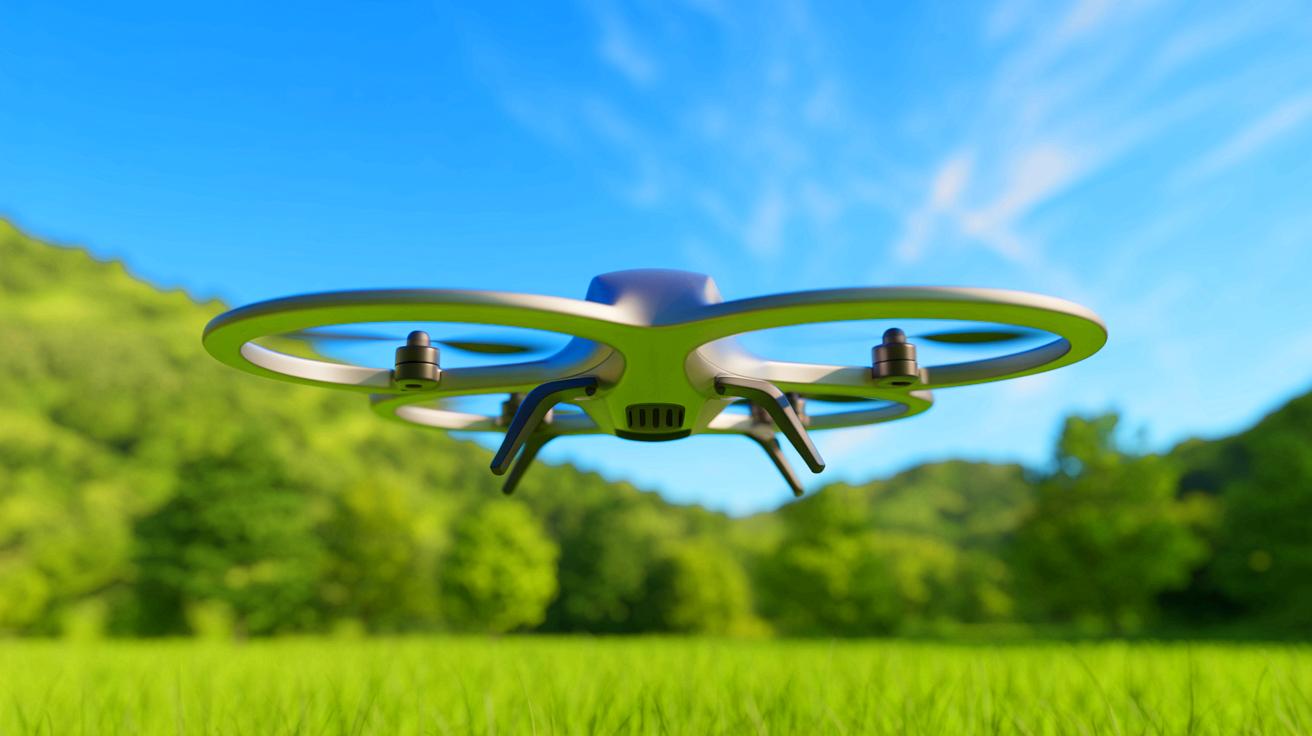
In a remarkable fusion of nature and technology, scientists at the Singapore University of Technology and Design (SUTD) have unveiled a groundbreaking monocopter drone inspired by the flight mechanics of maple seeds. Designed by a team led by Associate Professor Foong Shaohui, PhD, this innovative drone, known as the SG60, utilizes a single rotor to achieve autonomous flight for 26 minutes. This development marks a decade of drone innovation at SUTD, following the heavier and more complex SG50 model. The SG60’s design is not only a testament to the power of biomimicry but also paves the way for new applications in aerial technology.
The Natural Inspiration Behind the Design
The SG60’s design draws heavily from the samara, or helicopter seed, of the maple tree. These seeds are known for their ability to glide gracefully to the ground, a trait that the researchers sought to emulate in their drone. The team observed that every part of the maple seed contributes to its lift, providing a simple yet effective aerodynamic model. This inspired them to build an airframe where nothing is wasted, with a single rotor spinning the winged body to generate lift through a large airfoil.
The resulting 32-gram monocopter is lighter than a typical candy bar, yet it can hover with full autonomous control for 26 minutes. This is a significant achievement in the field of small drones, which often struggle with endurance due to their limited thrust and high power consumption. “Achieving flight becomes increasingly inefficient as you scale down,” Foong explained. The SG60 addresses this challenge by combining passive stability with efficient lift generation, eliminating the need for flapping parts or gearboxes.
Engineering Meets Efficiency
At the heart of the SG60’s success is an extensive design optimization process that balanced aerodynamic theory with practical testing. The researchers employed a data-driven algorithm to fine-tune key parameters such as wing shape, pitch, and mass distribution. This meticulous approach resulted in a drone with a power loading of 9.1 grams per watt, outperforming other micro air vehicles of similar size. “It’s a first-of-its-kind achievement,” said Cai Xinyu, a research fellow at SUTD. The SG60 proves that with the right design, a tiny aerial robot can achieve endurance comparable to much larger systems.
The drone’s long flight time and simple construction make it ideal for low-cost, long-duration missions. Potential applications include weather monitoring, where it could serve as a lightweight, reusable radiosonde. “The next step is to increase payload capacity and flight time without significantly increasing weight,” Xinyu noted. This focus on enhancing performance will involve developing custom parts and exploring advanced materials.
Pioneering Future Applications
The successful development of the SG60 monocopter opens up a wide range of possibilities for its use in various fields. With its efficient design and long flight capabilities, the drone is poised to play a significant role in both established and emerging applications. The researchers at SUTD are already looking into integrating bio-inspired wing shapes and advanced materials to further enhance the drone’s performance. “With further development, we see this technology playing a key role in a variety of applications,” Foong concluded.
The implications of this technology extend beyond just drones. By harnessing the principles of biomimicry and optimizing engineering design, the SG60 project exemplifies how innovation can be driven by looking to nature for solutions. This approach has the potential to revolutionize not only the field of unmanned aerial vehicles but also other areas of technology where efficiency and simplicity are paramount.
Engineers Reveal “This Tech Monitors EV Battery Health In Real Time Like Never Before”
The Road Ahead for Drone Innovation
As the SG60 paves the way for future advancements, the team at SUTD remains focused on pushing the boundaries of what is possible with drone technology. Plans are underway to explore new materials and integrate more sophisticated bio-inspired designs. These efforts aim to address current limitations and harness the full potential of the SG60’s innovative approach. The study detailing these findings has been published in the journal IEEE Robotics and Automation Letters, highlighting the scientific community’s recognition of this achievement.
The SG60 project represents a significant milestone in the evolution of drone technology, showcasing how biomimicry and engineering can work together to overcome traditional constraints. As the field continues to evolve, the question remains: How will these innovations shape the future of aerial technology, and what new possibilities will they unlock?



Wow, 26 minutes is impressive! How does this compare to other drones in its class? 🤔
Is the SG60 available for commercial purchase, or is it still in the prototype phase?
I can’t believe something inspired by a maple seed can fly for so long! Nature truly is amazing. 🌱✨
26 mins? My coffee maker takes longer than that! 😂
Great article! Could you provide more details on the materials used in the SG60’s construction?
How does the SG60 handle in windy conditions? 🌬️
Seems like a unique project! How heavy is the payload it can carry?
Is this drone’s design patent protected?