




| IN A NUTSHELL |
|
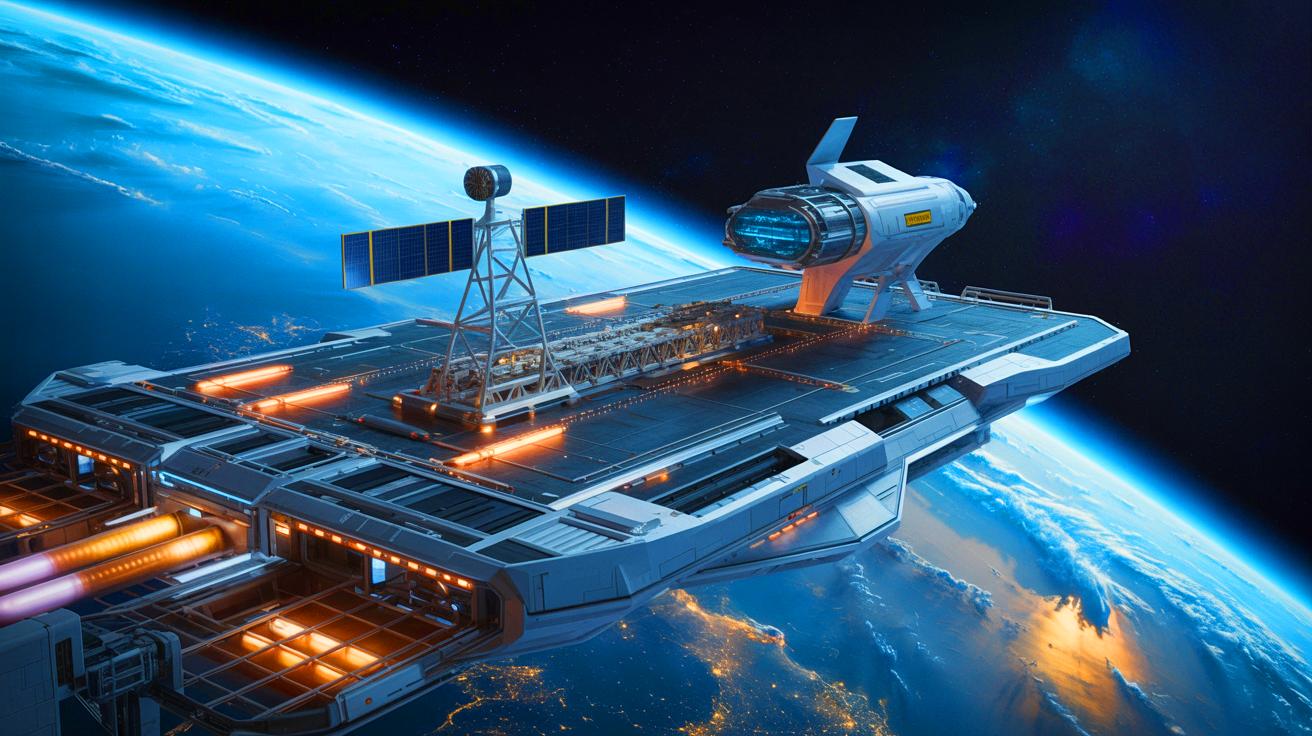
In a move that underscores its commitment to maintaining space superiority, the United States is pioneering the development of an orbital aircraft carrier. This ambitious project is a collaboration between the U.S. Space Force and Gravitics, a forward-thinking startup. The initiative is designed to revolutionize the way satellites are deployed and protected, providing strategic advantages in the ever-evolving domain of space. Amidst rising global tensions, this endeavor highlights the critical importance of space in national security and international relations, setting the stage for a new era in technological advancement and defense strategy.
The Vision Behind the Orbital Aircraft Carrier
The concept of an orbital aircraft carrier is an innovative leap in satellite deployment technology. Gravitics, with funding from the U.S. Space Force, is spearheading this $60 million project. The primary aim is to facilitate the direct launch of satellites from Earth’s orbit, a process that promises to be more efficient and responsive than traditional rocket launches. By eliminating the dependence on ground-based launches, the U.S. military can ensure a rapid and agile response to national security threats, which is increasingly vital in today’s geopolitical climate.
This initiative is not just about technological prowess; it reflects a strategic vision to maintain a robust orbital presence. With potential space arms races on the horizon, having a pre-positioned platform in orbit provides flexibility and security. The ability to deploy satellites as needed allows the U.S. to address both immediate threats and long-term strategic objectives. This project positions the United States at the cutting edge of space technology, reinforcing its commitment to maintaining leadership in this critical area.
Enhancing Space Security and Superiority
The orbital aircraft carrier by Gravitics is designed to offer a secure environment for satellites, protecting them from the harsh conditions of space. This unpressurized setup ensures the safety of satellite batteries and sensitive electronics, which is crucial in an era where electronic warfare and cyber threats are prevalent. By providing a shielded environment, the carrier enhances the U.S.’s space security capabilities significantly.
Additionally, the carrier’s ability to conceal satellites from adversaries offers a tactical advantage. As Gravitics CEO Colin Doughan notes, this development is a “game-changer” in aligning with the Space Force’s mission of achieving orbital dominance. The project not only strengthens military capabilities but also sets a precedent for future technological advancements in space exploration. Such advancements could redefine how nations approach space security and defense.
Public-Private Partnerships and Their Impact
The orbital aircraft carrier project is a testament to the vital role of public-private partnerships in the space sector. Gravitics, alongside Axiom Space, is developing both defense and commercial solutions, including a pressurized space module. This dual approach highlights the growing importance of collaborative efforts between private companies and government entities in advancing space technology.
These partnerships are essential for integrating cutting-edge technologies into national defense strategies. By leveraging the strengths of both sectors, the U.S. can enhance its position in space and foster technological innovations that have civilian applications. The success of these collaborations could open up new market opportunities and drive further advancements in space technology, benefiting the economy and national security alike.
UK’s Sea Dagger Autonomous Craft Deploys 12 Commandos at 46 MPH Using Trusted Mission AI Technology
The Future of Space Exploration
The emergence of technologies like the orbital aircraft carrier marks the beginning of a new era in space exploration. This advancement has the potential to transform security, surveillance, and communication paradigms, impacting both military operations and private sector involvement. As the U.S. Space Force and companies like Gravitics prepare for future challenges, the implications of these innovations are vast.
Questions about international space cooperation arise as these technologies develop. How will these advancements influence diplomatic relations between nations? More importantly, how can we ensure that space remains a domain of shared peace and progress, benefiting all of humanity? These are the challenges that the global community must address as we move forward in this new frontier.
As the United States continues to push the boundaries of space technology, the collaboration between the U.S. Space Force and Gravitics signifies a promising step forward. By redefining satellite deployment and enhancing space security, the orbital aircraft carrier project is set to have a lasting impact on national defense and international relations. As we look to the future, the question remains: How will nations balance technological advancements with the need for cooperation and peace in space?




Wow, an orbital platform for launching satellites? That’s some sci-fi level stuff! 🚀
What an incredible development! 🚀 How soon can we expect this to be operational?
What happens if this “aircraft carrier” gets hit by debris in space?
Isn’t $60 million a bit low for such an ambitious project? 🤔
Is $60 million really enough to build something this advanced?
No, you can’t even buy a single f35 + support systems for that price
Wow, this sounds like something straight out of a sci-fi movie! Can’t wait to see it in action. 🌌
How long before other countries start building their own versions?
I can’t even get decent Wi-Fi, but sure, let’s launch satellites from space! 😂
I’m skeptical about the practicality of this. How will they handle refueling and maintenance in orbit?
Thank you for sharing such an insightful article. It’s exciting to see the future of space exploration. 🌌
Gravitics is such a cool name for a space startup! Who comes up with these names? 😅
How will this affect the current satellite launching industry?
Thank you for the detailed article. It’s fascinating to see how public-private partnerships are advancing space tech.
Sounds like a great idea! What are the environmental impacts of this technology?
Is this part of the Space Force’s mission to have “orbital dominance”?
Gravitics must be doing something right to partner with the U.S. Space Force.
I hope this doesn’t escalate into a space arms race. 😬
Can this technology be used for peaceful purposes like global internet?
How will this project impact the budget for other NASA endeavors?
I’m concerned about the militarization of space. Shouldn’t we focus on cooperation instead?
Will this change how we track satellites and space debris?
This is a game-changer for sure. Can’t wait to see it in action! 🙌
Is there any timeline for when this will be operational?
Sounds cool, but will it be cost-effective in the long run?
How does this fit into the current geopolitical climate? 🤔
Can this platform launch other things besides satellites?
The future is now! Thanks for keeping us informed. 👍
Could this be a stepping stone to building space stations?
Will this platform be visible from Earth?
What are the risks if something goes wrong with this platform?
Is Gravitics planning to go public with this tech?
How will they ensure the security of such an important asset?
I wonder how the international community will react to this. 🌍
This sounds expensive. What’s the cost-benefit analysis? 💸
Can civilians invest in these types of space projects?
How does this compare to other space initiatives around the world?
Is there any public oversight for projects like these?
Will this lead to more job opportunities in the space sector?
I’m all for innovation, but let’s not forget about space ethics.
When are we going to see the first satellite launched from this carrier?
Looks like the future of defense strategy is in space! 🚀