



| IN A NUTSHELL |
|
The United States has taken a decisive step in its ongoing effort to address the political and economic turmoil in Venezuela. By imposing new sanctions on three nephews of Venezuelan President Nicolas Maduro, as well as six vessels transporting oil, the U.S. aims to pressure the Maduro regime. These measures reflect a broader strategy to curb illicit activities and weaken Maduro’s hold on power. This move, announced by Treasury Secretary Scott Bessent, underscores the complex geopolitical tensions that continue to unfold in the region. As the international community watches, questions remain about the effectiveness and potential consequences of these sanctions.
Sanctions Target Maduro’s Inner Circle
The recent sanctions imposed by the United States are specifically targeting three nephews of President Nicolas Maduro. By focusing on individuals closely tied to Maduro, the U.S. aims to disrupt the network that supports his administration. This strategy is part of a broader effort to isolate Maduro from his support base, both domestically and internationally. The inclusion of family members highlights the extent to which the U.S. is willing to go to exert pressure on the Venezuelan leadership.
Venezuela has been in a state of crisis for several years, with economic collapse and political unrest driving millions from their homes. The U.S. has consistently criticized Maduro for his role in this deterioration. By sanctioning those closest to him, the U.S. hopes to send a clear message that it will not tolerate the continuation of policies and practices that harm Venezuelans and destabilize the region.
Oil Tankers Under Scrutiny
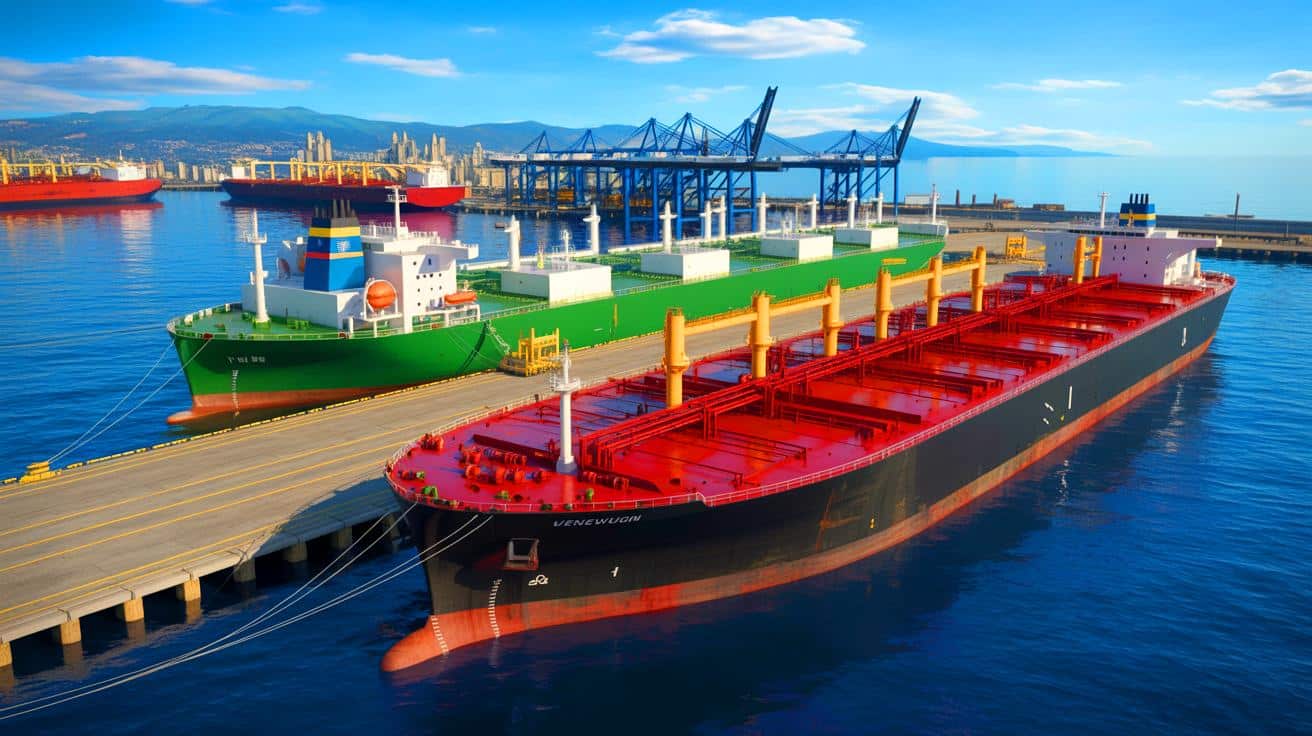
In addition to targeting individuals, the U.S. has sanctioned six oil tankers, a move that directly impacts Venezuela’s oil industry. Each of these vessels is registered under different companies, with four based in the Marshall Islands and one each in the United Kingdom and the British Virgin Islands. This diverse registration underscores the complex web of ownership and operation typical in the global shipping industry.
The sanctions on these tankers are designed to disrupt the flow of Venezuelan oil to international markets, a key source of revenue for the Maduro regime. By cutting off these financial lifelines, the U.S. hopes to weaken Maduro’s economic power and force negotiations for political change. The effectiveness of this approach remains to be seen, as Venezuela has historically found ways to circumvent such measures through various international alliances.
US LNG Exports Surge to Record Highs in November, Driven by Cooler Weather and Robust Production
U.S. Accusations of Narcotics Trafficking
The sanctions come amid accusations from the U.S. that the Venezuelan government is involved in narcotics trafficking. President Trump has been vocal about the alleged role of Maduro and his associates in flooding the U.S. with drugs. Treasury Secretary Scott Bessent has echoed these concerns, citing them as a justification for the recent measures.
These accusations add another layer to the already fraught relationship between the two nations. The U.S. government has long accused the Maduro regime of criminal activities, including drug trafficking and money laundering. These claims have been a central pillar of the U.S. strategy to build international support against Maduro. However, the Venezuelan government has consistently denied these allegations, calling them a pretext for U.S. intervention.
US Drillers Add Rigs Again: What This Growing Trend Means for Energy Markets and Local Communities
International Reactions and Potential Outcomes
The international community has had mixed reactions to the U.S.’s aggressive stance toward Venezuela. While some countries support the sanctions as a necessary measure to promote democracy and human rights, others view them as an overreach that exacerbates the suffering of the Venezuelan people. The geopolitical implications of these sanctions are significant, as they could lead to shifts in alliances and economic partnerships.
As the situation develops, the focus remains on the potential for dialogue and negotiation. The U.S. has expressed a willingness to lift sanctions if certain conditions are met, such as the establishment of free and fair elections in Venezuela. However, the path to such an outcome is fraught with challenges, given the deep-seated mistrust and conflicting interests involved.
In light of these developments, one must consider the broader implications of U.S. sanctions on Venezuela. How will these measures impact the lives of ordinary Venezuelans, and what role will the international community play in shaping the country’s future? The answers to these questions will undoubtedly shape the geopolitical landscape in the coming years.



Why are the US sanctions targeting Maduro’s nephews specifically? 🤔
Why target Maduro’s nephews specifically? Family ties seem a bit stretched! 🤔
Sanctioning oil tankers is a bold move, but will it really hit Maduro where it hurts?
I wonder if these sanctions will actually help the situation in Venezuela or just make it worse.
I think these sanctions are long overdue. Thanks for keeping us informed!
Thanks for the detailed article. It really helps understand the complexity of the issue.
Does anyone know if these sanctions have worked in the past? Feeling skeptical here.
Sanctioning oil tankers seems like a drastic step. Are there alternative solutions? 🚢
Great article, but let’s be real—Venezuela always finds a way to bypass these sanctions. 😅
Are there any countries that oppose these sanctions?
How does this affect the average Venezuelan who’s already struggling?