




| IN A NUTSHELL |
|
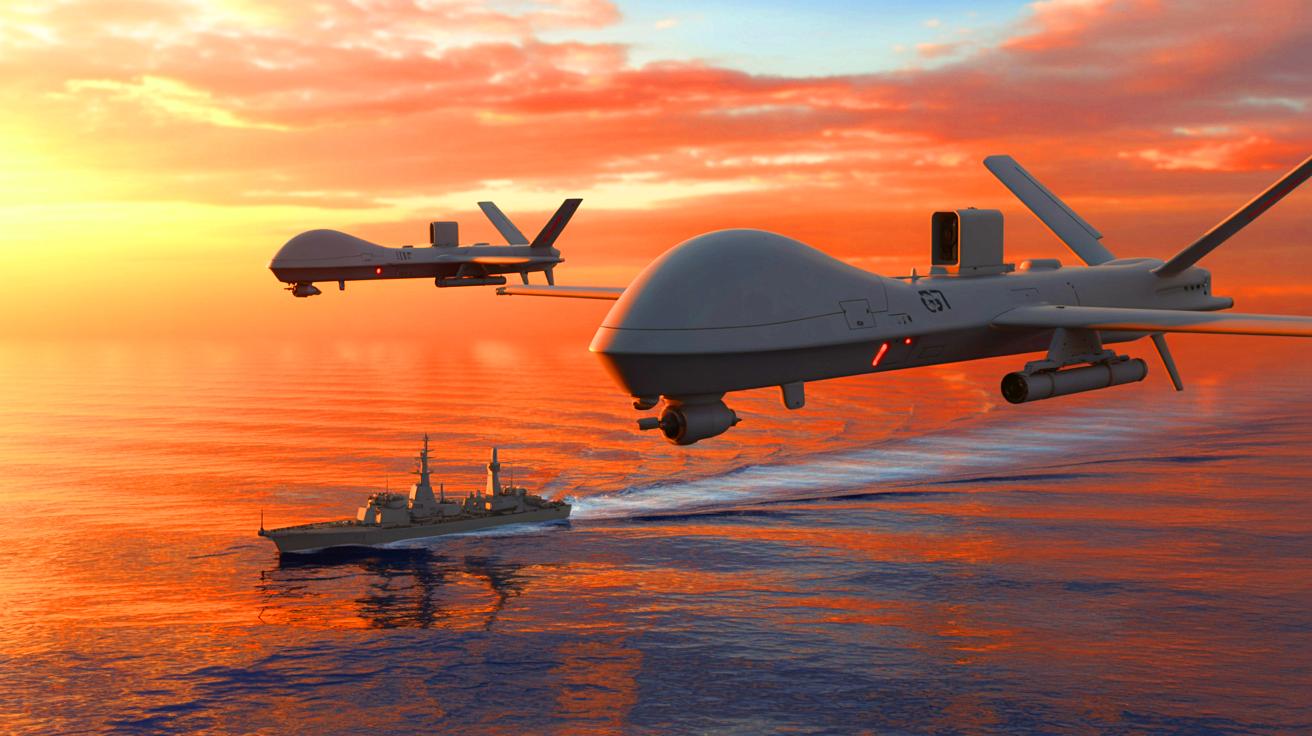
In a recent display of military prowess, the People’s Liberation Army (PLA) of China has released a documentary showcasing its advanced unmanned aerial systems (UAS). The documentary, titled Forging Ahead, features what is claimed to be the first-ever footage of a drone hunt targeting a “hostile warship.” This release highlights China’s growing capabilities in integrating drones with its intelligence operations. The video prominently showcases the WZ-7 and WZ-10 drones, marking a significant development in China’s drone technology and military strategy. This move comes amidst rising tensions in the Pacific region, as global powers continue to monitor each other’s military advancements.
The Drone Hunt: A Strategic Maneuver
The documentary begins with a vivid portrayal of two drones, the WZ-7 and WZ-10, taking off from a PLA Air Force base. These drones, integral to China’s surveillance strategy, are tasked with locating a “hostile warship” after a Chinese reconnaissance satellite faces difficulties. The urgency of the mission is palpable as the WZ-10, equipped for electronic reconnaissance, quickly relays imagery and data back to the intelligence center.
In an impressive display of coordination, the WZ-7 is deployed to verify potential targets identified by the WZ-10. The WZ-7 systematically searches the designated area, eventually pinpointing two suspicious objects. Detailed images and sensor data are relayed back, confirming one object as a foreign vessel. This process underscores the strategic importance of drones in modern military operations, offering a glimpse into how technology is reshaping intelligence gathering.
The segment concludes with a simulated strike, with a CJ-10A cruise missile launcher ready for action. Such exercises illustrate the PLA’s readiness to respond to potential threats swiftly and effectively. The documentary also notes the regularity of such missions over the western Pacific, emphasizing China’s commitment to honing its surveillance and intelligence skills.
Advancements in PLA Drone Technology
The WZ-7 drone, known as Xianglong or “Soaring Dragon,” is at the forefront of China’s reconnaissance capabilities. Its unique design, featuring swept-back and forward wings, is reminiscent of a traditional Chinese kite. This aerodynamic structure aids in its high-altitude surveillance missions. Equipped with advanced radar, infrared, and optical sensors, the WZ-7 can capture detailed images crucial for both strategic and tactical operations.
Comparable to the US Northrop Grumman RQ-4 Global Hawk, the WZ-7 boasts superior capabilities, according to retired PLA Air Force researcher Fu Qianshao. He asserts that the WZ-7 can fly higher and faster than its American counterpart, highlighting China’s technological advancements in drone development. This sentiment is echoed by defense analyst Wu Peixin, who notes that the WZ-7 complements the WZ-10, allowing for comprehensive surveillance and precise target identification.
The public release of such footage is unusual for the PLA, suggesting a shift towards greater transparency and confidence in their military capabilities. This development not only underscores the routine nature of these missions but also serves as a warning to potential adversaries about China’s expanding reconnaissance network.
Geopolitical Implications of China’s Drone Capabilities
The timing of the documentary’s release is significant, occurring as the US and its allies, including Japan, South Korea, and the Philippines, continue to deploy advanced naval assets near China. This military posturing highlights the strategic importance of the Pacific region, where tensions have been steadily rising. China’s demonstration of its drone capabilities sends a clear message to its adversaries about its preparedness and technological prowess.
The integration of drones into military strategy represents a broader trend in modern warfare, where unmanned systems play a crucial role in intelligence, reconnaissance, and combat operations. As nations continue to develop and deploy more advanced UAS, the balance of power in global military dynamics is likely to shift. The PLA’s investment in drone technology reflects its commitment to maintaining a competitive edge in this evolving landscape.
While the documentary showcases China’s advancements, it also raises questions about the potential for escalation in the region. As major powers vie for dominance, the role of technology in military strategy will undoubtedly continue to grow, shaping the future of international relations.
The Future of Military Reconnaissance
China’s demonstration of its drone capabilities through the recent documentary highlights the transformative impact of technology on military reconnaissance. The WZ-7 and WZ-10 drones exemplify the integration of advanced systems into strategic operations, offering a glimpse into the future of warfare. As these technologies evolve, they will increasingly influence how nations conduct surveillance and gather intelligence.
The PLA’s emphasis on routine reconnaissance missions underscores the importance of maintaining a robust and reliable surveillance network. This capability not only enhances China’s defensive posture but also serves as a deterrent to potential adversaries. As the geopolitical landscape continues to shift, the role of drones and other unmanned systems will become increasingly critical in shaping military strategies.
As nations invest in developing more sophisticated technologies, the question arises: How will these advancements influence global military dynamics and the balance of power in the coming years?




Wow, China’s drone tech is really taking off! 🚀
Does anyone else think the timing of this documentary is suspicious? 🤔
Great read! Thanks for keeping us informed about global military advancements.
Is the WZ-7 really comparable to the US Global Hawk? Sounds like quite a claim.
Why are these documentaries being released now? What’s the strategy here?
Honestly, the “Soaring Dragon” sounds like something out of a sci-fi movie! 🐉
It’s fascinating to see how technology is reshaping modern warfare.
I wonder how other countries will respond to this show of strength.
Are we witnessing the dawn of a new arms race in drone technology?
Thanks for the detailed analysis. Very informative!