



| IN A NUTSHELL |
|
In the depths of Hunan Province, China, a geological discovery is poised to reshape the global balance of critical raw materials. A significant lithium deposit has been unearthed in the Jijiaoshan mining area, Linwu County. As the world electrifies and competition for energy transition metals intensifies, this find further solidifies China’s dominant position in the battery value chain. This discovery comes at a time when the demand for lithium, a key component in electric vehicle batteries, is soaring. With China already holding a substantial share of the world’s lithium reserves, this discovery could reinforce its strategic advantage.
The Enormous Deposit and Its Strategic Location
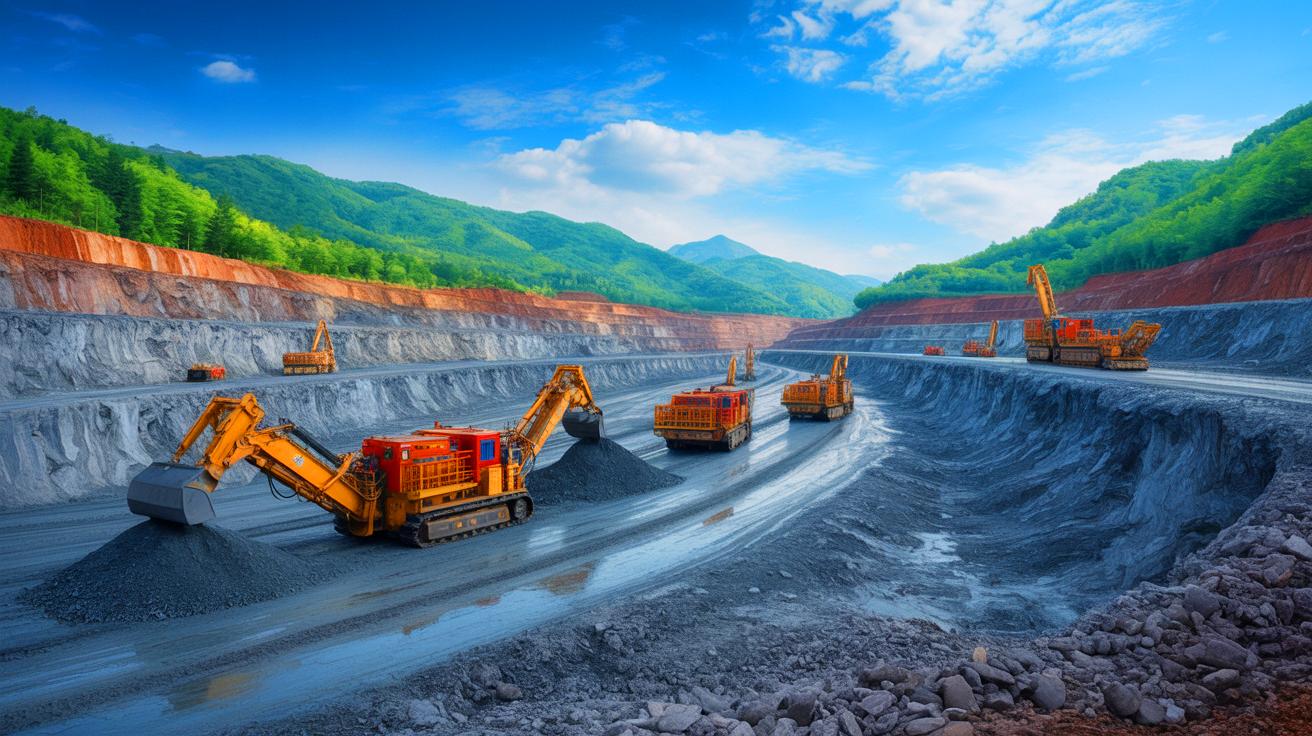
Local authorities and scientists from the Hunan Mineral Resources Research Institute have reported that the deposit contains nearly 490 million tons of rock with lithium, equating to approximately 1.31 million tons of lithium oxide. This wealth is embedded in altered granite—a geological structure well-known for favorable extraction conditions. Unlike brine deposits, which are more complex and slower to exploit, hard rock allows for more straightforward separation and processing methods.
This type of deposit offers another advantage: it is often multimetal-rich. In addition to lithium, geologists have identified other strategically important metals such as tungsten, tin, and rubidium. Rubidium, a rare element, is highly valued for atomic clocks and emerging photovoltaic technologies. These additional resources could prove invaluable as demand for advanced technologies continues to grow.
China’s Pre-existing Strong Position
This discovery does not occur in a strategic void. As of 2024, China already held 16.5% of the world’s lithium reserves, second only to Chile, and more significantly, over 70% of the global refining capacity. This makes China an essential player in transforming raw ore into usable materials for lithium-ion batteries, the technological heart of electric vehicles and stationary storage.
Moreover, Beijing continues to explore its subsurface. Exploration campaigns are underway in a vast spodumene geological belt in Tibet, spanning 2,800 miles. Initial estimates suggest up to 30 million tons of potential lithium. If these figures are confirmed, it could significantly alter the global resource balance, further cementing China’s leading role in the lithium market.
Responding to Explosive Demand
The race for lithium is not accidental. With over 60% of the world’s electric vehicle fleet, China expects its lithium demand to double by 2030, according to projections. It also dominates battery manufacturing, accounting for over three-quarters of global production. In the face of this growth, ensuring a reliable domestic supply has become a strategic priority.
The exploitation of the Jijiaoshan deposit aligns with this strategy: securing resources, accelerating their local processing, and thus enhancing the country’s industrial autonomy. This focus on domestic resources underlines China’s commitment to maintaining its leadership in the burgeoning electric vehicle and renewable energy sectors.
A Context of Global Competition
As geopolitical tensions rise around critical resources, Western countries are attempting to respond. Alliances like the United States-European Union Partnership on Raw Materials aim to reduce dependence on China. However, the gap is significant, particularly in refining and extraction technologies.
Meanwhile, China is advancing its initiatives: public subsidies, comprehensive exploration, and innovations in rare metal extraction processes. Recently, Chinese researchers developed a method to isolate ultra-pure rubidium chloride from low-concentration brines, opening new avenues for exploiting marginal resources. These advancements could further entrench China’s position in the global resource landscape.
A Major Piece on the Energy Chessboard
The discovery at Jijiaoshan is not just an additional deposit. It exemplifies China’s methodical strategy to secure access to the metals of the future. If exploitation proceeds as planned, this reserve could quickly supply the country’s battery factories while strengthening its position in international negotiations.
As the global energy transition relies on limited resources, the rocks of Hunan might play a decisive role. Beneath the granite, China may not have found gold, but something far more valuable for the 21st century. How will the rest of the world respond to this growing dominance in critical raw materials?


Wow, 1.3 million tons! 😮 Will this make a big difference in the global EV market?
China’s strategic moves are impressive, but is there any way for other countries to catch up?
Thank you for the detailed article! It really puts China’s dominance into perspective. 🌏
With such a large find, will the price of lithium go down?
I’m skeptical about the numbers. Are there any independent sources confirming this discovery?
This is terrifying for global competition. How will the West respond?