



| IN A NUTSHELL |
|
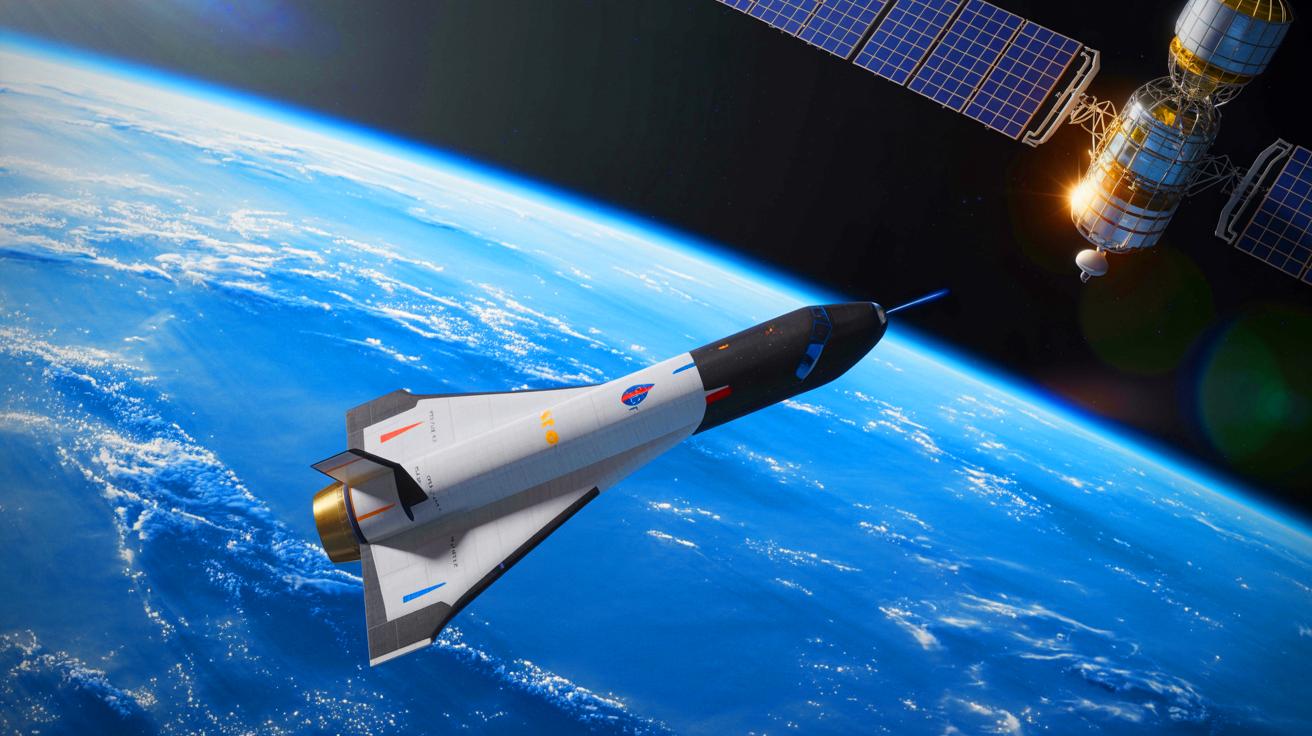
China’s recent advancements in space technology have sparked global interest and concern. The completion of the Shenlong spaceplane’s third orbital mission since 2020 has particularly captured attention. While China asserts that the spaceplane serves scientific purposes, many international observers remain skeptical. The ability to potentially house crew members and its observed maneuvers have led experts to question its true intentions. The United States and its allies are diligently monitoring these developments, seeking to understand how this might impact global security dynamics. This article delves into the technical aspects of the Shenlong spaceplane and its implications for international relations and space exploration.
The Technical Aspects of the Shenlong Spaceplane
The Shenlong spaceplane is launched atop a Long March 2F rocket booster, a staple of China’s space program. Although currently operating unmanned, the spaceplane is designed to accommodate a crew if needed. This flexibility raises questions about the potential for manned missions in the future. Observations of the spaceplane have noted its ability to release objects and return to its original position—a capability that suggests sophisticated maneuverability. Such operations could involve satellite retrieval, refueling, or maintenance, although these are not the only possibilities. The technical prowess displayed by the Shenlong spaceplane positions China as a formidable player in space technology.
These capabilities mirror those of the U.S. X-37B spacecraft developed by Boeing. The X-37B has conducted seven successful launches, performing similar maneuvers as the Shenlong spaceplane. This similarity points to a broader trend of spaceplanes being used for versatile space operations, which can range from scientific research to strategic military applications. The dual-use nature of these technologies necessitates careful scrutiny and understanding of their potential uses.
Global Reactions and Concerns
The international community, particularly the United States and its allies, has taken a keen interest in the Shenlong spaceplane’s missions. Despite China’s claims of peaceful scientific exploration, the potential military applications cannot be ignored. The ability to closely inspect or disable enemy satellites represents a significant strategic capability. Such concerns are compounded by the geopolitical tensions that already exist between China and other major world powers. The spaceplane’s operations have prompted calls for more transparency regarding its true objectives.
Experts like Marco Langbroek, a space situational lecturer at the Netherlands’ Delft University of Technology, have voiced their concerns. He suggests that while there are non-military applications for the Shenlong’s technology, the military implications are undeniable. This dual capability necessitates a balanced approach to monitoring and understanding China’s space ambitions. The international community must work collaboratively to ensure that space remains a domain of peaceful exploration and innovation.
The Strategic Context of Space Technology
Space technology has become an essential component of national security strategies worldwide. The ability to launch, maneuver, and potentially weaponize space assets has far-reaching implications. China’s advancements with the Shenlong spaceplane highlight the increasing competition in space exploration and military capabilities. The parallels between the Shenlong and the U.S. X-37B underscore the global nature of this competition.
As nations continue to invest in space technology, the line between peaceful exploration and military application becomes increasingly blurred. The strategic value of space capabilities cannot be understated, with potential impacts on communication, surveillance, and defense systems. This evolving landscape requires nations to navigate complex diplomatic and technological challenges to maintain stability and security in space.
The Future of Space Exploration and Security
The ongoing development of space technology presents both opportunities and challenges. As countries like China continue to push the boundaries of what is possible, the international community must adapt to these changes. Collaborative efforts in space exploration could lead to significant advancements in science and technology. However, the potential for space militarization remains a pressing concern.
Ensuring the peaceful use of space is a shared responsibility that requires cooperation and transparency among nations. As new technologies emerge, global governance structures must evolve to address the complexities of space security. How will nations balance the pursuit of technological innovation with the need for strategic stability? This question will shape the future of space exploration and international relations in profound ways.
As China’s Shenlong spaceplane continues to operate, the world watches with both anticipation and caution. The potential implications of these missions are vast, affecting not only international security but also the future of space exploration. The challenge lies in harnessing the benefits of these advancements while mitigating the risks. How will the global community respond to these developments, and what steps will be taken to ensure a peaceful and prosperous future in space?



Wow, this article sounds like something out of a sci-fi movie! 🚀
Wow, this sounds like a plot from a sci-fi movie! 🚀
Can someone explain why the US hasn’t developed countermeasures yet?
Isn’t it time for more international cooperation in space?
Can we really trust China’s claims about the Shenlong spaceplane? 🤔
If satellites are disappearing, how come we haven’t heard more about it on the news?
Thank you for this detailed analysis! It’s fascinating and a bit scary. 😨
I’m concerned about the lack of transparency in space technology. Shouldn’t there be international regulations?
China’s space ambitions are truly impressive, but should we be worried?
Orbital warfare? That’s a terrifying prospect. 😬
What are the potential consequences if this spaceplane is indeed used for military purposes?
Does this mean GPS services might be affected?
Is it possible that the Shenlong spaceplane is being exaggerated by the media?
Those who think this is just scientific research are kidding themselves. Wake up, folks!
Could this lead to an arms race in space?
How credible are the claims about the Shenlong’s military capabilities?
Could this technology potentially be used for peaceful purposes too?
Seems like the space race is back on, but with new players!
Why is there always a focus on the negative aspects of space technology?
What are the implications for international space treaties?
Space is getting crowded! How will we manage all these new technologies? 🌌
Is this just another media hype or a real threat?
Sounds like we need more transparency from all countries involved.
Are there any international efforts to regulate space technology?
What are the potential solutions to prevent space militarization?
Interesting read, but I’m not convinced about the “invisible attacks” part.
How does the Shenlong compare to the US’s X-37B in terms of capabilities?
Isn’t space exploration supposed to be about peaceful collaboration? 🌍
I hope this doesn’t lead to unnecessary tensions between nations.
Could private companies play a role in mitigating these risks?
Are there any talks of creating a new space agency to manage these issues?
Why isn’t there more media coverage on this? 🤔
How will this impact future space missions from other countries?
Sounds like a game of intergalactic chess, don’t you think?
More reason to invest in space defense technologies, perhaps?
Is there any chance this will lead to a peaceful resolution?
What can citizens do to promote peaceful space exploration?
Can someone break this down into layman’s terms? 😅
If this is true, it’s a game-changer for global security.
How credible is the information on this topic?
This could make for a great science fiction novel! 📚
Isn’t it ironic that space, the final frontier, is now a potential battlefield?