


| IN A NUTSHELL |
|
In a bold demonstration of its defense capabilities, Taiwan has unveiled a new hypersonic missile system, the Chiang-Kong interceptor, at the Taipei Aerospace & Defense Technology Exhibition. Developed by the National Chung-Shan Institute of Science and Technology (NCSIST), this advanced missile system is designed to intercept ballistic threats at altitudes of up to 230,000 feet. This development represents a significant leap in Taiwan’s defense technology, aimed at enhancing its ability to counter potential threats from neighboring regions. As tensions in the Asia-Pacific continue to evolve, Taiwan’s latest innovation underscores its commitment to maintaining its defensive posture and regional security.
Taiwan’s New Hypersonic Missile
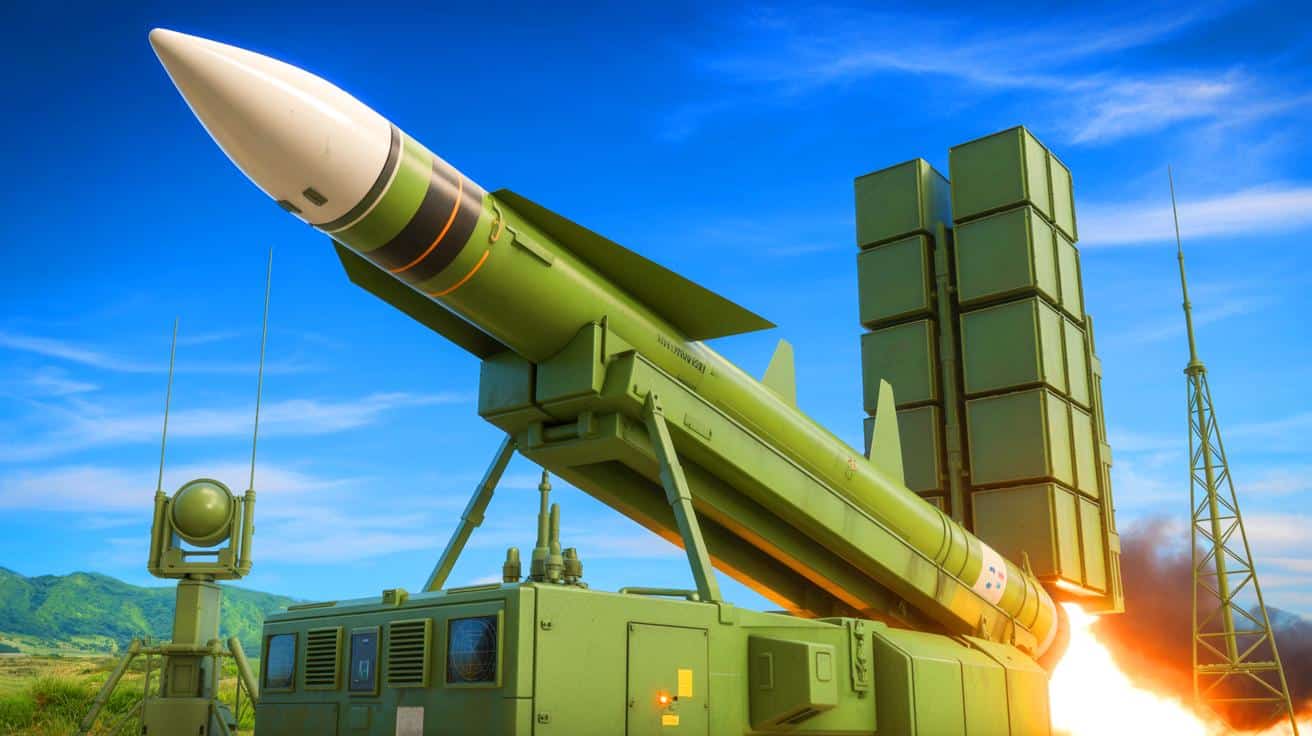
The Chiang-Kong interceptor is a groundbreaking development in Taiwan’s defense arsenal, showcasing the island’s increasing self-reliance in military technology. Developed by NCSIST, the missile system employs a booster and a kill vehicle that can achieve hypersonic speeds exceeding Mach 5. This capability allows the missile to engage targets at altitudes up to 230,000 feet, effectively countering threats in near space.
A standout feature of the missile system is its mobile launcher, which can carry four missiles and is equipped with its own power supply. This design enables automatic testing and rapid deployment, providing operational flexibility. Commands are transmitted from a control center, ensuring quick response times to emerging threats.
The Chiang-Kong’s AESA radar, the first of its kind developed domestically, is another key component. Utilizing solid-state transmit/receive modules for electronic steering, the radar can track multiple targets simultaneously. The system’s ability to uplink and downlink guidance data during flight ensures precision targeting, enhancing Taiwan’s defensive capabilities.
The missile transitions from inertial plus radar uplink guidance in the midcourse phase to active seeker guidance in the terminal phase, ensuring accurate interception. The warhead, loaded with high-explosive fragments, is designed to neutralize incoming threats effectively upon impact.
Answer to Chinese Threats
Taiwan's strategic planners have prioritized advanced defensive measures to counter potential threats from China, particularly in scenarios involving mass ballistic missile strikes. The Chiang-Kong system is designed to complement existing low-level defenses, providing a mid-tier capability against tactical ballistic missiles. Although its range remains undisclosed, the system’s speed and altitude capabilities offer a significant deterrent.
Part of Taiwan’s broader military modernization efforts, NCSIST's investment in indigenous defense projects signifies a strategic shift towards reducing reliance on foreign technology. The development of advanced radar and guidance systems for the Chiang-Kong is a critical milestone in this endeavor.
Unveiled at the Taipei Aerospace & Defense Technology Exhibition, the interceptor underscores Taiwan’s commitment to showcasing its defense capabilities to international partners and domestic audiences alike. While Taipei did not directly reference China, officials confirmed the system is primarily intended to counter ballistic missile threats aimed at Taiwan.
Technological Advancements in Defense
The introduction of the Chiang-Kong interceptor highlights Taiwan's focus on leveraging advanced technology to strengthen its defense infrastructure. Combining hypersonic speeds with sophisticated radar and guidance systems, Taiwan emerges as a formidable player in missile defense.
This technological advancement is not solely about enhancing military capabilities; it also signifies Taiwan's strategic intent to maintain sovereignty and security amidst evolving regional dynamics. By developing such cutting-edge systems domestically, Taiwan demonstrates its commitment to protecting its interests.
The integration of electronic steering and solid-state modules in the AESA radar reflects the sophistication of Taiwan’s technological advancements. These innovations provide a robust framework for future defense systems, reinforcing Taiwan’s strategic deterrence posture.
As global tensions continue to shape defense priorities, Taiwan's commitment to self-reliance and technological advancement becomes increasingly evident. The Chiang-Kong interceptor symbolizes Taiwan's resolve to address potential threats proactively and with precision.
Implications for Regional Security
The unveiling of Taiwan's hypersonic missile system carries significant implications for regional security dynamics. By enhancing its defensive capabilities, Taiwan sends a clear message of deterrence to potential aggressors, particularly amid its complex relationship with China.
This development could influence the strategic calculations of other nations in the region, prompting a reevaluation of defense postures and alliances. The deployment of such advanced systems may lead to an arms race, necessitating diplomatic efforts to manage regional tensions.
Furthermore, Taiwan's advancements in defense technology could inspire other countries to invest in similar capabilities, potentially altering the balance of power in the Asia-Pacific region. The emphasis on indigenous development reflects a broader trend towards self-sufficiency in defense, seen in various countries seeking to reduce dependence on foreign technology.
As Taiwan continues to bolster its defense infrastructure, the international community will be closely monitoring these developments. The long-term implications for regional stability and security remain to be seen, raising questions about the future trajectory of military and diplomatic relations in the region.
Taiwan's unveiling of the Chiang-Kong hypersonic missile system marks a significant milestone in its defense strategy, underscoring the island's commitment to safeguarding its sovereignty amidst regional tensions. As Taiwan continues to innovate and strengthen its defense capabilities, how will these developments shape the broader geopolitical landscape in the Asia-Pacific region?




Wow, Taiwan is really stepping up their defense game! Do you think this will lead to more tensions in the region? 🤔
Wow, this is a game-changer for Taiwan! 🚀 How will China respond to this new development?
Interesting article, but are there any details on the missile’s range? 🤔
Is this hypersonic missile system really necessary for Taiwan, or is it just escalating tensions?
Chiang-Kong” sounds like something out of a sci-fi movie. I hope it performs as well as it sounds! 🚀
Thank you for this insightful article! Really helps understand the regional security dynamics. 😊
Is this a sign that Taiwan is becoming less reliant on US military support?
Not sure how effective this will be against China’s arsenal, but it’s a bold move by Taiwan.
Can someone explain how a hypersonic missile works in layman’s terms?
Great article, very informative. Thanks for keeping us updated on such important developments!
This is just asking for trouble with China. Are we heading towards an arms race?
The technology behind this missile sounds impressive! Kudos to Taiwan’s scientists. 👏
How does the Chiang-Kong compare to similar systems from other countries?
How much did this missile system cost Taiwan? Seems like a huge investment. 💸
Great read! But what are the implications for US-Taiwan relations?
I don’t think this missile will change much. China still has the upper hand. 🤷♂️
Does anyone else find the timing of this announcement interesting?
Great article. More countries should focus on self-reliance in defense technology.
Is hypersonic tech the future of warfare? Seems like everyone’s jumping on the bandwagon. 😮
Will this new missile system affect Taiwan’s relations with neighboring countries?
I’m skeptical about the effectiveness of this missile system. Let’s see if it delivers.
How does this compare to other countries’ hypersonic missile capabilities?
Thank you for the detailed breakdown of the missile’s features. Very informative!
Does this mean Taiwan is moving away from US military support?
Anyone else worried this could trigger a regional conflict? 😟
Nice article, but what’s next for Taiwan’s defense strategy?
Sounds like a lot of hype. Is this really a breakthrough or just a PR stunt?
Could this new missile system lead to increased military spending across Asia? 🤑
I’m curious about the missile’s reliability. Has it been tested under real conditions?
Is there any video footage of the missile in action? Would love to see it! 🎥
Does this mean Taiwan is more secure now, or is it just another layer of defense?
What are the potential downsides of deploying such advanced technology?
Thanks for the article. It’s good to see Taiwan taking steps to protect itself. 🇹🇼
How do you think this development will affect Taiwan’s international relations?
I’m impressed by the technology, but is it enough to deter aggression?
Seems like Taiwan is making a statement. What will be China’s next move? 🤔
How does the public in Taiwan feel about this new missile system?
This could change the security map in Asia. What are the broader implications? 🌏
Are there any plans to collaborate with other countries on this technology?
Is this just the beginning of Taiwan’s defense upgrades, or a one-off project?
Great analysis, but what’s the likelihood of this technology being used in actual conflict?
Exciting times for Taiwan’s defense sector! Can’t wait to see what’s next. 🚀