




| IN A NUTSHELL |
|
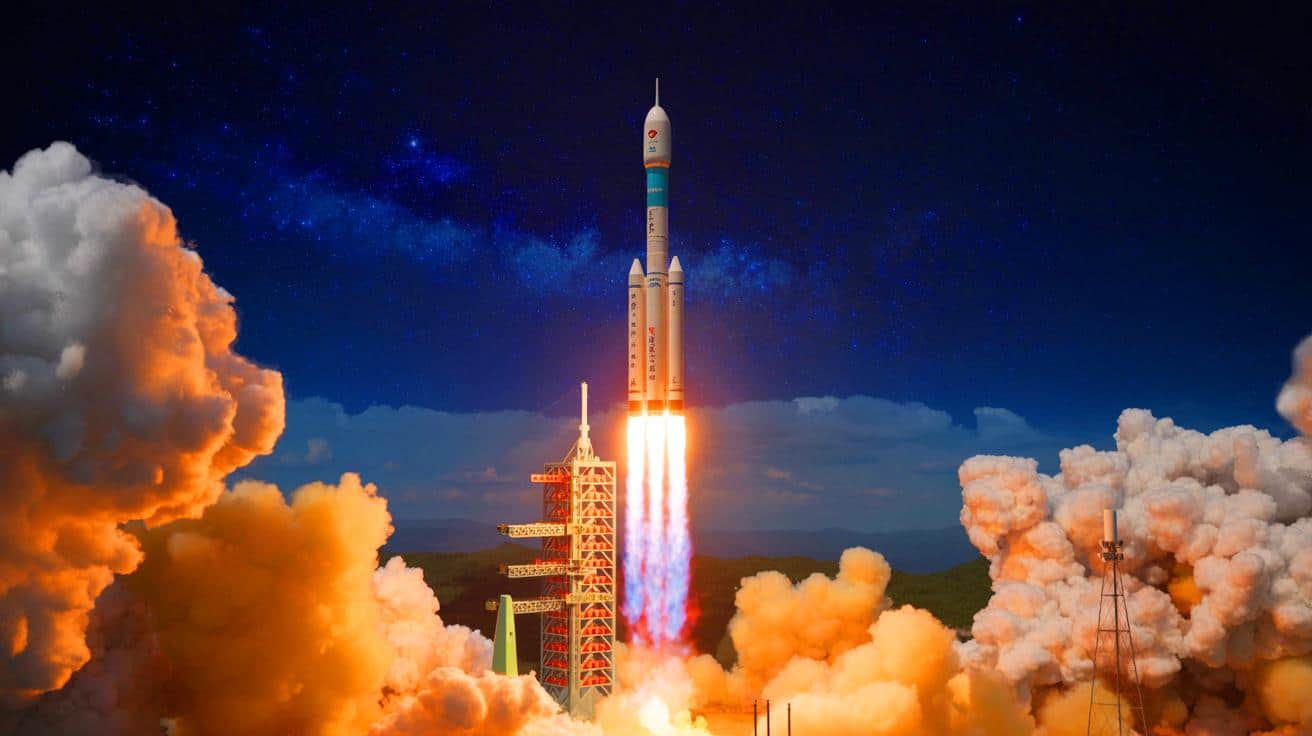
In a remarkable demonstration of its growing space capabilities, China successfully launched a pair of experimental Shiyan-30 satellites into orbit via a Long March 2D rocket. This recent launch, executed from the Xichang Satellite Launch Center, underscores China’s commitment to space exploration and technological advancement. With a focus on testing Earth observation technologies and potentially other strategic applications, the Shiyan-30 satellites represent another step in China’s ambitious space program. Despite the lack of detailed public information, these satellite missions are closely watched by international observers, highlighting the geopolitical significance of space exploration in today’s world.
China’s Growing Space Ambitions
China’s space endeavors have grown dramatically over the past few decades, positioning the nation as a formidable player in the global space community. The recent launch of the Shiyan-30 satellites is part of a broader initiative to advance China’s technological frontier in space. The Long March 2D rocket, which carried these satellites into orbit, is a testament to the country’s engineering prowess. This particular launch was the 100th for the Long March 2D, marking a significant milestone in China’s spaceflight history. The Long March 2D is only the second Chinese rocket to achieve triple-digit launches, following the Long March 3B.
The Shiyan-30 satellites are primarily utilized for testing and verifying Earth observation technologies. Developed by the Shanghai Academy of Spaceflight Technology, these satellites contribute to China’s ongoing efforts to innovate and validate new space technologies. While official details are often sparse, external analysts suggest that Shiyan missions serve multiple purposes, including technology demonstrations and space environment monitoring. Such activities contribute to the development of new systems like sensors and communication subsystems, ultimately enhancing China’s space capabilities.
The Strategic Implications of Shiyan Missions
Shiyan missions often remain cloaked in secrecy, yet they hold significant strategic importance. Observers speculate that these satellites are not only used for Earth observation but also for electronic intelligence and remote sensing. This aspect of the Shiyan missions underscores their potential dual-use nature, blending civilian and military applications. The strategic value of these missions extends beyond mere technological advancement, touching upon issues of national security and geopolitical influence.
Recent Shiyan satellites, such as Shiyan-12, have been noted for their proximity maneuvers in geosynchronous orbits, raising questions about their objectives. The Shiyan-12 (02) satellite was observed approaching the USA 336 spacecraft, suggesting capabilities for space situational awareness and possibly even reconnaissance. Such maneuvers highlight China's interest in developing technologies that could be pivotal in space diplomacy and defense.
Intensified Launch Cadence and Future Prospects
The launch of the Shiyan-30 satellites is part of an intense period of space activity for China. September alone witnessed ten launches, making it one of the most active months for Chinese spaceflight. This uptick in activity indicates a deliberate strategy to maintain a robust presence in space. It also reflects a broader trend of increased global competition in space exploration, where the stakes are not just scientific but also economic and strategic.
China's ambitious plans include further launches, such as the Long March 8A and the Gravity-1 missions, both slated for October. These future missions are expected to bolster China's capabilities in various space domains, from commercial satellite deployments to scientific research. As China continues to expand its space endeavors, the international community remains vigilant, recognizing that space exploration is not only a matter of national pride but also a key component of geopolitical strategy.
Geopolitical Context and International Reactions
The launch of the Shiyan-30 satellites and China's broader space ambitions must be viewed within the context of global geopolitical dynamics. As China advances its space program, other nations, particularly the United States, are keenly watching. The US has its own vested interests in space, both for national security and commercial purposes. The increasing frequency of Chinese launches has prompted discussions about the competitive nature of space exploration and the need for international cooperation or regulation.
International reactions to China's space activities range from admiration of their technological achievements to concerns about the strategic implications. The potential dual-use nature of satellites like the Shiyan-30 series adds a layer of complexity to international relations. As nations navigate these developments, questions about space governance, security, and collaboration become ever more pertinent. The future of space exploration will likely involve a delicate balance between competition and cooperation among the world's leading spacefaring nations.
As China's space program continues to evolve, it raises important questions about the future of international space exploration and cooperation. How will nations balance the pursuit of technological advancement with the need for strategic security in space? What frameworks will emerge to govern the use of space in a way that benefits all humanity? These questions remain at the forefront as the world watches China's next moves in the final frontier.




Wow, China is really stepping up their space game! 🚀
Isn’t it about time we start asking what’s really going on up there? 👀
Are these satellites really for Earth observation, or is there more to it? 🤔
Great article! It really opened my eyes to the complexities of space geopolitics. Thanks! 🌌
Great article! Thanks for keeping us informed about global space developments.
The secrecy around these missions is a bit concerning, don’t you think?
I’m skeptical about China’s “dual-use” technologies. Seems like a cover for military expansion. 🤔
I’m curious, how does this affect the existing balance of power in space?
China’s space program is quite impressive. I wonder what their next move will be.
Why does the international community allow such secrecy in space missions?
So, are these satellites spying on us or what? 😅
China’s space program sounds like a sci-fi movie plot. What’s next, a space station on the moon? 🚀
What do you think the dual-use nature of these satellites means for global security?
Does anyone else feel like we’re living in a sci-fi movie? 🌌
Interesting read! I’m not sure how to feel about the potential military applications.
Is it just me, or does this sound like the beginning of a space race? 🏁
Thanks for the detailed article! It’s fascinating to see how far space technology has come.
I wonder how other countries will respond to this increased activity from China.
Do we know how many more of these satellites China plans to launch?
Why all the secrecy? If it’s just Earth observation, why not be more transparent?
This feels like a game of chess on a cosmic scale! ♟️
How does China’s space program compare to the US or Russia’s in terms of technology?
Is there a possibility of international collaboration, or is it all competition?
Hope this doesn’t escalate into something more than just space exploration.
Great insights! The geopolitical implications are quite significant.
Anyone else worried about space becoming another battlefield? 😬
What exactly do these satellites do when they’re testing “new space technologies”?
Is there any way to confirm what these satellites are actually doing up there?
Thanks for the article! It’s a bit scary how much is happening above our heads.
China’s space ambitions are clearly not just for science. What’s the endgame here?
The international community needs to wake up to these developments!
How do these launches fit into China’s broader geopolitical strategy?
It’s impressive, but also a little unsettling. What’s next, space bases? 🛰️
Wondering if we’ll see more countries entering the space race soon.
Thanks for the write-up! The pace of these launches is incredible.
Are there any treaties or agreements that govern these kinds of satellite launches?
Exciting times for space exploration, but let’s hope for peaceful purposes! ✌️
Could this lead to new space tech innovations for civilian use?
I’m just here for the potential alien discoveries! 👽