




| IN A NUTSHELL |
|
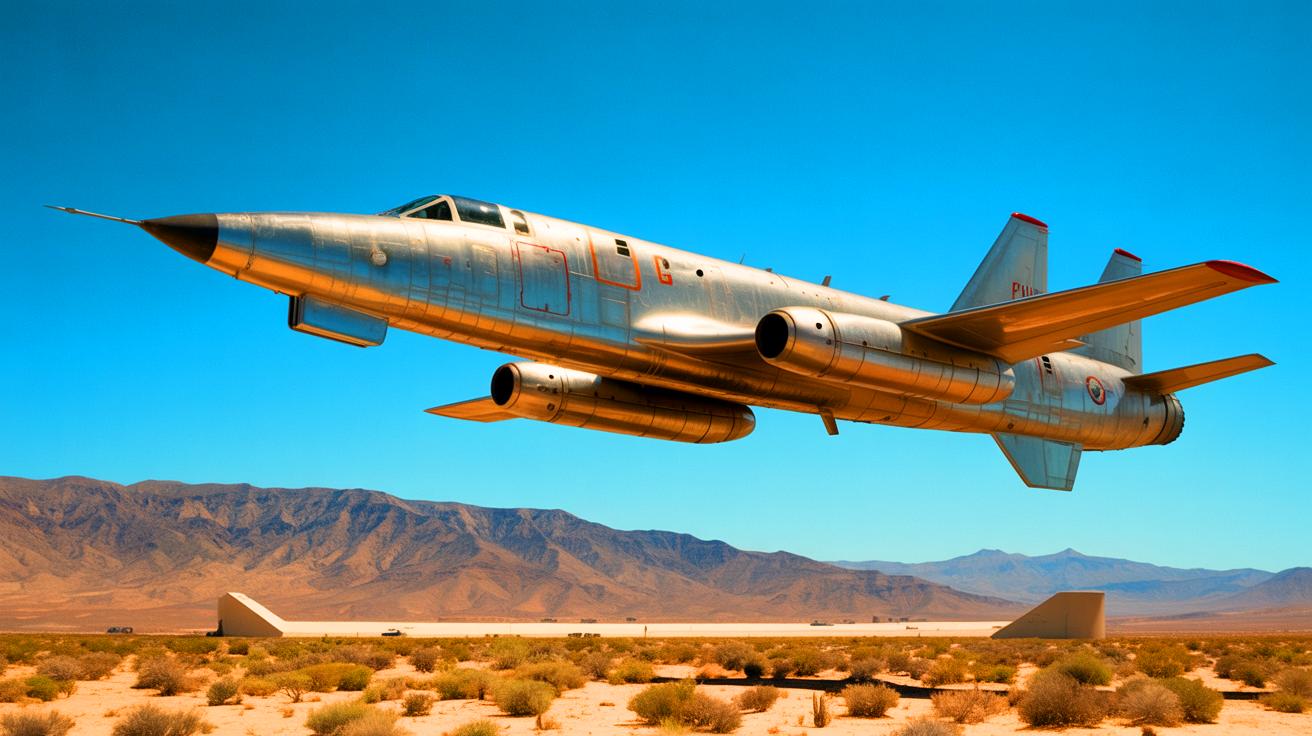
In the vast solitude of the Nevada desert, a single photograph has reignited fervent speculation about the enigmatic activities at one of the world’s most secretive military installations: Area 51. Captured by photographer Michael Rokita from Tikaboo Peak, the image reveals the RAT55, a mysterious aircraft of the U.S. Air Force, maneuvering near the legendary Hangar 18. This sighting has fueled renewed interest and debate about the covert operations potentially taking place at this heavily guarded facility. The implications of such a revelation are vast, touching on both national security interests and international technological races.
A Historic Photographic Capture
Michael Rokita’s venture to Tikaboo Peak, a vantage point 16 miles from Area 51, was not without its risks. This remote location is the only public spot where civilians can glimpse the Groom Lake installations without immediate repercussions. The images he captured depict the RAT55 performing repeated approaches to Runway 32 before vanishing into the depths of Hangar 18. Aviation experts have scrutinized these images, confirming long-held suspicions about the aircraft’s frequent presence in this restricted area.
The RAT55’s appearance in these rare photographs has stirred significant interest among military aviation enthusiasts. The plane’s maneuvers, captured on camera, provide tangible evidence supporting years of speculation regarding its operations within Area 51. Such documentation not only offers insight into the activities of this particular aircraft but also raises broader questions about the ongoing projects within this notorious military base.
RAT55: The Technological Spy with Unknown Capabilities
The RAT55, a heavily modified Boeing 737-200, stands out with its uniquely elongated nose and peculiar protuberances on its fuselage. Known by its radio call sign “Sabre 98,” the aircraft’s primary mission involves analyzing radar signatures of stealth prototype planes during testing phases. Its role in collecting and processing electromagnetic data makes it an indispensable tool for assessing the efficacy of the U.S. defense industry’s camouflage technologies.
Observers suspect that the RAT55 is integral to testing new stealth technologies, such as those found in the RQ-180 reconnaissance drone and the forthcoming B-21 Raider strategic bomber. These aircraft, representing the future of American military aviation, incorporate advanced stealth technologies that demand equally sophisticated measurement tools. The RAT55’s capabilities in this regard remain shrouded in mystery, emphasizing its critical role in maintaining U.S. technological superiority.
The Hangar 18: A Modern Legend’s Stronghold
The RAT55’s destination in Rokita’s images, Hangar 18, is iconic in American collective imagination. This massive structure has long been the focal point of speculation regarding Area 51’s true activities. While some enthusiasts propose it as a storage site for extraterrestrial technology, military analysts regard it as a hub for assembling and maintaining highly sensitive experimental aircraft.
The reality likely lies somewhere between these extremes, in a realm known only to a select few at the highest echelons of military intelligence. This blend of myth and reality continues to fuel the intrigue surrounding Hangar 18 and its mysterious occupants, keeping the public and analysts alike captivated by what might exist behind its walls.
The Legacy of a Legendary Base
Area 51’s fearsome reputation did not emerge from thin air. Since the 1950s, it has hosted some of the U.S. military’s most ambitious aeronautical programs. The U-2 spy plane, capable of flying at altitudes of 70,000 feet, was tested here in utmost secrecy. The hypersonic SR-71 Blackbird refined its incredible Mach 3 capabilities over this desert, intimidating adversarial air defenses worldwide.
In more recent history, the F-117 Nighthawk, the first true stealth fighter, honed its revolutionary technology in the Nevada skies long before its public unveiling during the Gulf War. Such historical milestones underscore Area 51’s enduring role in pushing the boundaries of aerospace technology under the cloak of national security.
The Persistence of Technological Mystery
The sighting of the RAT55 underscores that Area 51 remains at the forefront of aerospace innovation, shrouded in military secrecy. Each appearance of this spy plane is a testament to the technological realities that lurk behind even the most extravagant theories. In an era where military innovation dictates future geopolitical balances, these stolen images represent more than mere curiosity. They highlight the silent race for technological supremacy playing out above our heads.
As the world watches, the mysteries of Area 51 continue to intrigue and perplex. The existence and operations of the RAT55 invite further questions about what other technological marvels might be concealed within the base’s confines. With innovation propelling future geopolitical dynamics, what other secrets might this legendary site hold in its quest for technological domination?