


| IN A NUTSHELL |
|
Researchers at the University of Virginia have made a groundbreaking advancement in robotics, drawing inspiration from nature’s own engineers—water striders. This innovation is not just a theoretical exercise; it holds the potential to revolutionize how we approach environmental monitoring and disaster response. By introducing HydroSpread, a novel fabrication technique, these researchers have successfully developed tiny robots capable of walking on water. These robots, prototypes named HydroFlexor and HydroBuckler, could soon be deployed for tasks ranging from pollution monitoring to sample collection in flooded areas, thanks to their unique design and capabilities.
The Breakthrough of HydroSpread
The development of these insect-inspired robots is primarily credited to HydroSpread, a fabrication method introduced by Professor Baoxing Xu of the University of Virginia. Unlike previous approaches, HydroSpread allows ultrathin polymer films to form directly on water. This method eliminates the need for a fragile transfer step from rigid surfaces, which has traditionally been a significant source of error and failure in producing such films.
Professor Xu explained that fabricating the film directly on liquid provides an unprecedented level of integration and precision. This innovative technique not only simplifies the manufacturing process but also significantly reduces the likelihood of errors. Droplets of liquid polymer spread naturally into uniform sheets on water, and these sheets can then be precisely carved with lasers to form complex patterns. This level of precision is crucial for creating the delicate, floating devices necessary for soft robotics.
The elimination of the transfer stage leads to improved yield and opens the door to more ambitious designs. By leveraging the natural properties of liquids, HydroSpread achieves a level of smoothness and precision that was previously unattainable. This method is poised to significantly impact not just robotics, but other fields requiring delicate, resilient materials.
Prototypes and Their Potential
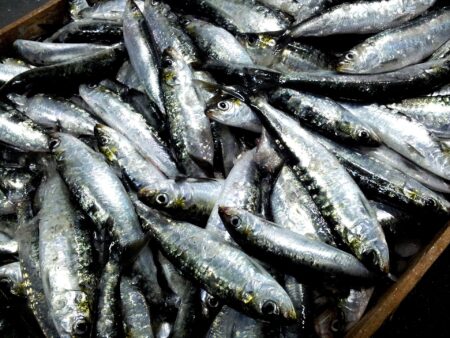
The two prototypes, HydroFlexor and HydroBuckler, showcase the potential of this technology. Powered by an overhead infrared heater, these robots mimic the movements of aquatic insects. HydroFlexor uses fin-like motions to paddle across water, while HydroBuckler utilizes buckling legs to walk forward, similar to water striders. The ability to adjust speed and direction by cycling heat on and off demonstrates the potential for controlled, repeatable motion at a small scale.
These prototypes, though still in the lab stage, suggest a future where fleets of miniature robots could perform tasks that are currently too dangerous or delicate for humans. Imagine robots gliding across polluted waters, gathering data, or responding to environmental disasters in real-time. The implications for environmental science and disaster response are substantial, offering new ways to engage with and protect our ecosystems.
Applications Beyond Robotics
HydroSpread is not limited to robotics. Its implications extend into various fields, including wearable medical sensors, flexible electronics, and environmental monitoring devices. Such devices require thin yet resilient materials, able to function in environments where traditional rigid materials cannot. HydroSpread's ability to fabricate directly on liquid allows for the creation of these delicate films, opening new avenues for lightweight and adaptable technologies.
Professor Xu emphasizes that this method could transform how scientists approach the design and production of flexible technologies. By bypassing the fragile transfer process, researchers can focus on creating more sophisticated and intricate designs. This innovation promises to accelerate advancements across multiple industries, potentially leading to breakthroughs in how we monitor health, interact with technology, and assess our environment.
The Future of Water-Walking Robots
While HydroFlexor and HydroBuckler remain prototypes, their insect-like movements provide a glimpse into what the future might hold. The potential applications for these robots are vast, from environmental monitoring to disaster response. As technology progresses, the possibility of deploying fleets of these tiny robots becomes increasingly feasible.
The study's publication in Science Advances highlights the significance of these findings. By enabling direct fabrication on liquid, HydroSpread represents a shift in how we approach material science and engineering. This innovation not only enhances our understanding of soft robotics but also broadens the horizons for various other technologies.
As we look to the future, the question remains: How will these advances in soft robotics and material fabrication shape our approach to solving some of the world's most pressing challenges?


Wow, these robots are incredible! Can’t wait to see them in action. 🤖
Incredible work by the UVA team! How soon before these robots are used in real-world applications? 🌍
Thank you for this fascinating article! It’s amazing to see nature inspiring technological advancements. 🌿
Are there any videos showing how these robots move on water?
What are the potential risks of deploying these robots in sensitive ecological areas? 🤔
Seems too good to be true! How do they maintain balance on water? 🤔
Can these robots really handle rough weather conditions during a disaster response?
What an amazing breakthrough! Kudos to the team at the University of Virginia! 🎉
How do these tiny robots avoid causing harm to the ecosystems they aim to protect?
Could these robots potentially disrupt aquatic ecosystems?
This is like something out of a sci-fi movie! Robots walking on water? Mind-blown! 🤯
Fantastic innovation! I hope this leads to significant improvements in environmental monitoring. 👍
If these robots are inspired by insects, do they also face similar limitations in terms of speed and agility?
How do they power these robots? Do they use solar energy or something else? ⚡
Great read! Will this technology be available for commercial use anytime soon?
Are there any ethical considerations in using such robots in disaster zones?
Wow, such a revolutionary step in robotics! What will they think of next? 🚀
Is this technology scalable for larger applications, or is it limited to small robots?
Hope they don’t start walking out of the water and into our homes! 😂
Could this technology be adapted for use in other environments, like deserts or forests?
Simply amazing! How do they ensure the durability of these robots in harsh conditions?
Not sure how I feel about robots in nature. Could they become invasive somehow?
Thanks for sharing this! What are the next steps for the research team? 🚀
How do these robots communicate with each other during a task?
I’m curious about the cost of producing these robots. Is it affordable for widespread use?
Hope they don’t malfunction and start a robot uprising! 🤖😜
As a nature lover, I’m both excited and cautious about this development. 🌱
Could these robots be used in space exploration, perhaps on watery moons? 🌌
Innovative indeed, but what about the maintenance of these tiny machines?
It’s thrilling to see polymer technology used in such a creative way! 👏
Are there any plans to test these robots in real-world disaster scenarios soon?
What kind of data can these robots collect during environmental monitoring?
This is revolutionary! Will other universities follow UVA’s lead in this research area?
Is it just me, or does this sound like a step towards robot domination? 😂
Very intresting article! Can these robots switch roles during a mission?